

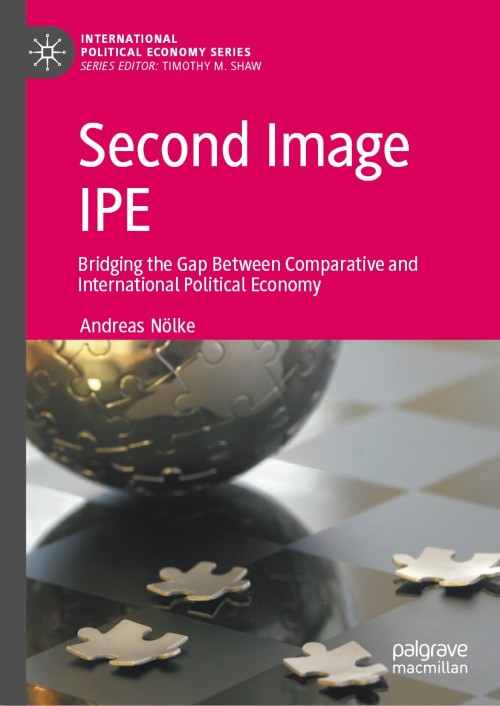
Second Image IPE [electronic resource] : Bridging the Gap Between Comparative and International Political Economy / by Andreas Nölke.
Erişim Adresi
ISBN
9783031376931
Dil Kodu
İngilizce
Yer Numarası
DK/19133
Yazar
Basım Bildirimi
1st ed. 2023.
Yayın Bilgisi
Cham : Springer International Publishing : Imprint: Palgrave Macmillan, 2023.
Fiziksel Niteleme
XXIII, 270 p. 13 illus. online resource.
Dizi
International Political Economy Series, 2662-2491
İçindekiler Notu
1. Introduction: Why “Second Image IPE”? -- 2. Building blocks for a recombination of Comparative and International Political Economy -- 3. Security -- 4. Finance -- 5. Regional integration -- 6. Trade -- 7. Foreign direct investment -- 8. Global order -- 9. Conclusion.
Özet, vb.
This book argues that the lack of adequate theories of contemporary capitalism is due to the increasing separation of the sub-disciplines of Comparative and International Political Economy. Theorizing only takes place in one of the two over-specialized sub-disciplines of Political Economy, thereby leading to a neglect of the interplay between national and international dimensions of capitalism. The author seeks to rectify this gap by developing a theory of Second Image IPE. Based on the “second image” notion developed by Kenneth Waltz, he furthers the classical theoretical approaches as developed by Peter Gourevitch and Peter Katzenstein. For this purpose, he incorporates recent analytical developments in Comparative Capitalism and Growth Model analysis. The book demonstrates the usefulness of Second Image IPE theory by studying the major empirical topics of Global Political Economy, including security, finance, regional integration, trade, production and global order. It also covers recent issues such as deep integration, selective de-globalization and state capitalist challenges to liberal international institutions. Andreas Nölke is Professor of Political Science at Goethe University Frankfurt, Germany. His recent books include Post-Corona Capitalism: The Alternatives Ahead (Bristol University Press, 2022) and State-Permeated Capitalism in Large Emerging Economies (Routledge, 2020, co-authored). For Second Image IPE, he has received an Opus Magnum grant by the Volkswagen Foundation.
Konu
International economic relations.
Globalization.
International relations.
International Political Economy’.
Globalization.
International Relations Theory.
Globalization.
International relations.
International Political Economy’.
Globalization.
International Relations Theory.
Kurum Adı
Eseri Alıntıla
Referansları kullanmadan önce gözden geçirmeniz ve varsa gerekli düzeltmeleri yapmanız önerilir.
Dijital Kaynak
MARC Görünümü
LEADER 05020nam a22006615i 4500
001 817924
003 TR_AnAIT
005 20260130183258
007 cr nn 008mamaa
008 230717s2023 sz | s |||| 0|eng d
020 |a9783031376931|9978-3-031-37693-1
024 7 |a10.1007/978-3-031-37693-1|2doi
041 |aeng
049 |aTürk Tarih Kurumu Kütüphanesi
050 4|aJZ1252
072 7|aJPS|2bicssc
072 7|aKCP|2bicssc
072 7|aPOL011020|2bisacsh
072 7|aJPS|2thema
072 7|aKCP|2thema
082 04|a327.111|223
090 |aDK/19133
100 1 |aNölke, Andreas.|eauthor.|4aut|4http://id.loc.gov/vocabulary/relators/aut
245 10|aSecond Image IPE|h[electronic resource] :|bBridging the Gap Between Comparative and International Political Economy /|cby Andreas Nölke.
250 |a1st ed. 2023.
264 1|aCham :|bSpringer International Publishing :|bImprint: Palgrave Macmillan,|c2023.
300 |aXXIII, 270 p. 13 illus.|bonline resource.
336 |atext|btxt|2rdacontent
337 |acomputer|bc|2rdamedia
338 |aonline resource|bcr|2rdacarrier
341 0 |bTable of contents navigation|2onix
341 0 |bSingle logical reading order|2onix
341 0 |bShort alternative textual descriptions|2onix
341 0 |bUse of color is not sole means of conveying information|2onix
341 0 |bUse of high contrast between text and background color|2onix
341 0 |bNext / Previous structural navigation|2onix
341 0 |bAll non-decorative content supports reading without sight|2onix
347 |atext file|bPDF|2rda
490 1 |aInternational Political Economy Series,|x2662-2491
505 0 |a1. Introduction: Why “Second Image IPE”? -- 2. Building blocks for a recombination of Comparative and International Political Economy -- 3. Security -- 4. Finance -- 5. Regional integration -- 6. Trade -- 7. Foreign direct investment -- 8. Global order -- 9. Conclusion.
520 |aThis book argues that the lack of adequate theories of contemporary capitalism is due to the increasing separation of the sub-disciplines of Comparative and International Political Economy. Theorizing only takes place in one of the two over-specialized sub-disciplines of Political Economy, thereby leading to a neglect of the interplay between national and international dimensions of capitalism. The author seeks to rectify this gap by developing a theory of Second Image IPE. Based on the “second image” notion developed by Kenneth Waltz, he furthers the classical theoretical approaches as developed by Peter Gourevitch and Peter Katzenstein. For this purpose, he incorporates recent analytical developments in Comparative Capitalism and Growth Model analysis. The book demonstrates the usefulness of Second Image IPE theory by studying the major empirical topics of Global Political Economy, including security, finance, regional integration, trade, production and global order. It also covers recent issues such as deep integration, selective de-globalization and state capitalist challenges to liberal international institutions. Andreas Nölke is Professor of Political Science at Goethe University Frankfurt, Germany. His recent books include Post-Corona Capitalism: The Alternatives Ahead (Bristol University Press, 2022) and State-Permeated Capitalism in Large Emerging Economies (Routledge, 2020, co-authored). For Second Image IPE, he has received an Opus Magnum grant by the Volkswagen Foundation.
532 8 |aAccessibility summary: This PDF does not fully comply with PDF/UA standards, but does feature limited screen reader support, described non-text content (images, graphs), bookmarks for easy navigation and searchable, selectable text. Users of assistive technologies may experience difficulty navigating or interpreting content in this document. We recognize the importance of accessibility, and we welcome queries about accessibility for any of our products. If you have a question or an access need, please get in touch with us at accessibilitysupport@springernature.com.
532 8 |aNo reading system accessibility options actively disabled
532 8 |aPublisher contact for further accessibility information: accessibilitysupport@springernature.com
650 0|aInternational economic relations.
650 0|aGlobalization.
650 0|aInternational relations.
650 14|aInternational Political Economy’.
650 24|aGlobalization.
650 24|aInternational Relations Theory.
710 2 |aSpringerLink (Online service)
773 0 |tSpringer Nature eBook
776 08|iPrinted edition:|z9783031376924
776 08|iPrinted edition:|z9783031376948
776 08|iPrinted edition:|z9783031376955
830 0|aInternational Political Economy Series,|x2662-2491
856 40|uhttps://doi.org/10.1007/978-3-031-37693-1
912 |aZDB-2-POS
912 |aZDB-2-SXPI
950 |aPolitical Science and International Studies (SpringerNature-41174)
950 |aPolitical Science and International Studies (R0) (SpringerNature-43724)
001 817924
003 TR_AnAIT
005 20260130183258
007 cr nn 008mamaa
008 230717s2023 sz | s |||| 0|eng d
020 |a9783031376931|9978-3-031-37693-1
024 7 |a10.1007/978-3-031-37693-1|2doi
041 |aeng
049 |aTürk Tarih Kurumu Kütüphanesi
050 4|aJZ1252
072 7|aJPS|2bicssc
072 7|aKCP|2bicssc
072 7|aPOL011020|2bisacsh
072 7|aJPS|2thema
072 7|aKCP|2thema
082 04|a327.111|223
090 |aDK/19133
100 1 |aNölke, Andreas.|eauthor.|4aut|4http://id.loc.gov/vocabulary/relators/aut
245 10|aSecond Image IPE|h[electronic resource] :|bBridging the Gap Between Comparative and International Political Economy /|cby Andreas Nölke.
250 |a1st ed. 2023.
264 1|aCham :|bSpringer International Publishing :|bImprint: Palgrave Macmillan,|c2023.
300 |aXXIII, 270 p. 13 illus.|bonline resource.
336 |atext|btxt|2rdacontent
337 |acomputer|bc|2rdamedia
338 |aonline resource|bcr|2rdacarrier
341 0 |bTable of contents navigation|2onix
341 0 |bSingle logical reading order|2onix
341 0 |bShort alternative textual descriptions|2onix
341 0 |bUse of color is not sole means of conveying information|2onix
341 0 |bUse of high contrast between text and background color|2onix
341 0 |bNext / Previous structural navigation|2onix
341 0 |bAll non-decorative content supports reading without sight|2onix
347 |atext file|bPDF|2rda
490 1 |aInternational Political Economy Series,|x2662-2491
505 0 |a1. Introduction: Why “Second Image IPE”? -- 2. Building blocks for a recombination of Comparative and International Political Economy -- 3. Security -- 4. Finance -- 5. Regional integration -- 6. Trade -- 7. Foreign direct investment -- 8. Global order -- 9. Conclusion.
520 |aThis book argues that the lack of adequate theories of contemporary capitalism is due to the increasing separation of the sub-disciplines of Comparative and International Political Economy. Theorizing only takes place in one of the two over-specialized sub-disciplines of Political Economy, thereby leading to a neglect of the interplay between national and international dimensions of capitalism. The author seeks to rectify this gap by developing a theory of Second Image IPE. Based on the “second image” notion developed by Kenneth Waltz, he furthers the classical theoretical approaches as developed by Peter Gourevitch and Peter Katzenstein. For this purpose, he incorporates recent analytical developments in Comparative Capitalism and Growth Model analysis. The book demonstrates the usefulness of Second Image IPE theory by studying the major empirical topics of Global Political Economy, including security, finance, regional integration, trade, production and global order. It also covers recent issues such as deep integration, selective de-globalization and state capitalist challenges to liberal international institutions. Andreas Nölke is Professor of Political Science at Goethe University Frankfurt, Germany. His recent books include Post-Corona Capitalism: The Alternatives Ahead (Bristol University Press, 2022) and State-Permeated Capitalism in Large Emerging Economies (Routledge, 2020, co-authored). For Second Image IPE, he has received an Opus Magnum grant by the Volkswagen Foundation.
532 8 |aAccessibility summary: This PDF does not fully comply with PDF/UA standards, but does feature limited screen reader support, described non-text content (images, graphs), bookmarks for easy navigation and searchable, selectable text. Users of assistive technologies may experience difficulty navigating or interpreting content in this document. We recognize the importance of accessibility, and we welcome queries about accessibility for any of our products. If you have a question or an access need, please get in touch with us at accessibilitysupport@springernature.com.
532 8 |aNo reading system accessibility options actively disabled
532 8 |aPublisher contact for further accessibility information: accessibilitysupport@springernature.com
650 0|aInternational economic relations.
650 0|aGlobalization.
650 0|aInternational relations.
650 14|aInternational Political Economy’.
650 24|aGlobalization.
650 24|aInternational Relations Theory.
710 2 |aSpringerLink (Online service)
773 0 |tSpringer Nature eBook
776 08|iPrinted edition:|z9783031376924
776 08|iPrinted edition:|z9783031376948
776 08|iPrinted edition:|z9783031376955
830 0|aInternational Political Economy Series,|x2662-2491
856 40|uhttps://doi.org/10.1007/978-3-031-37693-1
912 |aZDB-2-POS
912 |aZDB-2-SXPI
950 |aPolitical Science and International Studies (SpringerNature-41174)
950 |aPolitical Science and International Studies (R0) (SpringerNature-43724)
Materyaller
Depodan talep edilen materyal sadece kütüphane içerisinde kullanılmaktadır.
Materyal dışarıya ödünç verilmemektedir.
Materyal dışarıya ödünç verilmemektedir.
