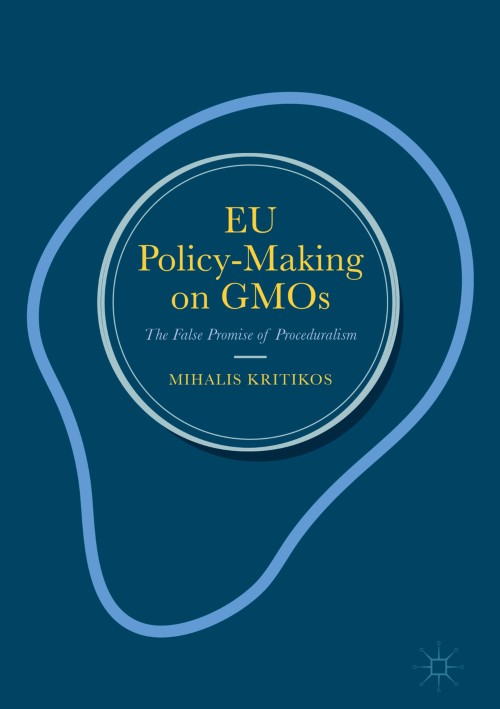
EU Policy-Making on GMOs [electronic resource] : The False Promise of Proceduralism / by Mihalis Kritikos.
Erişim Adresi
ISBN
9781137314468
Dil Kodu
İngilizce
Yer Numarası
DK/19160
Yazar
Basım Bildirimi
1st ed. 2018.
Yayın Bilgisi
London : Palgrave Macmillan UK : Imprint: Palgrave Macmillan, 2018.
Fiziksel Niteleme
XV, 341 p. online resource.
İçindekiler Notu
Chapter 1: Introduction -- Chapter 2: Initial Shaping of genetic engineering rules (1982–1986) -- Chapter 3: Developing a regulatory framework on GMO releases -- Chapter 4: The 1990/220 Deliberate Release Directive: Early Implementation and Revision -- Chapter 5: Authorising GMOs and the resort to EFSA’s opinions: Space for other legitimate factors? -- Chapter 6: Scientific Evaluations in the DRD: a case of asymmetries and uncertainties -- Chapter 7: Conclusions.
Özet, vb.
‘A critical analysis of the complex scientific, legal, and ethical challenges faced by the decision-making bodies of the European Union in governing the planting of GM crops. It is a fascinating case-study of the politics of risk management in Europe.’ —David Vogel, University of California, Berkeley, USA ‘This book will command the attention of policy-makers and academics not just in this field but of that of wider EU risk regulation. It is a must-read.’ —Damian Chalmers, the National University of Singapore and the London School of Economics and Political Science, UK ‘A masterful analysis of how existing institutions shape the regulation of new technologies.’ —Calestous Juma, Harvard University, USA This book examines the development and implementation of the EU’s legislative framework on the commercial release of GMO products as a case study of social regulation operating within a predominantly technical framework. The analysis and findings are based on an extensive documentary analysis and interviews with regulators, risk assessors, public interest groups and biotechnology experts. It argues that in the case of the EU biotechnology framework, the particular institutional settings created for the formulation and interpretation of its provisions have been of decisive importance in elaborating a proceduralised ‘science-based’ prior authorization scheme as the preferred framework for granting commercial permits. This interdisciplinary work will appeal to EU lawyers, decision-makers and risk managers as well as academics working in the fields of EU studies, politics, law, risk governance, sociology of science/risk and technology assessment. Mihalis Kritikos is Research Fellow at the Law, Science, Technology and Society research group at the Faculty of Law and Criminology, and Associate Researcher at the Institute of European Studies, Vrije Universiteit Brussels (VUB), Belgium, and a Fellow at Athens Public International Law Center (PIL), Greece. This book is based on a PhD thesis that was awarded the 2008 UACES Prize for Best Thesis in European Studies in Europe and with the EPEES 1st Prize for Best Thesis by a Greek Researcher (2004-2008).
Konu
Political planning.
Environmental law, International.
Environmental sciences __ Social aspects.
Europe __ Politics and government.
Law __ Europe.
Environmental engineering.
Biotechnology.
Bioremediation.
Public Policy.
International Environmental Law.
Environmental Social Sciences.
European Politics.
European Law.
Environmental Engineering/Biotechnology.
Environmental law, International.
Environmental sciences __ Social aspects.
Europe __ Politics and government.
Law __ Europe.
Environmental engineering.
Biotechnology.
Bioremediation.
Public Policy.
International Environmental Law.
Environmental Social Sciences.
European Politics.
European Law.
Environmental Engineering/Biotechnology.
Kurum Adı

Eseri Alıntıla
Referansları kullanmadan önce gözden geçirmeniz ve varsa gerekli düzeltmeleri yapmanız önerilir.
Dijital Kaynak
MARC Görünümü
LEADER 05428nam a22006255i 4500
001 817951
003 TR_AnAIT
005 20260130183127
007 cr nn 008mamaa
008 171102s2018 xxk| s |||| 0|eng d
020 |a9781137314468|9978-1-137-31446-8
024 7 |a10.1057/978-1-137-31446-8|2doi
041 |aeng
049 |aTürk Tarih Kurumu Kütüphanesi
050 4|aJF1525.P6
072 7|aJPP|2bicssc
072 7|aPOL028000|2bisacsh
072 7|aJPP|2thema
082 04|a320.6|223
090 |aDK/19160
100 1 |aKritikos, Mihalis.|eauthor.|4aut|4http://id.loc.gov/vocabulary/relators/aut
245 10|aEU Policy-Making on GMOs|h[electronic resource] :|bThe False Promise of Proceduralism /|cby Mihalis Kritikos.
250 |a1st ed. 2018.
264 1|aLondon :|bPalgrave Macmillan UK :|bImprint: Palgrave Macmillan,|c2018.
300 |aXV, 341 p.|bonline resource.
336 |atext|btxt|2rdacontent
337 |acomputer|bc|2rdamedia
338 |aonline resource|bcr|2rdacarrier
347 |atext file|bPDF|2rda
505 0 |aChapter 1: Introduction -- Chapter 2: Initial Shaping of genetic engineering rules (1982–1986) -- Chapter 3: Developing a regulatory framework on GMO releases -- Chapter 4: The 1990/220 Deliberate Release Directive: Early Implementation and Revision -- Chapter 5: Authorising GMOs and the resort to EFSA’s opinions: Space for other legitimate factors? -- Chapter 6: Scientific Evaluations in the DRD: a case of asymmetries and uncertainties -- Chapter 7: Conclusions.
520 |a‘A critical analysis of the complex scientific, legal, and ethical challenges faced by the decision-making bodies of the European Union in governing the planting of GM crops. It is a fascinating case-study of the politics of risk management in Europe.’ —David Vogel, University of California, Berkeley, USA ‘This book will command the attention of policy-makers and academics not just in this field but of that of wider EU risk regulation. It is a must-read.’ —Damian Chalmers, the National University of Singapore and the London School of Economics and Political Science, UK ‘A masterful analysis of how existing institutions shape the regulation of new technologies.’ —Calestous Juma, Harvard University, USA This book examines the development and implementation of the EU’s legislative framework on the commercial release of GMO products as a case study of social regulation operating within a predominantly technical framework. The analysis and findings are based on an extensive documentary analysis and interviews with regulators, risk assessors, public interest groups and biotechnology experts. It argues that in the case of the EU biotechnology framework, the particular institutional settings created for the formulation and interpretation of its provisions have been of decisive importance in elaborating a proceduralised ‘science-based’ prior authorization scheme as the preferred framework for granting commercial permits. This interdisciplinary work will appeal to EU lawyers, decision-makers and risk managers as well as academics working in the fields of EU studies, politics, law, risk governance, sociology of science/risk and technology assessment. Mihalis Kritikos is Research Fellow at the Law, Science, Technology and Society research group at the Faculty of Law and Criminology, and Associate Researcher at the Institute of European Studies, Vrije Universiteit Brussels (VUB), Belgium, and a Fellow at Athens Public International Law Center (PIL), Greece. This book is based on a PhD thesis that was awarded the 2008 UACES Prize for Best Thesis in European Studies in Europe and with the EPEES 1st Prize for Best Thesis by a Greek Researcher (2004-2008).
532 8 |aAccessibility summary: This PDF was produced prior to the implementation of current accessibility best practices. It supports searchable and selectable text. It may or may not include elements such as described non-text content (images, graphs etc), reflowable text or screen reader compatibility. Users with accessibility needs may experience limitations. Please contact us at accessibilitysupport@springernature.com if you require assistance or an alternative format.
532 8 |aNo reading system accessibility options actively disabled
532 8 |aPublisher contact for further accessibility information: accessibilitysupport@springernature.com
650 0|aPolitical planning.
650 0|aEnvironmental law, International.
650 0|aEnvironmental sciences|xSocial aspects.
650 0|aEurope|xPolitics and government.
650 0|aLaw|xEurope.
650 0|aEnvironmental engineering.
650 0|aBiotechnology.
650 0|aBioremediation.
650 14|aPublic Policy.
650 24|aInternational Environmental Law.
650 24|aEnvironmental Social Sciences.
650 24|aEuropean Politics.
650 24|aEuropean Law.
650 24|aEnvironmental Engineering/Biotechnology.
710 2 |aSpringerLink (Online service)
773 0 |tSpringer Nature eBook
776 08|iPrinted edition:|z9780230299948
776 08|iPrinted edition:|z9781349863228
776 08|iPrinted edition:|z9781349863235
856 40|uhttps://doi.org/10.1057/978-1-137-31446-8
912 |aZDB-2-POS
912 |aZDB-2-SXPI
950 |aPolitical Science and International Studies (SpringerNature-41174)
950 |aPolitical Science and International Studies (R0) (SpringerNature-43724)
001 817951
003 TR_AnAIT
005 20260130183127
007 cr nn 008mamaa
008 171102s2018 xxk| s |||| 0|eng d
020 |a9781137314468|9978-1-137-31446-8
024 7 |a10.1057/978-1-137-31446-8|2doi
041 |aeng
049 |aTürk Tarih Kurumu Kütüphanesi
050 4|aJF1525.P6
072 7|aJPP|2bicssc
072 7|aPOL028000|2bisacsh
072 7|aJPP|2thema
082 04|a320.6|223
090 |aDK/19160
100 1 |aKritikos, Mihalis.|eauthor.|4aut|4http://id.loc.gov/vocabulary/relators/aut
245 10|aEU Policy-Making on GMOs|h[electronic resource] :|bThe False Promise of Proceduralism /|cby Mihalis Kritikos.
250 |a1st ed. 2018.
264 1|aLondon :|bPalgrave Macmillan UK :|bImprint: Palgrave Macmillan,|c2018.
300 |aXV, 341 p.|bonline resource.
336 |atext|btxt|2rdacontent
337 |acomputer|bc|2rdamedia
338 |aonline resource|bcr|2rdacarrier
347 |atext file|bPDF|2rda
505 0 |aChapter 1: Introduction -- Chapter 2: Initial Shaping of genetic engineering rules (1982–1986) -- Chapter 3: Developing a regulatory framework on GMO releases -- Chapter 4: The 1990/220 Deliberate Release Directive: Early Implementation and Revision -- Chapter 5: Authorising GMOs and the resort to EFSA’s opinions: Space for other legitimate factors? -- Chapter 6: Scientific Evaluations in the DRD: a case of asymmetries and uncertainties -- Chapter 7: Conclusions.
520 |a‘A critical analysis of the complex scientific, legal, and ethical challenges faced by the decision-making bodies of the European Union in governing the planting of GM crops. It is a fascinating case-study of the politics of risk management in Europe.’ —David Vogel, University of California, Berkeley, USA ‘This book will command the attention of policy-makers and academics not just in this field but of that of wider EU risk regulation. It is a must-read.’ —Damian Chalmers, the National University of Singapore and the London School of Economics and Political Science, UK ‘A masterful analysis of how existing institutions shape the regulation of new technologies.’ —Calestous Juma, Harvard University, USA This book examines the development and implementation of the EU’s legislative framework on the commercial release of GMO products as a case study of social regulation operating within a predominantly technical framework. The analysis and findings are based on an extensive documentary analysis and interviews with regulators, risk assessors, public interest groups and biotechnology experts. It argues that in the case of the EU biotechnology framework, the particular institutional settings created for the formulation and interpretation of its provisions have been of decisive importance in elaborating a proceduralised ‘science-based’ prior authorization scheme as the preferred framework for granting commercial permits. This interdisciplinary work will appeal to EU lawyers, decision-makers and risk managers as well as academics working in the fields of EU studies, politics, law, risk governance, sociology of science/risk and technology assessment. Mihalis Kritikos is Research Fellow at the Law, Science, Technology and Society research group at the Faculty of Law and Criminology, and Associate Researcher at the Institute of European Studies, Vrije Universiteit Brussels (VUB), Belgium, and a Fellow at Athens Public International Law Center (PIL), Greece. This book is based on a PhD thesis that was awarded the 2008 UACES Prize for Best Thesis in European Studies in Europe and with the EPEES 1st Prize for Best Thesis by a Greek Researcher (2004-2008).
532 8 |aAccessibility summary: This PDF was produced prior to the implementation of current accessibility best practices. It supports searchable and selectable text. It may or may not include elements such as described non-text content (images, graphs etc), reflowable text or screen reader compatibility. Users with accessibility needs may experience limitations. Please contact us at accessibilitysupport@springernature.com if you require assistance or an alternative format.
532 8 |aNo reading system accessibility options actively disabled
532 8 |aPublisher contact for further accessibility information: accessibilitysupport@springernature.com
650 0|aPolitical planning.
650 0|aEnvironmental law, International.
650 0|aEnvironmental sciences|xSocial aspects.
650 0|aEurope|xPolitics and government.
650 0|aLaw|xEurope.
650 0|aEnvironmental engineering.
650 0|aBiotechnology.
650 0|aBioremediation.
650 14|aPublic Policy.
650 24|aInternational Environmental Law.
650 24|aEnvironmental Social Sciences.
650 24|aEuropean Politics.
650 24|aEuropean Law.
650 24|aEnvironmental Engineering/Biotechnology.
710 2 |aSpringerLink (Online service)
773 0 |tSpringer Nature eBook
776 08|iPrinted edition:|z9780230299948
776 08|iPrinted edition:|z9781349863228
776 08|iPrinted edition:|z9781349863235
856 40|uhttps://doi.org/10.1057/978-1-137-31446-8
912 |aZDB-2-POS
912 |aZDB-2-SXPI
950 |aPolitical Science and International Studies (SpringerNature-41174)
950 |aPolitical Science and International Studies (R0) (SpringerNature-43724)
Materyaller
Depodan talep edilen materyal sadece kütüphane içerisinde kullanılmaktadır.
Materyal dışarıya ödünç verilmemektedir.
