LEADER 03183nam a22004935i 4500
001 818049
003 TR_AnAIT
005 20260130182640
007 cr nn 008mamaa
008 170722s2018 sz | s |||| 0|eng d
020 |a9783319567358|9978-3-319-56735-8
024 7 |a10.1007/978-3-319-56735-8|2doi
041 |aeng
049 |aTürk Tarih Kurumu Kütüphanesi
050 4|aJF251-289
072 7|aJPH|2bicssc
072 7|aPOL028000|2bisacsh
072 7|aJPH|2thema
082 04|a351|223
090 |aDK/19258
100 1 |aCurini, Luigi.|eauthor.|4aut|4http://id.loc.gov/vocabulary/relators/aut
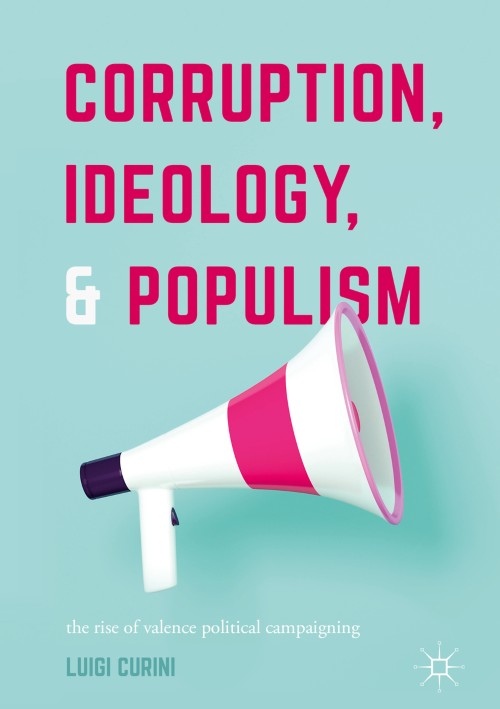
245 10|aCorruption, Ideology, and Populism|h[electronic resource] :|bThe Rise of Valence Political Campaigning /|cby Luigi Curini.
250 |a1st ed. 2018.
264 1|aCham :|bSpringer International Publishing :|bImprint: Palgrave Macmillan,|c2018.
300 |aXVII, 206 p. 30 illus.|bonline resource.
336 |atext|btxt|2rdacontent
337 |acomputer|bc|2rdamedia
338 |aonline resource|bcr|2rdacarrier
347 |atext file|bPDF|2rda
505 0 |aChapter 1. Political corruption and valence issues -- Chapter 2. The ideological incentive for campaigning on corruption issues -- Chapter 3. Political corruption in legislative speeches: the Italian way (1946-2014) -- Chapter 4. Political corruption in electoral programmes: a comparative perspective -- Chapter 5. Political corruption on Twitter: the 2014 European Electoral campaigning -- Chapter 6. Conclusion: which implications?.
520 |aThis book investigates the ideological conditions inducing political actors to highlight corruption issues through valence campaigns. Using case studies and comparative analyses of party programmes, legislatives speeches and social media data, the author demonstrates that the more parties and/or candidates present a similar policy programme, the more they rely on valence campaigns. In other words, as the ideologies of parties have become increasingly similar over recent decades, the content of political competition has substantially shifted from policy to non-policy factors, such as corruption issues. These dynamics, and the ideological considerations underpinning them, also provide a novel perspective on recent phenomena in contemporary democracies, such as the growth of negative campaigning, as well as populist strategies based on anti-elite rhetoric. The book will appeal to students and scholars interested in political corruption, valence politics, and electoral campaigning. <.
650 0|aExecutive power.
650 0|aCommunication in politics.
650 0|aElections.
650 14|aExecutive Politics.
650 24|aPolitical Communication.
650 24|aElectoral Politics.
710 2 |aSpringerLink (Online service)
773 0 |tSpringer Nature eBook
776 08|iPrinted edition:|z9783319567341
776 08|iPrinted edition:|z9783319567365
776 08|iPrinted edition:|z9783319859873
856 40|uhttps://doi.org/10.1007/978-3-319-56735-8
912 |aZDB-2-POS
912 |aZDB-2-SXPI
950 |aPolitical Science and International Studies (SpringerNature-41174)
950 |aPolitical Science and International Studies (R0) (SpringerNature-43724)