LEADER 03741nam a22006135i 4500
001 818253
003 TR_AnAIT
005 20260130181757
007 cr nn 008mamaa
008 160310s2016 xxu| s |||| 0|eng d
020 |a9781137585776|9978-1-137-58577-6
024 7 |a10.1007/978-1-137-58577-6|2doi
041 |aeng
049 |aTürk Tarih Kurumu Kütüphanesi
050 4|aJQ1758-1852
072 7|aJP|2bicssc
072 7|a1FB|2bicssc
072 7|aPOL059000|2bisacsh
072 7|aJP|x1FB|2thema
082 04|a320.956|223
090 |aDK/19462
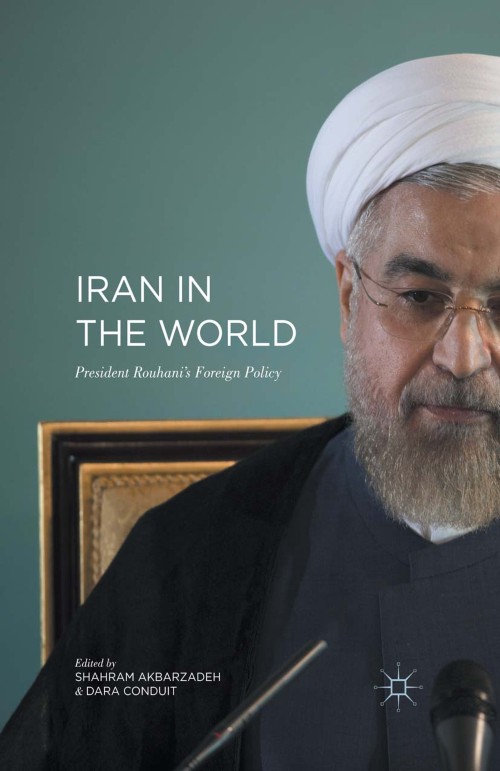
245 10|aIran in the World|h[electronic resource] :|bPresident Rouhani's Foreign Policy /|cedited by Shahram Akbarzadeh, Dara Conduit.
250 |a1st ed. 2016.
264 1|aNew York :|bPalgrave Macmillan US :|bImprint: Palgrave Macmillan,|c2016.
300 |aVII, 205 p.|bonline resource.
336 |atext|btxt|2rdacontent
337 |acomputer|bc|2rdamedia
338 |aonline resource|bcr|2rdacarrier
347 |atext file|bPDF|2rda
520 |aThis book evaluates President Hassan Rouhani's foreign policy during his first two years in office, looking at the case studies of Armenia, Azerbaijan, the UAE, Turkey, and Syria, as well as the Iran-US relationship. President Rouhani came to power in Iran in 2013 promising to reform the country's long-contentious foreign policy. His top priorities were rehabilitating the Iranian economy, ending the nuclear dispute, rebuilding relations with the US, and mending ties with Iran's neighbors. It is argued here that while President Rouhani has made progress in the Iran-US relationship, in nuclear negotiations and some bilateral relationships, his broader success has been hampered by regional political developments and domestic competition. Further, it is contended that his future success will be guided by emerging regional tensions, including whether Iran's neighbors will accept the terms of the nuclear agreement.
532 8 |aAccessibility summary: This PDF was produced prior to the implementation of current accessibility best practices. It supports searchable and selectable text. It may or may not include elements such as described non-text content (images, graphs etc), reflowable text or screen reader compatibility. Users with accessibility needs may experience limitations. Please contact us at accessibilitysupport@springernature.com if you require assistance or an alternative format.
532 8 |aNo reading system accessibility options actively disabled
532 8 |aPublisher contact for further accessibility information: accessibilitysupport@springernature.com
650 0|aMiddle East|xPolitics and government.
650 0|aInternational relations.
650 0|aPolitical science.
650 0|aInternational economic relations.
650 0|aPolitics and war.
650 14|aMiddle Eastern Politics.
650 24|aInternational Relations.
650 24|aPolitical Science.
650 24|aInternational Political Economy’.
650 24|aMilitary and Defence Studies.
650 24|aForeign Policy.
700 1 |aAkbarzadeh, Shahram.|eeditor.|4edt|4http://id.loc.gov/vocabulary/relators/edt
700 1 |aConduit, Dara.|eeditor.|4edt|4http://id.loc.gov/vocabulary/relators/edt
710 2 |aSpringerLink (Online service)
773 0 |tSpringer Nature eBook
776 08|iPrinted edition:|z9781137576323
776 08|iPrinted edition:|z9781349998715
776 08|iPrinted edition:|z9781349995370
776 08|iPrinted edition:|z9781349954148
856 40|uhttps://doi.org/10.1007/978-1-137-58577-6
912 |aZDB-2-POS
912 |aZDB-2-SXPI
950 |aPolitical Science and International Studies (SpringerNature-41174)
950 |aPolitical Science and International Studies (R0) (SpringerNature-43724)