

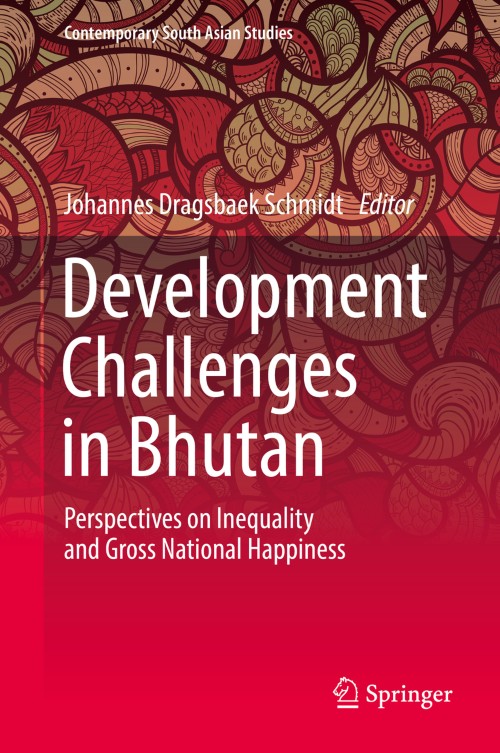
Development Challenges in Bhutan [electronic resource] : Perspectives on Inequality and Gross National Happiness / edited by Johannes Dragsbaek Schmidt.
Erişim Adresi
ISBN
9783319479255
Dil Kodu
İngilizce
Yer Numarası
DK/19468
Basım Bildirimi
1st ed. 2017.
Yayın Bilgisi
Cham : Springer International Publishing : Imprint: Springer, 2017.
Fiziksel Niteleme
XVII, 263 p. 19 illus., 15 illus. in color. online resource.
Dizi
Contemporary South Asian Studies, 2509-4181
İçindekiler Notu
Chapter 1: Development Challenges in Bhutan - Perspectives on Inequality and Gross National Happiness -- Part 1: Comparing Bhutan’s Development Trajectories. - Chapter 2: Sociocultural and Political Change in Bhutan since the 1980s: Reflections from a Distance -- Chapter 3: Donor-assisted Ethno-Nationalism and Education Policy in Bhutan -- Part 2: GNH, Equality and Inclusion/Exclusion -- Chapter 4: Gross National Happiness and Inequality -- Chapter 5: Distress Migration and Individual Happiness in Bhutan -- Part 3: Culture, Legal issues and the Politics of Change -- Chapter 6: A Form of “Democratization Project” in Contemporary Bhutan: Being Apolitical and being Religious -- Chapter 7: Law, “Tradition” and Legitimacy: Contesting Driglam namzha -- Part 4: Governance and Integration -- Chapter 8: Between Hopeful Intentions and Disenchanting Constraints: Lessons Learned in Bhutan’s Nationwide E-Governance Initiative -- Chapter 9: Disaster Governance, Inequality and Poverty Alleviation in Bhutan: Towards integrated and preventive policies -- Part 5: Health, Food and Disparities -- Chapter 10: Regional Disparities and Food Problems in Bhutan -- Chapter 11: Policy Synergies in Health-Promoting Education in Bhutan.
Özet, vb.
This book provides essential insights into Bhutan’s developmental challenges. It analyzes and scrutinizes the sovereign state’s developmental approach, including the idea of Gross National Happiness (GNH), which has replaced Gross National Product (GNP) as a measurement of prosperity. The authors also explore and deconstruct ideational and cultural aspects of knowledge production and present a critical overall assessment of the political economy of education policy, health, ICT and migration in Bhutan. The book is divided into five parts all taking a critical approach towards inequality: Part one offers an assessment of Bhutan’s developmental trajectories; part two deals with GNH, equality and inclusion versus exclusion; part three is devoted to culture, legal issues and the politics of change; and part four to governance and integration; section five addresses health, food and disparities. This book will appeal to all scholars of South Asian affairs and development studies, as well as to diplomats and professionals involved in development aid.
Konu
Economic development.
International economic relations.
Development economics.
Human rights.
Asia __ Politics and government.
Development Studies.
International Political Economy’.
Development Economics.
Human Rights.
Asian Politics.
International economic relations.
Development economics.
Human rights.
Asia __ Politics and government.
Development Studies.
International Political Economy’.
Development Economics.
Human Rights.
Asian Politics.
Diğer Yazarlar
Kurum Adı
Eseri Alıntıla
Referansları kullanmadan önce gözden geçirmeniz ve varsa gerekli düzeltmeleri yapmanız önerilir.
Dijital Kaynak
MARC Görünümü
LEADER 04416nam a22005655i 4500
001 818259
003 TR_AnAIT
005 20260130181750
007 cr nn 008mamaa
008 170322s2017 sz | s |||| 0|eng d
020 |a9783319479255|9978-3-319-47925-5
024 7 |a10.1007/978-3-319-47925-5|2doi
041 |aeng
049 |aTürk Tarih Kurumu Kütüphanesi
050 4|aHD72-88
072 7|aGTF|2bicssc
072 7|aSOC042000|2bisacsh
072 7|aGTP|2thema
082 04|a338.9|223
090 |aDK/19468
245 10|aDevelopment Challenges in Bhutan|h[electronic resource] :|bPerspectives on Inequality and Gross National Happiness /|cedited by Johannes Dragsbaek Schmidt.
250 |a1st ed. 2017.
264 1|aCham :|bSpringer International Publishing :|bImprint: Springer,|c2017.
300 |aXVII, 263 p. 19 illus., 15 illus. in color.|bonline resource.
336 |atext|btxt|2rdacontent
337 |acomputer|bc|2rdamedia
338 |aonline resource|bcr|2rdacarrier
347 |atext file|bPDF|2rda
490 1 |aContemporary South Asian Studies,|x2509-4181
505 0 |aChapter 1: Development Challenges in Bhutan - Perspectives on Inequality and Gross National Happiness -- Part 1: Comparing Bhutan’s Development Trajectories. - Chapter 2: Sociocultural and Political Change in Bhutan since the 1980s: Reflections from a Distance -- Chapter 3: Donor-assisted Ethno-Nationalism and Education Policy in Bhutan -- Part 2: GNH, Equality and Inclusion/Exclusion -- Chapter 4: Gross National Happiness and Inequality -- Chapter 5: Distress Migration and Individual Happiness in Bhutan -- Part 3: Culture, Legal issues and the Politics of Change -- Chapter 6: A Form of “Democratization Project” in Contemporary Bhutan: Being Apolitical and being Religious -- Chapter 7: Law, “Tradition” and Legitimacy: Contesting Driglam namzha -- Part 4: Governance and Integration -- Chapter 8: Between Hopeful Intentions and Disenchanting Constraints: Lessons Learned in Bhutan’s Nationwide E-Governance Initiative -- Chapter 9: Disaster Governance, Inequality and Poverty Alleviation in Bhutan: Towards integrated and preventive policies -- Part 5: Health, Food and Disparities -- Chapter 10: Regional Disparities and Food Problems in Bhutan -- Chapter 11: Policy Synergies in Health-Promoting Education in Bhutan.
520 |aThis book provides essential insights into Bhutan’s developmental challenges. It analyzes and scrutinizes the sovereign state’s developmental approach, including the idea of Gross National Happiness (GNH), which has replaced Gross National Product (GNP) as a measurement of prosperity. The authors also explore and deconstruct ideational and cultural aspects of knowledge production and present a critical overall assessment of the political economy of education policy, health, ICT and migration in Bhutan. The book is divided into five parts all taking a critical approach towards inequality: Part one offers an assessment of Bhutan’s developmental trajectories; part two deals with GNH, equality and inclusion versus exclusion; part three is devoted to culture, legal issues and the politics of change; and part four to governance and integration; section five addresses health, food and disparities. This book will appeal to all scholars of South Asian affairs and development studies, as well as to diplomats and professionals involved in development aid.
650 0|aEconomic development.
650 0|aInternational economic relations.
650 0|aDevelopment economics.
650 0|aHuman rights.
650 0|aAsia|xPolitics and government.
650 14|aDevelopment Studies.
650 24|aInternational Political Economy’.
650 24|aDevelopment Economics.
650 24|aHuman Rights.
650 24|aAsian Politics.
700 1 |aSchmidt, Johannes Dragsbaek.|eeditor.|4edt|4http://id.loc.gov/vocabulary/relators/edt
710 2 |aSpringerLink (Online service)
773 0 |tSpringer Nature eBook
776 08|iPrinted edition:|z9783319479248
776 08|iPrinted edition:|z9783319479262
776 08|iPrinted edition:|z9783319838601
830 0|aContemporary South Asian Studies,|x2509-4181
856 40|uhttps://doi.org/10.1007/978-3-319-47925-5
912 |aZDB-2-POS
912 |aZDB-2-SXPI
950 |aPolitical Science and International Studies (SpringerNature-41174)
950 |aPolitical Science and International Studies (R0) (SpringerNature-43724)
001 818259
003 TR_AnAIT
005 20260130181750
007 cr nn 008mamaa
008 170322s2017 sz | s |||| 0|eng d
020 |a9783319479255|9978-3-319-47925-5
024 7 |a10.1007/978-3-319-47925-5|2doi
041 |aeng
049 |aTürk Tarih Kurumu Kütüphanesi
050 4|aHD72-88
072 7|aGTF|2bicssc
072 7|aSOC042000|2bisacsh
072 7|aGTP|2thema
082 04|a338.9|223
090 |aDK/19468
245 10|aDevelopment Challenges in Bhutan|h[electronic resource] :|bPerspectives on Inequality and Gross National Happiness /|cedited by Johannes Dragsbaek Schmidt.
250 |a1st ed. 2017.
264 1|aCham :|bSpringer International Publishing :|bImprint: Springer,|c2017.
300 |aXVII, 263 p. 19 illus., 15 illus. in color.|bonline resource.
336 |atext|btxt|2rdacontent
337 |acomputer|bc|2rdamedia
338 |aonline resource|bcr|2rdacarrier
347 |atext file|bPDF|2rda
490 1 |aContemporary South Asian Studies,|x2509-4181
505 0 |aChapter 1: Development Challenges in Bhutan - Perspectives on Inequality and Gross National Happiness -- Part 1: Comparing Bhutan’s Development Trajectories. - Chapter 2: Sociocultural and Political Change in Bhutan since the 1980s: Reflections from a Distance -- Chapter 3: Donor-assisted Ethno-Nationalism and Education Policy in Bhutan -- Part 2: GNH, Equality and Inclusion/Exclusion -- Chapter 4: Gross National Happiness and Inequality -- Chapter 5: Distress Migration and Individual Happiness in Bhutan -- Part 3: Culture, Legal issues and the Politics of Change -- Chapter 6: A Form of “Democratization Project” in Contemporary Bhutan: Being Apolitical and being Religious -- Chapter 7: Law, “Tradition” and Legitimacy: Contesting Driglam namzha -- Part 4: Governance and Integration -- Chapter 8: Between Hopeful Intentions and Disenchanting Constraints: Lessons Learned in Bhutan’s Nationwide E-Governance Initiative -- Chapter 9: Disaster Governance, Inequality and Poverty Alleviation in Bhutan: Towards integrated and preventive policies -- Part 5: Health, Food and Disparities -- Chapter 10: Regional Disparities and Food Problems in Bhutan -- Chapter 11: Policy Synergies in Health-Promoting Education in Bhutan.
520 |aThis book provides essential insights into Bhutan’s developmental challenges. It analyzes and scrutinizes the sovereign state’s developmental approach, including the idea of Gross National Happiness (GNH), which has replaced Gross National Product (GNP) as a measurement of prosperity. The authors also explore and deconstruct ideational and cultural aspects of knowledge production and present a critical overall assessment of the political economy of education policy, health, ICT and migration in Bhutan. The book is divided into five parts all taking a critical approach towards inequality: Part one offers an assessment of Bhutan’s developmental trajectories; part two deals with GNH, equality and inclusion versus exclusion; part three is devoted to culture, legal issues and the politics of change; and part four to governance and integration; section five addresses health, food and disparities. This book will appeal to all scholars of South Asian affairs and development studies, as well as to diplomats and professionals involved in development aid.
650 0|aEconomic development.
650 0|aInternational economic relations.
650 0|aDevelopment economics.
650 0|aHuman rights.
650 0|aAsia|xPolitics and government.
650 14|aDevelopment Studies.
650 24|aInternational Political Economy’.
650 24|aDevelopment Economics.
650 24|aHuman Rights.
650 24|aAsian Politics.
700 1 |aSchmidt, Johannes Dragsbaek.|eeditor.|4edt|4http://id.loc.gov/vocabulary/relators/edt
710 2 |aSpringerLink (Online service)
773 0 |tSpringer Nature eBook
776 08|iPrinted edition:|z9783319479248
776 08|iPrinted edition:|z9783319479262
776 08|iPrinted edition:|z9783319838601
830 0|aContemporary South Asian Studies,|x2509-4181
856 40|uhttps://doi.org/10.1007/978-3-319-47925-5
912 |aZDB-2-POS
912 |aZDB-2-SXPI
950 |aPolitical Science and International Studies (SpringerNature-41174)
950 |aPolitical Science and International Studies (R0) (SpringerNature-43724)
Materyaller
Depodan talep edilen materyal sadece kütüphane içerisinde kullanılmaktadır.
Materyal dışarıya ödünç verilmemektedir.
Materyal dışarıya ödünç verilmemektedir.
