LEADER 03634nam a22004935i 4500
001 818267
003 TR_AnAIT
005 20260130181711
007 cr nn 008mamaa
008 161027s2016 sz | s |||| 0|eng d
020 |a9783319408897|9978-3-319-40889-7
024 7 |a10.1007/978-3-319-40889-7|2doi
041 |aeng
049 |aTürk Tarih Kurumu Kütüphanesi
050 4|aJF1001-1048.52
072 7|aJPHF|2bicssc
072 7|aPOL008000|2bisacsh
072 7|aJPHF|2thema
082 04|a324.6|223
090 |aDK/19476
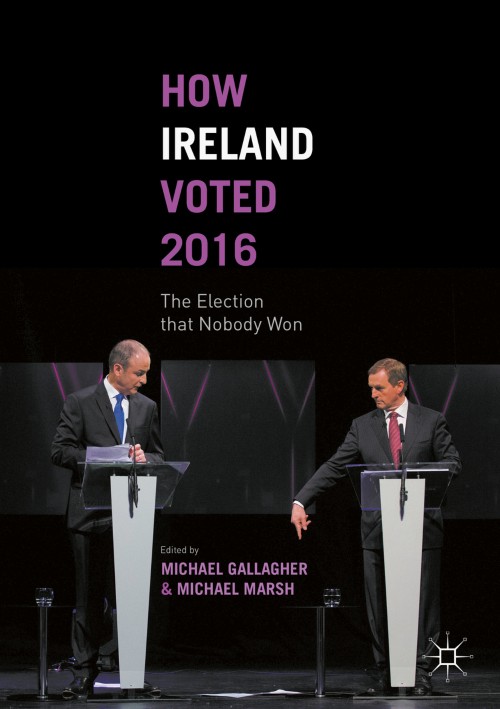
245 10|aHow Ireland Voted 2016|h[electronic resource] :|bThe Election that Nobody Won /|cedited by Michael Gallagher, Michael Marsh.
250 |a1st ed. 2016.
264 1|aCham :|bSpringer International Publishing :|bImprint: Palgrave Macmillan,|c2016.
300 |aLII, 327 p. 100 illus., 51 illus. in color.|bonline resource.
336 |atext|btxt|2rdacontent
337 |acomputer|bc|2rdamedia
338 |aonline resource|bcr|2rdacarrier
347 |atext file|bPDF|2rda
505 0 |aChapter 1. The Background to the Election -- Chapter 2. The Selection of Candidates -- Chapter 3. Campaign Strategies and Political Marketing -- Chapter 4. The View from the Campaign Trail -- Chapter 5. The Election results and the New Dáil -- Chapter 6. How the Voters Decided -- Chapter 7. Women and the Election -- Chapter 8. The Seanad Election -- Chapter 9. The Formation of the Government -- Chapter 10. Implications for the Irish Party System.
520 |aThis book is the definitive analysis of the 2016 Irish general election and is the eighth book in the well-established How Ireland Voted series. The 2011 election in Ireland was characterised as an earthquake, but the aftershocks visible in the 2016 election were equally dramatic. This election saw the rout of the government that had presided over a remarkable economic recovery, and marked a new low for the strength of the traditional party system, as smaller parties and independents attracted almost half of all votes. The first chapter sets the context, and later ones investigate the extent to which the outgoing government fulfilled its 2011 pledges, and how candidates were selected. The success or otherwise of campaign strategies is assessed, the results and the behaviour of voters are analysed, and the aftermath, when it took a record length of time to form a government, is explored. Other chapters examine the consequence of new gender quotas for candidate selection, consider thereasons for the unusual success of independents, and reflect on the implications. The book also reveals intriguing insights into the candidates’ experiences of the election, both successful and unsuccessful. It will be of use to students, teachers and scholars of Irish politics, as well as the wider reader interested in Irish politics and elections.
650 0|aElections.
650 0|aEurope|xPolitics and government.
650 0|aPolitical science.
650 14|aElectoral Politics.
650 24|aEuropean Politics.
650 24|aPolitical Science.
700 1 |aGallagher, Michael.|eeditor.|4edt|4http://id.loc.gov/vocabulary/relators/edt
700 1 |aMarsh, Michael.|eeditor.|4edt|4http://id.loc.gov/vocabulary/relators/edt
710 2 |aSpringerLink (Online service)
773 0 |tSpringer Nature eBook
776 08|iPrinted edition:|z9783319408880
776 08|iPrinted edition:|z9783319408903
856 40|uhttps://doi.org/10.1007/978-3-319-40889-7
912 |aZDB-2-POS
912 |aZDB-2-SXPI
950 |aPolitical Science and International Studies (SpringerNature-41174)
950 |aPolitical Science and International Studies (R0) (SpringerNature-43724)