

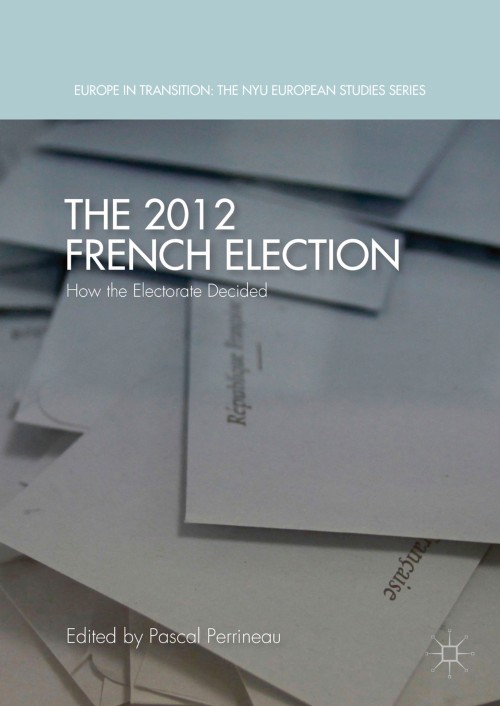
The 2012 French Election [electronic resource] : How the Electorate Decided / edited by Pascal Perrineau.
Erişim Adresi
ISBN
9781349949571
Dil Kodu
İngilizce
Yer Numarası
DK/19672
Basım Bildirimi
1st ed. 2016.
Yayın Bilgisi
New York : Palgrave Macmillan US : Imprint: Palgrave Macmillan, 2016.
Fiziksel Niteleme
XVII, 243 p. 25 illus., 19 illus. in color. online resource.
Dizi
Europe in Transition: The NYU European Studies Series, 2946-3645
İçindekiler Notu
INTRODUCTION by Pascal Perrineau -- PART 1: Perceptions of the Campaign -- Chapter 1: Pre-determined Issues in the 2012 Presidential election by Gilles Finchelstein -- Chapter 2: The Candidates: Crystallized Images by Daniel Boy, Jean Chiche -- Chapter 3: Information Gathering and Campaign Following among Voters: The Paradox of Electoral Campaigns by Thierry Vedel -- PART 2: Voter Mobility and Mobilization -- Chapter 4: Electoral Turnout: Mobilization in all its Diversity by Anne Muxel -- Chapter 5: Fluctuations on the Left by Flora Chanvril, Henry Rey -- Chapter 6: Shifts in Voting Decisions on the Right: From a Centripetal Victory to a Centrifugal Defeat by Bruno Cautrès, Sylvie Strudel -- Chapter 7: Fluctuations between the Left and the Right: Expressions of Protest that Benefitted François Hollande by Anne Muxel -- Chapter 8: Fluctuations at the Center: a Short-lived and Fragile Breakthrough for François Bayrou by Pierre Bréchon -- PART 3: Making a Voting Choice -- Chapter 9: The Moment of Electoral Choice by Pascal Perrineau, Brice Teinturier -- Chapter 10: The Impact of Issues on Electoral Choice by Dominique Reynié -- Chapter 11: Narrowing the Gap in the Second Round or the ‘Referenda’ of the 6th of May 2012 by Jérôme Jaffré -- PART 4: Expectations of the Incoming President -- Chapter 12: Expectations of the New President by Mariette Sineau, Bruno Cautrès -- Chapter 13: A Review of the First Hundred Days: a ‘Normal’ presidency at a Time of Unprecedented Crisis by Jérôme Fourquet -- CONCLUSION by Pascal Perrineau -- BIBLIOGRAPHY.
Özet, vb.
This edited volume is based on a highly original survey carried out between November 2011 and June 2012 among a panel of 6,000 voters. The panel was interviewed on 12 separate occasions about how and why they made their voting choices. The book focuses on how electoral choices are made and how these choices evolve during the short time-span of an election campaign. The analysis of the 2012 electoral result shows more than ever that voting choices are the fruit of interweaving timelines: the long term period that characterizes voters’ predispositions and their predictions of a possible scenario; the shorter period of time during which the campaign unfolds where those predispositions are either confirmed, called into question, or undone; and the moment when the final choice is made. This is the first time the electoral decision-making process during a French Presidential election has been systematically studied. .
Konu
Europe __ Politics and government.
Elections.
Political science.
Political sociology.
Demography.
Population.
Sociology __ Methodology.
European Politics.
Electoral Politics.
Political Science.
Political Sociology.
Population and Demography.
Sociological Methods.
Elections.
Political science.
Political sociology.
Demography.
Population.
Sociology __ Methodology.
European Politics.
Electoral Politics.
Political Science.
Political Sociology.
Population and Demography.
Sociological Methods.
Diğer Yazarlar
Kurum Adı
Eseri Alıntıla
Referansları kullanmadan önce gözden geçirmeniz ve varsa gerekli düzeltmeleri yapmanız önerilir.
Dijital Kaynak
MARC Görünümü
LEADER 04731nam a22006135i 4500
001 818464
003 TR_AnAIT
005 20260130181008
007 cr nn 008mamaa
008 160909s2016 xxu| s |||| 0|eng d
020 |a9781349949571|9978-1-349-94957-1
024 7 |a10.1057/978-1-349-94957-1|2doi
041 |aeng
049 |aTürk Tarih Kurumu Kütüphanesi
050 4|aJN1-9692.2
072 7|aJP|2bicssc
072 7|a1D|2bicssc
072 7|aPOL058000|2bisacsh
072 7|aJP|x1D|2thema
082 04|a320.94|223
090 |aDK/19672
245 14|aThe 2012 French Election|h[electronic resource] :|bHow the Electorate Decided /|cedited by Pascal Perrineau.
250 |a1st ed. 2016.
264 1|aNew York :|bPalgrave Macmillan US :|bImprint: Palgrave Macmillan,|c2016.
300 |aXVII, 243 p. 25 illus., 19 illus. in color.|bonline resource.
336 |atext|btxt|2rdacontent
337 |acomputer|bc|2rdamedia
338 |aonline resource|bcr|2rdacarrier
347 |atext file|bPDF|2rda
490 1 |aEurope in Transition: The NYU European Studies Series,|x2946-3645
505 0 |aINTRODUCTION by Pascal Perrineau -- PART 1: Perceptions of the Campaign -- Chapter 1: Pre-determined Issues in the 2012 Presidential election by Gilles Finchelstein -- Chapter 2: The Candidates: Crystallized Images by Daniel Boy, Jean Chiche -- Chapter 3: Information Gathering and Campaign Following among Voters: The Paradox of Electoral Campaigns by Thierry Vedel -- PART 2: Voter Mobility and Mobilization -- Chapter 4: Electoral Turnout: Mobilization in all its Diversity by Anne Muxel -- Chapter 5: Fluctuations on the Left by Flora Chanvril, Henry Rey -- Chapter 6: Shifts in Voting Decisions on the Right: From a Centripetal Victory to a Centrifugal Defeat by Bruno Cautrès, Sylvie Strudel -- Chapter 7: Fluctuations between the Left and the Right: Expressions of Protest that Benefitted François Hollande by Anne Muxel -- Chapter 8: Fluctuations at the Center: a Short-lived and Fragile Breakthrough for François Bayrou by Pierre Bréchon -- PART 3: Making a Voting Choice -- Chapter 9: The Moment of Electoral Choice by Pascal Perrineau, Brice Teinturier -- Chapter 10: The Impact of Issues on Electoral Choice by Dominique Reynié -- Chapter 11: Narrowing the Gap in the Second Round or the ‘Referenda’ of the 6th of May 2012 by Jérôme Jaffré -- PART 4: Expectations of the Incoming President -- Chapter 12: Expectations of the New President by Mariette Sineau, Bruno Cautrès -- Chapter 13: A Review of the First Hundred Days: a ‘Normal’ presidency at a Time of Unprecedented Crisis by Jérôme Fourquet -- CONCLUSION by Pascal Perrineau -- BIBLIOGRAPHY.
520 |aThis edited volume is based on a highly original survey carried out between November 2011 and June 2012 among a panel of 6,000 voters. The panel was interviewed on 12 separate occasions about how and why they made their voting choices. The book focuses on how electoral choices are made and how these choices evolve during the short time-span of an election campaign. The analysis of the 2012 electoral result shows more than ever that voting choices are the fruit of interweaving timelines: the long term period that characterizes voters’ predispositions and their predictions of a possible scenario; the shorter period of time during which the campaign unfolds where those predispositions are either confirmed, called into question, or undone; and the moment when the final choice is made. This is the first time the electoral decision-making process during a French Presidential election has been systematically studied. .
650 0|aEurope|xPolitics and government.
650 0|aElections.
650 0|aPolitical science.
650 0|aPolitical sociology.
650 0|aDemography.
650 0|aPopulation.
650 0|aSociology|xMethodology.
650 14|aEuropean Politics.
650 24|aElectoral Politics.
650 24|aPolitical Science.
650 24|aPolitical Sociology.
650 24|aPopulation and Demography.
650 24|aSociological Methods.
700 1 |aPerrineau, Pascal.|eeditor.|4edt|4http://id.loc.gov/vocabulary/relators/edt
710 2 |aSpringerLink (Online service)
773 0 |tSpringer Nature eBook
776 08|iPrinted edition:|z9781349949564
776 08|iPrinted edition:|z9781349949588
776 08|iPrinted edition:|z9781349956869
830 0|aEurope in Transition: The NYU European Studies Series,|x2946-3645
856 40|uhttps://doi.org/10.1057/978-1-349-94957-1
912 |aZDB-2-POS
912 |aZDB-2-SXPI
950 |aPolitical Science and International Studies (SpringerNature-41174)
950 |aPolitical Science and International Studies (R0) (SpringerNature-43724)
001 818464
003 TR_AnAIT
005 20260130181008
007 cr nn 008mamaa
008 160909s2016 xxu| s |||| 0|eng d
020 |a9781349949571|9978-1-349-94957-1
024 7 |a10.1057/978-1-349-94957-1|2doi
041 |aeng
049 |aTürk Tarih Kurumu Kütüphanesi
050 4|aJN1-9692.2
072 7|aJP|2bicssc
072 7|a1D|2bicssc
072 7|aPOL058000|2bisacsh
072 7|aJP|x1D|2thema
082 04|a320.94|223
090 |aDK/19672
245 14|aThe 2012 French Election|h[electronic resource] :|bHow the Electorate Decided /|cedited by Pascal Perrineau.
250 |a1st ed. 2016.
264 1|aNew York :|bPalgrave Macmillan US :|bImprint: Palgrave Macmillan,|c2016.
300 |aXVII, 243 p. 25 illus., 19 illus. in color.|bonline resource.
336 |atext|btxt|2rdacontent
337 |acomputer|bc|2rdamedia
338 |aonline resource|bcr|2rdacarrier
347 |atext file|bPDF|2rda
490 1 |aEurope in Transition: The NYU European Studies Series,|x2946-3645
505 0 |aINTRODUCTION by Pascal Perrineau -- PART 1: Perceptions of the Campaign -- Chapter 1: Pre-determined Issues in the 2012 Presidential election by Gilles Finchelstein -- Chapter 2: The Candidates: Crystallized Images by Daniel Boy, Jean Chiche -- Chapter 3: Information Gathering and Campaign Following among Voters: The Paradox of Electoral Campaigns by Thierry Vedel -- PART 2: Voter Mobility and Mobilization -- Chapter 4: Electoral Turnout: Mobilization in all its Diversity by Anne Muxel -- Chapter 5: Fluctuations on the Left by Flora Chanvril, Henry Rey -- Chapter 6: Shifts in Voting Decisions on the Right: From a Centripetal Victory to a Centrifugal Defeat by Bruno Cautrès, Sylvie Strudel -- Chapter 7: Fluctuations between the Left and the Right: Expressions of Protest that Benefitted François Hollande by Anne Muxel -- Chapter 8: Fluctuations at the Center: a Short-lived and Fragile Breakthrough for François Bayrou by Pierre Bréchon -- PART 3: Making a Voting Choice -- Chapter 9: The Moment of Electoral Choice by Pascal Perrineau, Brice Teinturier -- Chapter 10: The Impact of Issues on Electoral Choice by Dominique Reynié -- Chapter 11: Narrowing the Gap in the Second Round or the ‘Referenda’ of the 6th of May 2012 by Jérôme Jaffré -- PART 4: Expectations of the Incoming President -- Chapter 12: Expectations of the New President by Mariette Sineau, Bruno Cautrès -- Chapter 13: A Review of the First Hundred Days: a ‘Normal’ presidency at a Time of Unprecedented Crisis by Jérôme Fourquet -- CONCLUSION by Pascal Perrineau -- BIBLIOGRAPHY.
520 |aThis edited volume is based on a highly original survey carried out between November 2011 and June 2012 among a panel of 6,000 voters. The panel was interviewed on 12 separate occasions about how and why they made their voting choices. The book focuses on how electoral choices are made and how these choices evolve during the short time-span of an election campaign. The analysis of the 2012 electoral result shows more than ever that voting choices are the fruit of interweaving timelines: the long term period that characterizes voters’ predispositions and their predictions of a possible scenario; the shorter period of time during which the campaign unfolds where those predispositions are either confirmed, called into question, or undone; and the moment when the final choice is made. This is the first time the electoral decision-making process during a French Presidential election has been systematically studied. .
650 0|aEurope|xPolitics and government.
650 0|aElections.
650 0|aPolitical science.
650 0|aPolitical sociology.
650 0|aDemography.
650 0|aPopulation.
650 0|aSociology|xMethodology.
650 14|aEuropean Politics.
650 24|aElectoral Politics.
650 24|aPolitical Science.
650 24|aPolitical Sociology.
650 24|aPopulation and Demography.
650 24|aSociological Methods.
700 1 |aPerrineau, Pascal.|eeditor.|4edt|4http://id.loc.gov/vocabulary/relators/edt
710 2 |aSpringerLink (Online service)
773 0 |tSpringer Nature eBook
776 08|iPrinted edition:|z9781349949564
776 08|iPrinted edition:|z9781349949588
776 08|iPrinted edition:|z9781349956869
830 0|aEurope in Transition: The NYU European Studies Series,|x2946-3645
856 40|uhttps://doi.org/10.1057/978-1-349-94957-1
912 |aZDB-2-POS
912 |aZDB-2-SXPI
950 |aPolitical Science and International Studies (SpringerNature-41174)
950 |aPolitical Science and International Studies (R0) (SpringerNature-43724)
Materyaller
Depodan talep edilen materyal sadece kütüphane içerisinde kullanılmaktadır.
Materyal dışarıya ödünç verilmemektedir.
Materyal dışarıya ödünç verilmemektedir.
