

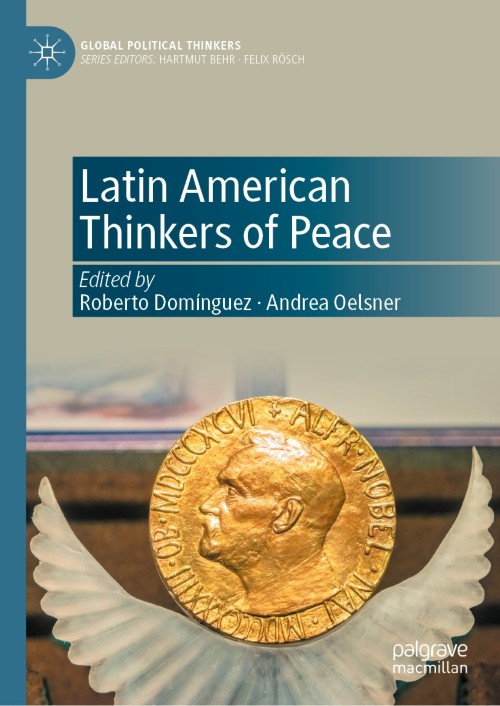
Latin American Thinkers of Peace [electronic resource] / edited by Roberto Domínguez, Andrea Oelsner.
Erişim Adresi
ISBN
9783031361074
Dil Kodu
İngilizce
Yer Numarası
DK/19743
Basım Bildirimi
1st ed. 2023.
Yayın Bilgisi
Cham : Springer International Publishing : Imprint: Palgrave Macmillan, 2023.
Fiziksel Niteleme
XII, 186 p. 1 illus. online resource.
Dizi
Global Political Thinkers, 2946-3882
İçindekiler Notu
Introduction -- Chapter 1: An Intellectual of the Americas: Carlos Saavedra Lamas’ vision for peace -- Chapter 2: Adolfo Pérez Esquivel: Grassroots movements and Human Rights -- Chapter 3: The International Political Thought of Alfonso García Robles -- Chapter 4: Oscar Arias and Reconciliation in Central America -- Chapter 5: Rigoberta Menchú: Peacebuilding through respect for diversity -- Chapter 6: Juan Manuel Santos: Colombian diplomacy for peace (2010-2018) -- Chapter 7: Javier Pérez de Cuellar: United Nations -- Conclusion.
Özet, vb.
“This welcomed and important book immensely enriches the literatures on peace studies, Global IR, and Latin American contributions to international society. It focuses upon seven Latin American Nobel Peace recipients ranging from Carlos Saavedra Lamas (1936) to Juan Manuel Santos (2016), and their impact on ideas and practices of peace in Latin America and beyond, including issue-areas such as mediation and diplomacy, human rights, nuclear disarmament, indigenous rights, peacekeeping, reconciliation, and ending civil wars.” — Prof. Arie M. Kacowicz, Chaim Weizmann Chair in International Relations, Hebrew University of Jerusalem, Israel “From the social activism of Rigoberta Menchú to the global initiatives of UN Secretary-General Javier Pérez de Cuéllar, this book explores the connection between the power of ideas and the actions of peace leaders to build a better world. The authors’ analyses serve as a reminder to academics and diplomats of the importance of taking small and large steps to manage and transform conflict and create institutions with a human focus.” — Ambassador Claudia Fuentes Julio, Permanent Representative of Chile to the United Nations and other International Organizations in Geneva, Switzerland This book analyzes the contributions of seven Latin American peace actors to reconciliation and conflict resolution: Carlos Saavedra Lamas, Adolfo Pérez Esquivel, Alfonso García Robles, Óscar Arias Sánchez, Rigoberta Menchú Tum, Juan Manuel Santos, and Javier Pérez de Cuéllar. Working within an eclectic conceptual approach to systematize the difusion of their ideas, the chapters build upon three fundamentals of mainstream constructivism: a) change across time and space in each peace actor’s lifetime; b) socialization through changing norms, rules, and language; and c) processes of interaction in which they chose strategies and built networks. In their respective historical times, their views and ideas transcended the confines of Latin America to influence global political thought and produce change that favored peace. Roberto Domínguez is Professor of International Relations at Suffolk University, USA. Andrea Oelsner is Associate Professor and Director of the Political Science and IR Programs at the University of San Andrés, Argentina.
Konu
Political science.
America __ Politics and government.
International relations.
Peace.
Political leadership.
Political Theory.
American Politics.
International Relations Theory.
Peace and Conflict Studies.
Political Leadership.
America __ Politics and government.
International relations.
Peace.
Political leadership.
Political Theory.
American Politics.
International Relations Theory.
Peace and Conflict Studies.
Political Leadership.
Kurum Adı
Eseri Alıntıla
Referansları kullanmadan önce gözden geçirmeniz ve varsa gerekli düzeltmeleri yapmanız önerilir.
Dijital Kaynak
MARC Görünümü
LEADER 06156nam a22006855i 4500
001 818535
003 TR_AnAIT
005 20260130180733
007 cr nn 008mamaa
008 230828s2023 sz | s |||| 0|eng d
020 |a9783031361074|9978-3-031-36107-4
024 7 |a10.1007/978-3-031-36107-4|2doi
041 |aeng
049 |aTürk Tarih Kurumu Kütüphanesi
050 4|aJC11-607
072 7|aJPA|2bicssc
072 7|aPOL010000|2bisacsh
072 7|aJPA|2thema
082 04|a320.01|223
090 |aDK/19743
245 10|aLatin American Thinkers of Peace|h[electronic resource] /|cedited by Roberto Domínguez, Andrea Oelsner.
250 |a1st ed. 2023.
264 1|aCham :|bSpringer International Publishing :|bImprint: Palgrave Macmillan,|c2023.
300 |aXII, 186 p. 1 illus.|bonline resource.
336 |atext|btxt|2rdacontent
337 |acomputer|bc|2rdamedia
338 |aonline resource|bcr|2rdacarrier
341 0 |bTable of contents navigation|2onix
341 0 |bSingle logical reading order|2onix
341 0 |bUse of color is not sole means of conveying information|2onix
341 0 |bUse of high contrast between text and background color|2onix
341 0 |bNext / Previous structural navigation|2onix
341 0 |bAll non-decorative content supports reading without sight|2onix
347 |atext file|bPDF|2rda
490 1 |aGlobal Political Thinkers,|x2946-3882
505 0 |aIntroduction -- Chapter 1: An Intellectual of the Americas: Carlos Saavedra Lamas’ vision for peace -- Chapter 2: Adolfo Pérez Esquivel: Grassroots movements and Human Rights -- Chapter 3: The International Political Thought of Alfonso García Robles -- Chapter 4: Oscar Arias and Reconciliation in Central America -- Chapter 5: Rigoberta Menchú: Peacebuilding through respect for diversity -- Chapter 6: Juan Manuel Santos: Colombian diplomacy for peace (2010-2018) -- Chapter 7: Javier Pérez de Cuellar: United Nations -- Conclusion.
520 |a“This welcomed and important book immensely enriches the literatures on peace studies, Global IR, and Latin American contributions to international society. It focuses upon seven Latin American Nobel Peace recipients ranging from Carlos Saavedra Lamas (1936) to Juan Manuel Santos (2016), and their impact on ideas and practices of peace in Latin America and beyond, including issue-areas such as mediation and diplomacy, human rights, nuclear disarmament, indigenous rights, peacekeeping, reconciliation, and ending civil wars.” — Prof. Arie M. Kacowicz, Chaim Weizmann Chair in International Relations, Hebrew University of Jerusalem, Israel “From the social activism of Rigoberta Menchú to the global initiatives of UN Secretary-General Javier Pérez de Cuéllar, this book explores the connection between the power of ideas and the actions of peace leaders to build a better world. The authors’ analyses serve as a reminder to academics and diplomats of the importance of taking small and large steps to manage and transform conflict and create institutions with a human focus.” — Ambassador Claudia Fuentes Julio, Permanent Representative of Chile to the United Nations and other International Organizations in Geneva, Switzerland This book analyzes the contributions of seven Latin American peace actors to reconciliation and conflict resolution: Carlos Saavedra Lamas, Adolfo Pérez Esquivel, Alfonso García Robles, Óscar Arias Sánchez, Rigoberta Menchú Tum, Juan Manuel Santos, and Javier Pérez de Cuéllar. Working within an eclectic conceptual approach to systematize the difusion of their ideas, the chapters build upon three fundamentals of mainstream constructivism: a) change across time and space in each peace actor’s lifetime; b) socialization through changing norms, rules, and language; and c) processes of interaction in which they chose strategies and built networks. In their respective historical times, their views and ideas transcended the confines of Latin America to influence global political thought and produce change that favored peace. Roberto Domínguez is Professor of International Relations at Suffolk University, USA. Andrea Oelsner is Associate Professor and Director of the Political Science and IR Programs at the University of San Andrés, Argentina.
532 8 |aAccessibility summary: This PDF does not fully comply with PDF/UA standards, but does feature limited screen reader support, bookmarks for easy navigation and searchable, selectable text. Users of assistive technologies may experience difficulty navigating or interpreting content in this document. We recognize the importance of accessibility, and we welcome queries about accessibility for any of our products. If you have a question or an access need, please get in touch with us at accessibilitysupport@springernature.com.
532 8 |aNo reading system accessibility options actively disabled
532 8 |aPublisher contact for further accessibility information: accessibilitysupport@springernature.com
650 0|aPolitical science.
650 0|aAmerica|xPolitics and government.
650 0|aInternational relations.
650 0|aPeace.
650 0|aPolitical leadership.
650 14|aPolitical Theory.
650 24|aAmerican Politics.
650 24|aInternational Relations Theory.
650 24|aPeace and Conflict Studies.
650 24|aPolitical Leadership.
700 1 |aDomínguez, Roberto.|eeditor.|4edt|4http://id.loc.gov/vocabulary/relators/edt
700 1 |aOelsner, Andrea.|eeditor.|0(orcid)0000-0002-8867-1321|1https://orcid.org/0000-0002-8867-1321|4edt|4http://id.loc.gov/vocabulary/relators/edt
710 2 |aSpringerLink (Online service)
773 0 |tSpringer Nature eBook
776 08|iPrinted edition:|z9783031361067
776 08|iPrinted edition:|z9783031361081
776 08|iPrinted edition:|z9783031361098
830 0|aGlobal Political Thinkers,|x2946-3882
856 40|uhttps://doi.org/10.1007/978-3-031-36107-4
912 |aZDB-2-POS
912 |aZDB-2-SXPI
950 |aPolitical Science and International Studies (SpringerNature-41174)
950 |aPolitical Science and International Studies (R0) (SpringerNature-43724)
001 818535
003 TR_AnAIT
005 20260130180733
007 cr nn 008mamaa
008 230828s2023 sz | s |||| 0|eng d
020 |a9783031361074|9978-3-031-36107-4
024 7 |a10.1007/978-3-031-36107-4|2doi
041 |aeng
049 |aTürk Tarih Kurumu Kütüphanesi
050 4|aJC11-607
072 7|aJPA|2bicssc
072 7|aPOL010000|2bisacsh
072 7|aJPA|2thema
082 04|a320.01|223
090 |aDK/19743
245 10|aLatin American Thinkers of Peace|h[electronic resource] /|cedited by Roberto Domínguez, Andrea Oelsner.
250 |a1st ed. 2023.
264 1|aCham :|bSpringer International Publishing :|bImprint: Palgrave Macmillan,|c2023.
300 |aXII, 186 p. 1 illus.|bonline resource.
336 |atext|btxt|2rdacontent
337 |acomputer|bc|2rdamedia
338 |aonline resource|bcr|2rdacarrier
341 0 |bTable of contents navigation|2onix
341 0 |bSingle logical reading order|2onix
341 0 |bUse of color is not sole means of conveying information|2onix
341 0 |bUse of high contrast between text and background color|2onix
341 0 |bNext / Previous structural navigation|2onix
341 0 |bAll non-decorative content supports reading without sight|2onix
347 |atext file|bPDF|2rda
490 1 |aGlobal Political Thinkers,|x2946-3882
505 0 |aIntroduction -- Chapter 1: An Intellectual of the Americas: Carlos Saavedra Lamas’ vision for peace -- Chapter 2: Adolfo Pérez Esquivel: Grassroots movements and Human Rights -- Chapter 3: The International Political Thought of Alfonso García Robles -- Chapter 4: Oscar Arias and Reconciliation in Central America -- Chapter 5: Rigoberta Menchú: Peacebuilding through respect for diversity -- Chapter 6: Juan Manuel Santos: Colombian diplomacy for peace (2010-2018) -- Chapter 7: Javier Pérez de Cuellar: United Nations -- Conclusion.
520 |a“This welcomed and important book immensely enriches the literatures on peace studies, Global IR, and Latin American contributions to international society. It focuses upon seven Latin American Nobel Peace recipients ranging from Carlos Saavedra Lamas (1936) to Juan Manuel Santos (2016), and their impact on ideas and practices of peace in Latin America and beyond, including issue-areas such as mediation and diplomacy, human rights, nuclear disarmament, indigenous rights, peacekeeping, reconciliation, and ending civil wars.” — Prof. Arie M. Kacowicz, Chaim Weizmann Chair in International Relations, Hebrew University of Jerusalem, Israel “From the social activism of Rigoberta Menchú to the global initiatives of UN Secretary-General Javier Pérez de Cuéllar, this book explores the connection between the power of ideas and the actions of peace leaders to build a better world. The authors’ analyses serve as a reminder to academics and diplomats of the importance of taking small and large steps to manage and transform conflict and create institutions with a human focus.” — Ambassador Claudia Fuentes Julio, Permanent Representative of Chile to the United Nations and other International Organizations in Geneva, Switzerland This book analyzes the contributions of seven Latin American peace actors to reconciliation and conflict resolution: Carlos Saavedra Lamas, Adolfo Pérez Esquivel, Alfonso García Robles, Óscar Arias Sánchez, Rigoberta Menchú Tum, Juan Manuel Santos, and Javier Pérez de Cuéllar. Working within an eclectic conceptual approach to systematize the difusion of their ideas, the chapters build upon three fundamentals of mainstream constructivism: a) change across time and space in each peace actor’s lifetime; b) socialization through changing norms, rules, and language; and c) processes of interaction in which they chose strategies and built networks. In their respective historical times, their views and ideas transcended the confines of Latin America to influence global political thought and produce change that favored peace. Roberto Domínguez is Professor of International Relations at Suffolk University, USA. Andrea Oelsner is Associate Professor and Director of the Political Science and IR Programs at the University of San Andrés, Argentina.
532 8 |aAccessibility summary: This PDF does not fully comply with PDF/UA standards, but does feature limited screen reader support, bookmarks for easy navigation and searchable, selectable text. Users of assistive technologies may experience difficulty navigating or interpreting content in this document. We recognize the importance of accessibility, and we welcome queries about accessibility for any of our products. If you have a question or an access need, please get in touch with us at accessibilitysupport@springernature.com.
532 8 |aNo reading system accessibility options actively disabled
532 8 |aPublisher contact for further accessibility information: accessibilitysupport@springernature.com
650 0|aPolitical science.
650 0|aAmerica|xPolitics and government.
650 0|aInternational relations.
650 0|aPeace.
650 0|aPolitical leadership.
650 14|aPolitical Theory.
650 24|aAmerican Politics.
650 24|aInternational Relations Theory.
650 24|aPeace and Conflict Studies.
650 24|aPolitical Leadership.
700 1 |aDomínguez, Roberto.|eeditor.|4edt|4http://id.loc.gov/vocabulary/relators/edt
700 1 |aOelsner, Andrea.|eeditor.|0(orcid)0000-0002-8867-1321|1https://orcid.org/0000-0002-8867-1321|4edt|4http://id.loc.gov/vocabulary/relators/edt
710 2 |aSpringerLink (Online service)
773 0 |tSpringer Nature eBook
776 08|iPrinted edition:|z9783031361067
776 08|iPrinted edition:|z9783031361081
776 08|iPrinted edition:|z9783031361098
830 0|aGlobal Political Thinkers,|x2946-3882
856 40|uhttps://doi.org/10.1007/978-3-031-36107-4
912 |aZDB-2-POS
912 |aZDB-2-SXPI
950 |aPolitical Science and International Studies (SpringerNature-41174)
950 |aPolitical Science and International Studies (R0) (SpringerNature-43724)
Materyaller
Depodan talep edilen materyal sadece kütüphane içerisinde kullanılmaktadır.
Materyal dışarıya ödünç verilmemektedir.
Materyal dışarıya ödünç verilmemektedir.
