LEADER 04072nam a22004695i 4500
001 818590
003 TR_AnAIT
005 20260130180547
007 cr nn 008mamaa
008 170210s2017 sz | s |||| 0|eng d
020 |a9783319434377|9978-3-319-43437-7
024 7 |a10.1007/978-3-319-43437-7|2doi
041 |aeng
049 |aTürk Tarih Kurumu Kütüphanesi
050 4|aJA1-92
072 7|aJP|2bicssc
072 7|aPOL000000|2bisacsh
072 7|aJP|2thema
082 04|a320|223
090 |aDK/19798
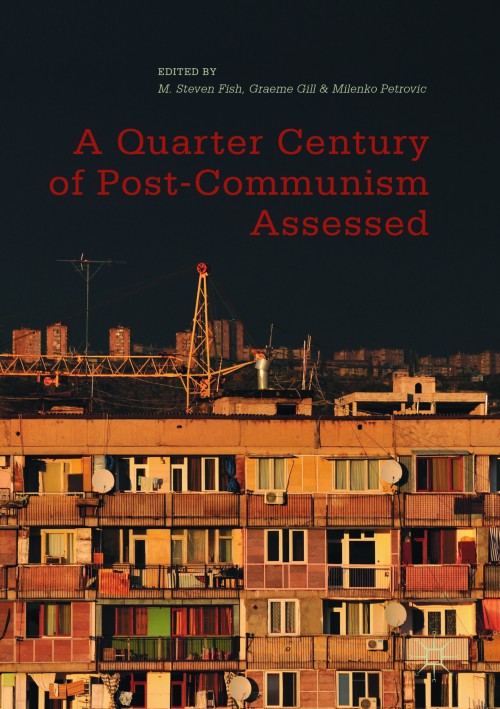
245 12|aA Quarter Century of Post-Communism Assessed|h[electronic resource] /|cedited by M. Steven Fish, Graeme Gill, Milenko Petrovic.
250 |a1st ed. 2017.
264 1|aCham :|bSpringer International Publishing :|bImprint: Palgrave Macmillan,|c2017.
300 |aXII, 360 p. 12 illus.|bonline resource.
336 |atext|btxt|2rdacontent
337 |acomputer|bc|2rdamedia
338 |aonline resource|bcr|2rdacarrier
347 |atext file|bPDF|2rda
505 0 |aIntroduction: Steven Fish, Graeme Gill, Milenko Petrovic -- Chapter 1. A Quarter-Century of Postcommunism: what have we learnt about democracy, social change and economic reform? -- Chapter 2: Postcommunist Transition under the Umbrella of Uneven EUropeanisation: East Central Europe, the Baltic States and the Balkans -- Chapter 3. Trajectories of Political Development in the Post-Soviet States -- Chapter 4. Postcommunist Corruption: does EU membership make any difference? -- Chapter 5: The V4 Countries and the EU: a comparative perspective -- Chapter 6: China and European Postcommunist Integration: the CEEC Countries and the “16+1” Platform -- Chapter 7: Illiberal Democracy and the Anti-Democratic Backlash: Hungary – a new model in the making? -- Chapter 8. The Shaky Postcommunist Transition in the Western Balkans: Serb-Croat relations and the Kosovo issue -- Chapter 9: Old Paradigms of Ethnicity and Post-Soviet Transition in the Baltic States. Chapter 10: Ukraine’s democratization Path Post-Orange Revolution: the internal and external impediments to democratic reform -- Chapter 11. Personalism Rampant: Russian policy-making on Ukraine and the December 2014 economic crisis -- Chapter 12: Post-Communist Russia and the West: from Crisis to Crisis. Chapter 13: Kazakhstan and the Eurasian Economic Union: the dilemmas of alliance-making in the post-Soviet period.
520 |aThis edited volume seeks to understand and explain the pattern of varying national and regional success in post-communist political and economic transition across the post-communist world. Despite widespread hopes for the development of vigorous democratic political systems and vibrant market economies, the outcomes of a quarter century of post-communist transition in the countries of the former communist bloc in Eurasia have been widely variant. Some have matched these hopes, including becoming full members of the EU; others have fallen far short, with political and economic systems little changed from the communist era. This collection, with an internationally respected list of contributors, addresses some of the pressing issues in political science and transition studies, ranging from theoretical overviews to the more specific nitty-gritty of contemporary politics.
650 0|aPolitical science.
650 14|aPolitics and International Studies.
700 1 |aFish, M. Steven.|eeditor.|4edt|4http://id.loc.gov/vocabulary/relators/edt
700 1 |aGill, Graeme.|eeditor.|4edt|4http://id.loc.gov/vocabulary/relators/edt
700 1 |aPetrovic, Milenko.|eeditor.|4edt|4http://id.loc.gov/vocabulary/relators/edt
710 2 |aSpringerLink (Online service)
773 0 |tSpringer Nature eBook
776 08|iPrinted edition:|z9783319434360
776 08|iPrinted edition:|z9783319434384
776 08|iPrinted edition:|z9783319828244
856 40|uhttps://doi.org/10.1007/978-3-319-43437-7
912 |aZDB-2-POS
912 |aZDB-2-SXPI
950 |aPolitical Science and International Studies (SpringerNature-41174)
950 |aPolitical Science and International Studies (R0) (SpringerNature-43724)