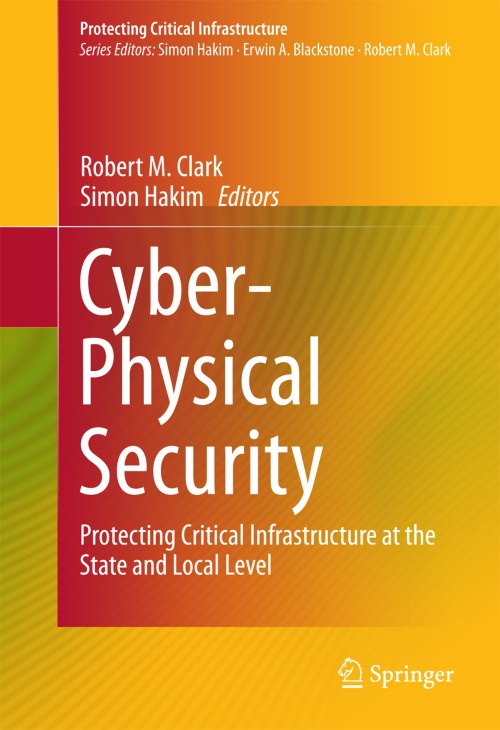
Cyber-Physical Security [electronic resource] : Protecting Critical Infrastructure at the State and Local Level / edited by Robert M. Clark, Simon Hakim.
Erişim Adresi
ISBN
9783319328249
Dil Kodu
İngilizce
Yer Numarası
DK/19807
Basım Bildirimi
1st ed. 2017.
Yayın Bilgisi
Cham : Springer International Publishing : Imprint: Springer, 2017.
Fiziksel Niteleme
XVIII, 281 p. 32 illus. in color. online resource.
Dizi
Protecting Critical Infrastructure, 2512-1804 ; 3
İçindekiler Notu
Protecting Critical Infrastructure at the State Provincial and Local Level: Issues in Cyber-Physical Security -- Cybersecurity Terminology and Frameworks -- Assessing Cyber Threats and Solutions for Municipalities -- Cyber Perimeters for Critical Infrastructures -- A Security Evaluation of a Municipal Computer Network: The Case of Collaboration between the City of Pittsburgh and Carnegie Mellon University -- Cyber Risks in the Marine Transportation System -- Creating a Cybersecurity Culture for Your Water/Waste Water Utility -- The Community Cyber Security Maturity Model -- Fighting Cybercrime: A Joint Effort -- Cybersecurity Challenges: The Israeli Water Sector Example -- Efforts to Get People Involved In Cyber-Physical Security: Case Studies of Australia And Singapore -- Cyber Security, Trust-Building and Trust-Management: As Tools for Multi-Agency Cooperation within the Functions Vital To Society An Analysis of the Nature of Spam as Cybercrime -- Securing theAutomotive Critical Infrastructure.
Özet, vb.
This book focuses on the vulnerabilities of state and local services to cyber-threats and suggests possible protective action that might be taken against such threats. Cyber-threats to U.S. critical infrastructure are of growing concern to policymakers, managers and consumers. Information and communications technology (ICT) is ubiquitous and many ICT devices and other components are interdependent; therefore, disruption of one component may have a negative, cascading effect on others. Cyber-attacks might include denial of service, theft or manipulation of data. Damage to critical infrastructure through a cyber-based attack could have a significant impact on the national security, the economy, and the livelihood and safety of many individual citizens. Traditionally cyber security has generally been viewed as being focused on higher level threats such as those against the internet or the Federal government. Little attention has been paid to cyber-security at the state and local level. However, these governmental units play a critical role in providing services to local residents and consequently are highly vulnerable to cyber-threats. The failure of these services, such as waste water collection and water supply, transportation, public safety, utility services, and communication services, would pose a great threat to the public. Featuring contributions from leading experts in the field, this volume is intended for state and local government officials and managers, state and Federal officials, academics, and public policy specialists.
Konu
Political science.
Pollution.
Transportation engineering.
Traffic engineering.
Political Science.
Pollution.
Transportation Technology and Traffic Engineering.
Pollution.
Transportation engineering.
Traffic engineering.
Political Science.
Pollution.
Transportation Technology and Traffic Engineering.
Diğer Yazarlar
Kurum Adı

Eseri Alıntıla
Referansları kullanmadan önce gözden geçirmeniz ve varsa gerekli düzeltmeleri yapmanız önerilir.
Dijital Kaynak
MARC Görünümü
LEADER 04634nam a22005415i 4500
001 818599
003 TR_AnAIT
005 20260130180535
007 cr nn 008mamaa
008 160810s2017 sz | s |||| 0|eng d
020 |a9783319328249|9978-3-319-32824-9
024 7 |a10.1007/978-3-319-32824-9|2doi
041 |aeng
049 |aTürk Tarih Kurumu Kütüphanesi
050 4|aJA1-92
072 7|aJPA|2bicssc
072 7|aPOL000000|2bisacsh
072 7|aJPA|2thema
082 04|a320|223
090 |aDK/19807
245 10|aCyber-Physical Security|h[electronic resource] :|bProtecting Critical Infrastructure at the State and Local Level /|cedited by Robert M. Clark, Simon Hakim.
250 |a1st ed. 2017.
264 1|aCham :|bSpringer International Publishing :|bImprint: Springer,|c2017.
300 |aXVIII, 281 p. 32 illus. in color.|bonline resource.
336 |atext|btxt|2rdacontent
337 |acomputer|bc|2rdamedia
338 |aonline resource|bcr|2rdacarrier
347 |atext file|bPDF|2rda
490 1 |aProtecting Critical Infrastructure,|x2512-1804 ;|v3
505 0 |aProtecting Critical Infrastructure at the State Provincial and Local Level: Issues in Cyber-Physical Security -- Cybersecurity Terminology and Frameworks -- Assessing Cyber Threats and Solutions for Municipalities -- Cyber Perimeters for Critical Infrastructures -- A Security Evaluation of a Municipal Computer Network: The Case of Collaboration between the City of Pittsburgh and Carnegie Mellon University -- Cyber Risks in the Marine Transportation System -- Creating a Cybersecurity Culture for Your Water/Waste Water Utility -- The Community Cyber Security Maturity Model -- Fighting Cybercrime: A Joint Effort -- Cybersecurity Challenges: The Israeli Water Sector Example -- Efforts to Get People Involved In Cyber-Physical Security: Case Studies of Australia And Singapore -- Cyber Security, Trust-Building and Trust-Management: As Tools for Multi-Agency Cooperation within the Functions Vital To Society An Analysis of the Nature of Spam as Cybercrime -- Securing theAutomotive Critical Infrastructure.
520 |aThis book focuses on the vulnerabilities of state and local services to cyber-threats and suggests possible protective action that might be taken against such threats. Cyber-threats to U.S. critical infrastructure are of growing concern to policymakers, managers and consumers. Information and communications technology (ICT) is ubiquitous and many ICT devices and other components are interdependent; therefore, disruption of one component may have a negative, cascading effect on others. Cyber-attacks might include denial of service, theft or manipulation of data. Damage to critical infrastructure through a cyber-based attack could have a significant impact on the national security, the economy, and the livelihood and safety of many individual citizens. Traditionally cyber security has generally been viewed as being focused on higher level threats such as those against the internet or the Federal government. Little attention has been paid to cyber-security at the state and local level. However, these governmental units play a critical role in providing services to local residents and consequently are highly vulnerable to cyber-threats. The failure of these services, such as waste water collection and water supply, transportation, public safety, utility services, and communication services, would pose a great threat to the public. Featuring contributions from leading experts in the field, this volume is intended for state and local government officials and managers, state and Federal officials, academics, and public policy specialists.
650 0|aPolitical science.
650 0|aPollution.
650 0|aTransportation engineering.
650 0|aTraffic engineering.
650 14|aPolitical Science.
650 24|aPollution.
650 24|aTransportation Technology and Traffic Engineering.
700 1 |aClark, Robert M.|eeditor.|4edt|4http://id.loc.gov/vocabulary/relators/edt
700 1 |aHakim, Simon.|eeditor.|4edt|4http://id.loc.gov/vocabulary/relators/edt
710 2 |aSpringerLink (Online service)
773 0 |tSpringer Nature eBook
776 08|iPrinted edition:|z9783319328225
776 08|iPrinted edition:|z9783319328232
776 08|iPrinted edition:|z9783319813752
830 0|aProtecting Critical Infrastructure,|x2512-1804 ;|v3
856 40|uhttps://doi.org/10.1007/978-3-319-32824-9
912 |aZDB-2-POS
912 |aZDB-2-SXPI
950 |aPolitical Science and International Studies (SpringerNature-41174)
950 |aPolitical Science and International Studies (R0) (SpringerNature-43724)
001 818599
003 TR_AnAIT
005 20260130180535
007 cr nn 008mamaa
008 160810s2017 sz | s |||| 0|eng d
020 |a9783319328249|9978-3-319-32824-9
024 7 |a10.1007/978-3-319-32824-9|2doi
041 |aeng
049 |aTürk Tarih Kurumu Kütüphanesi
050 4|aJA1-92
072 7|aJPA|2bicssc
072 7|aPOL000000|2bisacsh
072 7|aJPA|2thema
082 04|a320|223
090 |aDK/19807
245 10|aCyber-Physical Security|h[electronic resource] :|bProtecting Critical Infrastructure at the State and Local Level /|cedited by Robert M. Clark, Simon Hakim.
250 |a1st ed. 2017.
264 1|aCham :|bSpringer International Publishing :|bImprint: Springer,|c2017.
300 |aXVIII, 281 p. 32 illus. in color.|bonline resource.
336 |atext|btxt|2rdacontent
337 |acomputer|bc|2rdamedia
338 |aonline resource|bcr|2rdacarrier
347 |atext file|bPDF|2rda
490 1 |aProtecting Critical Infrastructure,|x2512-1804 ;|v3
505 0 |aProtecting Critical Infrastructure at the State Provincial and Local Level: Issues in Cyber-Physical Security -- Cybersecurity Terminology and Frameworks -- Assessing Cyber Threats and Solutions for Municipalities -- Cyber Perimeters for Critical Infrastructures -- A Security Evaluation of a Municipal Computer Network: The Case of Collaboration between the City of Pittsburgh and Carnegie Mellon University -- Cyber Risks in the Marine Transportation System -- Creating a Cybersecurity Culture for Your Water/Waste Water Utility -- The Community Cyber Security Maturity Model -- Fighting Cybercrime: A Joint Effort -- Cybersecurity Challenges: The Israeli Water Sector Example -- Efforts to Get People Involved In Cyber-Physical Security: Case Studies of Australia And Singapore -- Cyber Security, Trust-Building and Trust-Management: As Tools for Multi-Agency Cooperation within the Functions Vital To Society An Analysis of the Nature of Spam as Cybercrime -- Securing theAutomotive Critical Infrastructure.
520 |aThis book focuses on the vulnerabilities of state and local services to cyber-threats and suggests possible protective action that might be taken against such threats. Cyber-threats to U.S. critical infrastructure are of growing concern to policymakers, managers and consumers. Information and communications technology (ICT) is ubiquitous and many ICT devices and other components are interdependent; therefore, disruption of one component may have a negative, cascading effect on others. Cyber-attacks might include denial of service, theft or manipulation of data. Damage to critical infrastructure through a cyber-based attack could have a significant impact on the national security, the economy, and the livelihood and safety of many individual citizens. Traditionally cyber security has generally been viewed as being focused on higher level threats such as those against the internet or the Federal government. Little attention has been paid to cyber-security at the state and local level. However, these governmental units play a critical role in providing services to local residents and consequently are highly vulnerable to cyber-threats. The failure of these services, such as waste water collection and water supply, transportation, public safety, utility services, and communication services, would pose a great threat to the public. Featuring contributions from leading experts in the field, this volume is intended for state and local government officials and managers, state and Federal officials, academics, and public policy specialists.
650 0|aPolitical science.
650 0|aPollution.
650 0|aTransportation engineering.
650 0|aTraffic engineering.
650 14|aPolitical Science.
650 24|aPollution.
650 24|aTransportation Technology and Traffic Engineering.
700 1 |aClark, Robert M.|eeditor.|4edt|4http://id.loc.gov/vocabulary/relators/edt
700 1 |aHakim, Simon.|eeditor.|4edt|4http://id.loc.gov/vocabulary/relators/edt
710 2 |aSpringerLink (Online service)
773 0 |tSpringer Nature eBook
776 08|iPrinted edition:|z9783319328225
776 08|iPrinted edition:|z9783319328232
776 08|iPrinted edition:|z9783319813752
830 0|aProtecting Critical Infrastructure,|x2512-1804 ;|v3
856 40|uhttps://doi.org/10.1007/978-3-319-32824-9
912 |aZDB-2-POS
912 |aZDB-2-SXPI
950 |aPolitical Science and International Studies (SpringerNature-41174)
950 |aPolitical Science and International Studies (R0) (SpringerNature-43724)
Materyaller
Depodan talep edilen materyal sadece kütüphane içerisinde kullanılmaktadır.
Materyal dışarıya ödünç verilmemektedir.
