LEADER 03630nam a22005535i 4500
001 818684
003 TR_AnAIT
005 20260130180309
007 cr nn 008mamaa
008 191204s2020 sz | s |||| 0|eng d
020 |a9783030301712|9978-3-030-30171-2
024 7 |a10.1007/978-3-030-30171-2|2doi
041 |aeng
049 |aTürk Tarih Kurumu Kütüphanesi
050 4|aJK1-9993
050 4|aJL1-3899
072 7|aJP|2bicssc
072 7|a1K|2bicssc
072 7|aPOL040000|2bisacsh
072 7|aJP|x1K|2thema
082 04|a320.9|223
090 |aDK/19892
100 1 |aHoman, Patrick.|eauthor.|4aut|4http://id.loc.gov/vocabulary/relators/aut
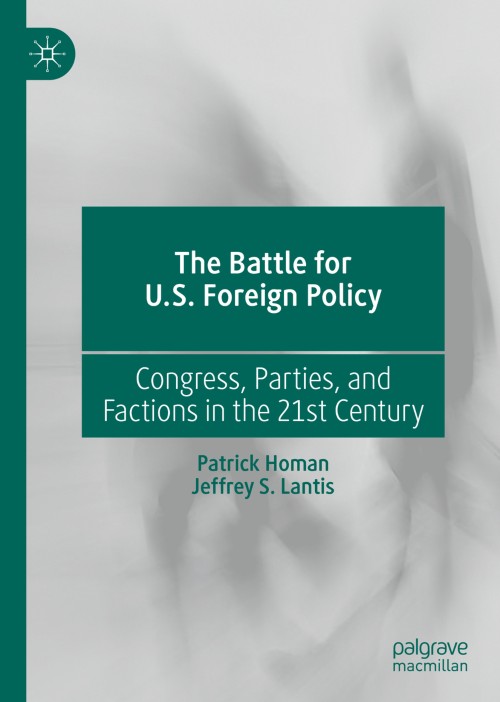
245 14|aThe Battle for U.S. Foreign Policy|h[electronic resource] :|bCongress, Parties, and Factions in the 21st Century /|cby Patrick Homan, Jeffrey S. Lantis.
250 |a1st ed. 2020.
264 1|aCham :|bSpringer International Publishing :|bImprint: Palgrave Macmillan,|c2020.
300 |aXI, 258 p.|bonline resource.
336 |atext|btxt|2rdacontent
337 |acomputer|bc|2rdamedia
338 |aonline resource|bcr|2rdacarrier
347 |atext file|bPDF|2rda
505 0 |a1. Introduction: Congress, Factions, and the Battle for U.S. Foreign Policy -- 2. Factionalism and Foreign Policy: A Model of Minority Influence -- 3. “We the People?”: Historical Foundations of Factionalism -- 4. The Tea Party, the Freedom Caucus, and the Obama Administration -- 5. Progressive Caucus Activism During the Obama Administration -- 6. The Freedom Caucus and Factionalism in the Trump Era -- 7. Progressives and Foreign Policy in the Trump Era -- 8. Conclusion: The Battle Continues.
520 |aThis book is an original study of the contemporary debate over U.S. foreign policy between the president, members of Congress, and political parties. Specifically, it examines how factions at the ideological extremes within parties such as the Tea Party, the Freedom Caucus, and Progressive Democrats can play significant roles in shaping U.S. foreign policy. In today’s polarized atmosphere whereAmericans seem increasingly divided, factions are emerging as powerful insurgents, innovators, and engines of change. The book develops a minority theory of influence that recognizes the importance of traditional and nontraditional strategies including persuasion, legislation, and issue framing. Original case studies explore factions at work in foreign policy development during the Barack Obama and Donald Trump administrations, including struggles over immigration policy, trade agreements, development aid, and foreign policies toward Iran and Syria. The Battle for U.S. Foreign Policy captures the spirit of ideological and practical party struggles and fills a substantial gap in foreign policy analysis literature.
650 0|aAmerica|xPolitics and government.
650 0|aInternational relations.
650 0|aExecutive power.
650 0|aPolitical science.
650 14|aAmerican Politics.
650 24|aForeign Policy.
650 24|aExecutive Politics.
650 24|aGovernance and Government.
700 1 |aLantis, Jeffrey S.|eauthor.|4aut|4http://id.loc.gov/vocabulary/relators/aut
710 2 |aSpringerLink (Online service)
773 0 |tSpringer Nature eBook
776 08|iPrinted edition:|z9783030301705
776 08|iPrinted edition:|z9783030301729
776 08|iPrinted edition:|z9783030301736
856 40|uhttps://doi.org/10.1007/978-3-030-30171-2
912 |aZDB-2-POS
912 |aZDB-2-SXPI
950 |aPolitical Science and International Studies (SpringerNature-41174)
950 |aPolitical Science and International Studies (R0) (SpringerNature-43724)