LEADER 03295nam a22005535i 4500
001 818849
003 TR_AnAIT
005 20260130175749
007 cr nn 008mamaa
008 161025s2017 sz | s |||| 0|eng d
020 |a9783319398020|9978-3-319-39802-0
024 7 |a10.1007/978-3-319-39802-0|2doi
041 |aeng
049 |aTürk Tarih Kurumu Kütüphanesi
050 4|aJN1-9692.2
072 7|aJP|2bicssc
072 7|a1D|2bicssc
072 7|aPOL058000|2bisacsh
072 7|aJP|x1D|2thema
082 04|a320.94|223
090 |aDK/20057
100 1 |aHollander, Ethan J.|eauthor.|4aut|4http://id.loc.gov/vocabulary/relators/aut
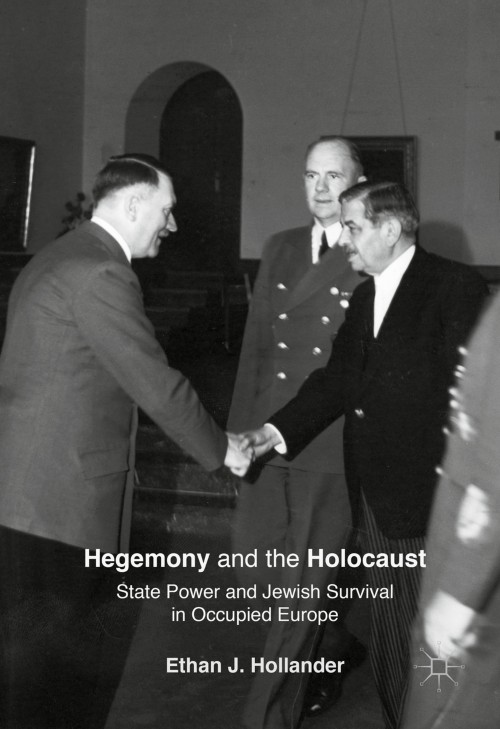
245 10|aHegemony and the Holocaust|h[electronic resource] :|bState Power and Jewish Survival in Occupied Europe /|cby Ethan J. Hollander.
250 |a1st ed. 2017.
264 1|aCham :|bSpringer International Publishing :|bImprint: Palgrave Macmillan,|c2017.
300 |aXV, 312 p. 7 illus.|bonline resource.
336 |atext|btxt|2rdacontent
337 |acomputer|bc|2rdamedia
338 |aonline resource|bcr|2rdacarrier
347 |atext file|bPDF|2rda
505 0 |a1. Introduction: Swords or Shields? -- 2. Scandinavia: The Banality of Goodness -- 3. Western Europe: The Politics of Judgment -- 4. Eastern Europe: The Benefits of Alliance -- 5. Conclusion: German Hegemony, State Power, and Jewish Survival.
520 |aThis book explains why more Jewish people survived in some German-occupied countries compared to others during World War II. Hollander demonstrates that collaborators sometimes played a surprising role in ensuring Jewish survival. Where high-ranking governing officials stayed in their countries and helped Nazi Germany, they could often “trade” their loyal cooperation in military and economic affairs for inefficient or incomplete implementation of the Final Solution. And while they sometimes did this because they had sincere moral objections to Nazi policy, they also did so because deporting local Jews was politically unpopular, because they regarded it as less important than winning the war, or because deporting Jews meant that the collaborators gave up potentially profitable opportunities to exploit them. This unique book has important implications for our understanding of state-sponsored violence, international hierarchy, and genocide, and it raises harrowing moral questions about the Holocaust and the nature of political evil.
650 0|aEurope|xPolitics and government.
650 0|aWorld politics.
650 0|aEurope, Central|xHistory.
650 0|aWorld War, 1939-1945.
650 0|aPolitics and war.
650 14|aEuropean Politics.
650 24|aPolitical History.
650 24|aHistory of Germany and Central Europe.
650 24|aHistory of World War II and the Holocaust.
650 24|aMilitary and Defence Studies.
710 2 |aSpringerLink (Online service)
773 0 |tSpringer Nature eBook
776 08|iPrinted edition:|z9783319398013
776 08|iPrinted edition:|z9783319398037
776 08|iPrinted edition:|z9783319819709
856 40|uhttps://doi.org/10.1007/978-3-319-39802-0
912 |aZDB-2-POS
912 |aZDB-2-SXPI
950 |aPolitical Science and International Studies (SpringerNature-41174)
950 |aPolitical Science and International Studies (R0) (SpringerNature-43724)