

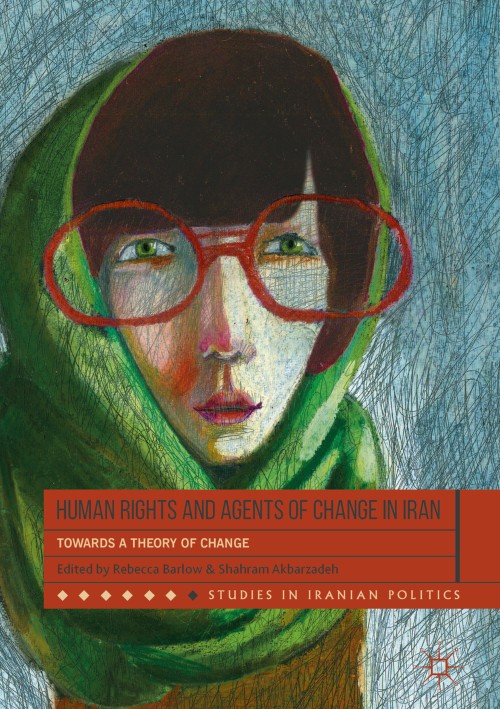
Human Rights and Agents of Change in Iran [electronic resource] : Towards a Theory of Change / edited by Rebecca Barlow, Shahram Akbarzadeh.
Erişim Adresi
ISBN
9789811088247
Dil Kodu
İngilizce
Yer Numarası
DK/20104
Basım Bildirimi
1st ed. 2018.
Yayın Bilgisi
Singapore : Springer Nature Singapore : Imprint: Palgrave Macmillan, 2018.
Fiziksel Niteleme
X, 232 p. online resource.
Dizi
Studies in Iranian Politics, 2524-4140
İçindekiler Notu
1. Top-down or bottom-up? Towards a theory of change for human rights practice in Iran -- 2. The ‘inside-track’ approach to change in Iran under President Rouhani: The case of freedom on the internet -- 3. Indigenising ‘modernisation’ in Iran -- 4. Iranian lawyers for human rights: The Defenders of Human Rights Center -- 5. Is grassroots justice a viable alternative to impunity? The case of the Iran People’s Tribunal -- 6. Secular and Islamic feminist work to increase parliamentary representation in Iran: Towards an alliance? -- 7. Struggles for revival: The Iranian student movement under the ‘moderate’ government (2013–2017) -- 8. Environmental activism and social change in Iran -- 9. Ethnic minorities and the question of liberal multiculturalism in Iran -- 10. Intersecting issues and their implications for human right practice in Iran.
Özet, vb.
This volume extends debates on the interaction between universal human rights and the political experiences of Iranians, through a conceptual analysis of ‘theories of change’. It assesses the practical processes by which individuals, organizations and movements can reform or impact the structural, theological, and political challenges faced in the Iranian context. Contributors to this volume investigate how structures, institutions, and agents in Iran maneuver for influence and power at the state level, through the law, in international corridors, at the grassroots, and by implementing multiple and complex methods. The chapters provide distinct but interrelated analysis of key drivers of change in Iran. A number of those operate primarily through top-down approaches, such as the political reform movement, lawyers pursuing legislative change, and international human rights monitoring bodies. Others take a bottom-up approach, including local movements and campaigns such as the women’s movement, the student movement, and ethnic minority groups. Rebecca Barlow is a Senior Research Fellow at the Alfred Deakin Institute for Citizenship and Globalisation, Deakin University, Australia. Her research focuses on the Iranian women’s movement and the politics of human rights in the Islamic Republic of Iran. Dr. Barlow is the author of Universal Women’s Human Rights and the Muslim Question: Iran’s One Million Signatures Campaign (2012). She has worked for the Victorian Local Governance Association to produce a toolkit to implement the ‘Victorian Charter of Human Rights and Responsibilities’. She has also interned and acted as Consultant for the United Nations Population Fund (UNFPA) Gender, Human Rights and Culture Branch, working on the United Nations Global Forum of Faith-based Organisations in Population and Development (2008). Shahram Akbarzadeh is Professor of Middle East & Central Asian Politics at the Alfred Deakin Institute for Citizenship and Globalisation, Deakin University, Australia. Prof. Akbarzadeh is author of Uzbekistan and the United States (2005), US Foreign Policy in the Middle East (2008 with Kylie Baxter) and Muslim Active Citizenship in the West (2014 with Mario Peucker). He is the founding Editor of the Islamic Studies Series and a regular public commentator.
Konu
Middle East __ Politics and government.
Human rights.
Middle Eastern Politics.
Human Rights.
Human rights.
Middle Eastern Politics.
Human Rights.
Diğer Yazarlar
Kurum Adı
Eseri Alıntıla
Referansları kullanmadan önce gözden geçirmeniz ve varsa gerekli düzeltmeleri yapmanız önerilir.
Dijital Kaynak
MARC Görünümü
LEADER 05131nam a22005175i 4500
001 818896
003 TR_AnAIT
005 20260130175614
007 cr nn 008mamaa
008 180713s2018 si | s |||| 0|eng d
020 |a9789811088247|9978-981-10-8824-7
024 7 |a10.1007/978-981-10-8824-7|2doi
041 |aeng
049 |aTürk Tarih Kurumu Kütüphanesi
050 4|aJQ1758-1852
072 7|aJP|2bicssc
072 7|a1FB|2bicssc
072 7|aPOL059000|2bisacsh
072 7|aJP|x1FB|2thema
082 04|a320.956|223
090 |aDK/20104
245 10|aHuman Rights and Agents of Change in Iran|h[electronic resource] :|bTowards a Theory of Change /|cedited by Rebecca Barlow, Shahram Akbarzadeh.
250 |a1st ed. 2018.
264 1|aSingapore :|bSpringer Nature Singapore :|bImprint: Palgrave Macmillan,|c2018.
300 |aX, 232 p.|bonline resource.
336 |atext|btxt|2rdacontent
337 |acomputer|bc|2rdamedia
338 |aonline resource|bcr|2rdacarrier
347 |atext file|bPDF|2rda
490 1 |aStudies in Iranian Politics,|x2524-4140
505 0 |a1. Top-down or bottom-up? Towards a theory of change for human rights practice in Iran -- 2. The ‘inside-track’ approach to change in Iran under President Rouhani: The case of freedom on the internet -- 3. Indigenising ‘modernisation’ in Iran -- 4. Iranian lawyers for human rights: The Defenders of Human Rights Center -- 5. Is grassroots justice a viable alternative to impunity? The case of the Iran People’s Tribunal -- 6. Secular and Islamic feminist work to increase parliamentary representation in Iran: Towards an alliance? -- 7. Struggles for revival: The Iranian student movement under the ‘moderate’ government (2013–2017) -- 8. Environmental activism and social change in Iran -- 9. Ethnic minorities and the question of liberal multiculturalism in Iran -- 10. Intersecting issues and their implications for human right practice in Iran.
520 |aThis volume extends debates on the interaction between universal human rights and the political experiences of Iranians, through a conceptual analysis of ‘theories of change’. It assesses the practical processes by which individuals, organizations and movements can reform or impact the structural, theological, and political challenges faced in the Iranian context. Contributors to this volume investigate how structures, institutions, and agents in Iran maneuver for influence and power at the state level, through the law, in international corridors, at the grassroots, and by implementing multiple and complex methods. The chapters provide distinct but interrelated analysis of key drivers of change in Iran. A number of those operate primarily through top-down approaches, such as the political reform movement, lawyers pursuing legislative change, and international human rights monitoring bodies. Others take a bottom-up approach, including local movements and campaigns such as the women’s movement, the student movement, and ethnic minority groups. Rebecca Barlow is a Senior Research Fellow at the Alfred Deakin Institute for Citizenship and Globalisation, Deakin University, Australia. Her research focuses on the Iranian women’s movement and the politics of human rights in the Islamic Republic of Iran. Dr. Barlow is the author of Universal Women’s Human Rights and the Muslim Question: Iran’s One Million Signatures Campaign (2012). She has worked for the Victorian Local Governance Association to produce a toolkit to implement the ‘Victorian Charter of Human Rights and Responsibilities’. She has also interned and acted as Consultant for the United Nations Population Fund (UNFPA) Gender, Human Rights and Culture Branch, working on the United Nations Global Forum of Faith-based Organisations in Population and Development (2008). Shahram Akbarzadeh is Professor of Middle East & Central Asian Politics at the Alfred Deakin Institute for Citizenship and Globalisation, Deakin University, Australia. Prof. Akbarzadeh is author of Uzbekistan and the United States (2005), US Foreign Policy in the Middle East (2008 with Kylie Baxter) and Muslim Active Citizenship in the West (2014 with Mario Peucker). He is the founding Editor of the Islamic Studies Series and a regular public commentator.
650 0|aMiddle East|xPolitics and government.
650 0|aHuman rights.
650 14|aMiddle Eastern Politics.
650 24|aHuman Rights.
700 1 |aBarlow, Rebecca.|eeditor.|4edt|4http://id.loc.gov/vocabulary/relators/edt
700 1 |aAkbarzadeh, Shahram.|eeditor.|4edt|4http://id.loc.gov/vocabulary/relators/edt
710 2 |aSpringerLink (Online service)
773 0 |tSpringer Nature eBook
776 08|iPrinted edition:|z9789811088230
776 08|iPrinted edition:|z9789811088254
776 08|iPrinted edition:|z9789811342509
830 0|aStudies in Iranian Politics,|x2524-4140
856 40|uhttps://doi.org/10.1007/978-981-10-8824-7
912 |aZDB-2-POS
912 |aZDB-2-SXPI
950 |aPolitical Science and International Studies (SpringerNature-41174)
950 |aPolitical Science and International Studies (R0) (SpringerNature-43724)
001 818896
003 TR_AnAIT
005 20260130175614
007 cr nn 008mamaa
008 180713s2018 si | s |||| 0|eng d
020 |a9789811088247|9978-981-10-8824-7
024 7 |a10.1007/978-981-10-8824-7|2doi
041 |aeng
049 |aTürk Tarih Kurumu Kütüphanesi
050 4|aJQ1758-1852
072 7|aJP|2bicssc
072 7|a1FB|2bicssc
072 7|aPOL059000|2bisacsh
072 7|aJP|x1FB|2thema
082 04|a320.956|223
090 |aDK/20104
245 10|aHuman Rights and Agents of Change in Iran|h[electronic resource] :|bTowards a Theory of Change /|cedited by Rebecca Barlow, Shahram Akbarzadeh.
250 |a1st ed. 2018.
264 1|aSingapore :|bSpringer Nature Singapore :|bImprint: Palgrave Macmillan,|c2018.
300 |aX, 232 p.|bonline resource.
336 |atext|btxt|2rdacontent
337 |acomputer|bc|2rdamedia
338 |aonline resource|bcr|2rdacarrier
347 |atext file|bPDF|2rda
490 1 |aStudies in Iranian Politics,|x2524-4140
505 0 |a1. Top-down or bottom-up? Towards a theory of change for human rights practice in Iran -- 2. The ‘inside-track’ approach to change in Iran under President Rouhani: The case of freedom on the internet -- 3. Indigenising ‘modernisation’ in Iran -- 4. Iranian lawyers for human rights: The Defenders of Human Rights Center -- 5. Is grassroots justice a viable alternative to impunity? The case of the Iran People’s Tribunal -- 6. Secular and Islamic feminist work to increase parliamentary representation in Iran: Towards an alliance? -- 7. Struggles for revival: The Iranian student movement under the ‘moderate’ government (2013–2017) -- 8. Environmental activism and social change in Iran -- 9. Ethnic minorities and the question of liberal multiculturalism in Iran -- 10. Intersecting issues and their implications for human right practice in Iran.
520 |aThis volume extends debates on the interaction between universal human rights and the political experiences of Iranians, through a conceptual analysis of ‘theories of change’. It assesses the practical processes by which individuals, organizations and movements can reform or impact the structural, theological, and political challenges faced in the Iranian context. Contributors to this volume investigate how structures, institutions, and agents in Iran maneuver for influence and power at the state level, through the law, in international corridors, at the grassroots, and by implementing multiple and complex methods. The chapters provide distinct but interrelated analysis of key drivers of change in Iran. A number of those operate primarily through top-down approaches, such as the political reform movement, lawyers pursuing legislative change, and international human rights monitoring bodies. Others take a bottom-up approach, including local movements and campaigns such as the women’s movement, the student movement, and ethnic minority groups. Rebecca Barlow is a Senior Research Fellow at the Alfred Deakin Institute for Citizenship and Globalisation, Deakin University, Australia. Her research focuses on the Iranian women’s movement and the politics of human rights in the Islamic Republic of Iran. Dr. Barlow is the author of Universal Women’s Human Rights and the Muslim Question: Iran’s One Million Signatures Campaign (2012). She has worked for the Victorian Local Governance Association to produce a toolkit to implement the ‘Victorian Charter of Human Rights and Responsibilities’. She has also interned and acted as Consultant for the United Nations Population Fund (UNFPA) Gender, Human Rights and Culture Branch, working on the United Nations Global Forum of Faith-based Organisations in Population and Development (2008). Shahram Akbarzadeh is Professor of Middle East & Central Asian Politics at the Alfred Deakin Institute for Citizenship and Globalisation, Deakin University, Australia. Prof. Akbarzadeh is author of Uzbekistan and the United States (2005), US Foreign Policy in the Middle East (2008 with Kylie Baxter) and Muslim Active Citizenship in the West (2014 with Mario Peucker). He is the founding Editor of the Islamic Studies Series and a regular public commentator.
650 0|aMiddle East|xPolitics and government.
650 0|aHuman rights.
650 14|aMiddle Eastern Politics.
650 24|aHuman Rights.
700 1 |aBarlow, Rebecca.|eeditor.|4edt|4http://id.loc.gov/vocabulary/relators/edt
700 1 |aAkbarzadeh, Shahram.|eeditor.|4edt|4http://id.loc.gov/vocabulary/relators/edt
710 2 |aSpringerLink (Online service)
773 0 |tSpringer Nature eBook
776 08|iPrinted edition:|z9789811088230
776 08|iPrinted edition:|z9789811088254
776 08|iPrinted edition:|z9789811342509
830 0|aStudies in Iranian Politics,|x2524-4140
856 40|uhttps://doi.org/10.1007/978-981-10-8824-7
912 |aZDB-2-POS
912 |aZDB-2-SXPI
950 |aPolitical Science and International Studies (SpringerNature-41174)
950 |aPolitical Science and International Studies (R0) (SpringerNature-43724)
Materyaller
Depodan talep edilen materyal sadece kütüphane içerisinde kullanılmaktadır.
Materyal dışarıya ödünç verilmemektedir.
Materyal dışarıya ödünç verilmemektedir.
