

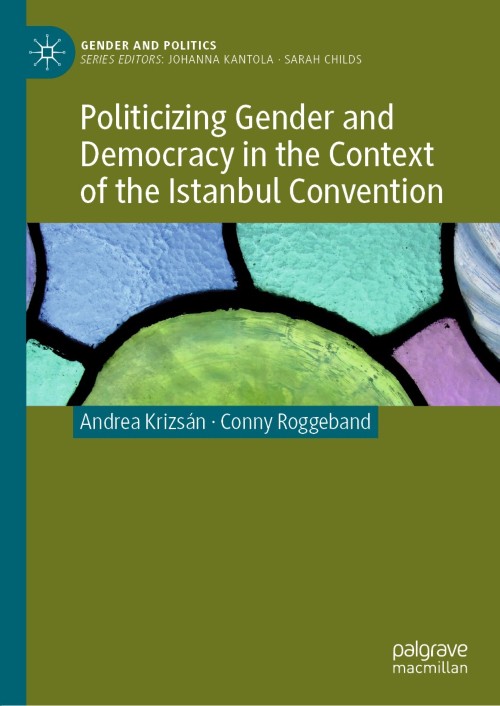
Politicizing Gender and Democracy in the Context of the Istanbul Convention [electronic resource] / by Andrea Krizsán, Conny Roggeband.
Erişim Adresi
ISBN
9783030790691
Dil Kodu
İngilizce
Yer Numarası
DK/20200
Basım Bildirimi
1st ed. 2021.
Yayın Bilgisi
Cham : Springer International Publishing : Imprint: Palgrave Pivot, 2021.
Fiziksel Niteleme
XIX, 248 p. 10 illus., 8 illus. in color. online resource.
Dizi
Gender and Politics, 2662-5822
İçindekiler Notu
1. Chapter :1 Contestation around the Istanbul Convention and the questions it raises -- Chapter 2: The politics of violence against women: theoretical considerations -- Chapter 3: Opposing the Istanbul Convention: actors, strategies and frames -- Chapter 4: Resistance, resilience and resignation: women’s rights advocates and their allies -- Chapter 5: The reconfiguration of the policy field: how opponents appropriate VAW policies -- Chapter 6: Implications of the attacks for feminism, the state and democracy. .
Özet, vb.
In this meticulously documented study, Krizsán and Roggeband demonstrate how the Istanbul Convention mobilized conservative forces, fostered intricate ties between autocratic states and nonstate actors, refigured civil society to advantage anti-equality activists, defunded feminist organizations providing services to abused women and shifted resources to conservative organizations favoring “family values” over women’s empowerment. Their insightful analysis has vital lessons for those concerned with social justice in the 21st century. --Mary Hawkesworth, Rutgers University This incisive analysis of the politics of violence against women in Central and Eastern Europe highlights how some determined governments are blocking or reversing important gains on the international legal front through concerted political and civic action. A cautionary story with important implications for the broader fight to advance women's rights globally. --Thomas Carothers, Carnegie Endowment for International Peace This important study compares and challenges Central and Eastern European pushback movements against the Istanbul Convention. The Convention for the first time provides legally binding definitions of “gender” and “gender-based violence against women”, misinterpreted by conservative forces opposing this progressive international instrument. This book shows how positive instruments like the Istanbul Convention can be judged as problematic and that much more is needed to make gender equality a reality. --Dubravka Šimonović, Special Rapporteur on Violence against Women, its Causes and Consequences This book examines opposition to the Council of Europe’s Istanbul Convention and its consequences for the politics of violence against women in four countries of Central and Eastern Europe. Krizsán and Roggeband discuss why and how successful anti-gender mobilizations managed to obstruct ratification of the Convention or push for withdrawal from it. They show how resistance to the Convention significantly redraws debates on violence against women and has consequences for policies, women’s rights advocacy and gender-equal democracy. Andrea Krizsán is a professor at the Central European University, Austria. Conny Roggeband is an associate professor of political science at the University of Amsterdam, Netherlands.
Konu
Identity politics.
Human rights.
World politics.
Sex.
Politics and Gender.
Politics and Human Rights.
Political History.
Gender Studies.
Human rights.
World politics.
Sex.
Politics and Gender.
Politics and Human Rights.
Political History.
Gender Studies.
Diğer Yazarlar
Kurum Adı
Eseri Alıntıla
Referansları kullanmadan önce gözden geçirmeniz ve varsa gerekli düzeltmeleri yapmanız önerilir.
Dijital Kaynak
MARC Görünümü
LEADER 04992nam a22005775i 4500
001 818992
003 TR_AnAIT
005 20260130175314
007 cr nn 008mamaa
008 210913s2021 sz | s |||| 0|eng d
020 |a9783030790691|9978-3-030-79069-1
024 7 |a10.1007/978-3-030-79069-1|2doi
041 |aeng
049 |aTürk Tarih Kurumu Kütüphanesi
050 4|aJA76
072 7|aJP|2bicssc
072 7|aJFSJ|2bicssc
072 7|aPOL000000|2bisacsh
072 7|aJP|2thema
072 7|aJBSF|2thema
082 04|a320.562|223
082 04|a323.33|223
090 |aDK/20200
100 1 |aKrizsán, Andrea.|eauthor.|0(orcid)0000-0002-8723-4023|1https://orcid.org/0000-0002-8723-4023|4aut|4http://id.loc.gov/vocabulary/relators/aut
245 10|aPoliticizing Gender and Democracy in the Context of the Istanbul Convention|h[electronic resource] /|cby Andrea Krizsán, Conny Roggeband.
250 |a1st ed. 2021.
264 1|aCham :|bSpringer International Publishing :|bImprint: Palgrave Pivot,|c2021.
300 |aXIX, 248 p. 10 illus., 8 illus. in color.|bonline resource.
336 |atext|btxt|2rdacontent
337 |acomputer|bc|2rdamedia
338 |aonline resource|bcr|2rdacarrier
347 |atext file|bPDF|2rda
490 1 |aGender and Politics,|x2662-5822
505 0 |a1. Chapter :1 Contestation around the Istanbul Convention and the questions it raises -- Chapter 2: The politics of violence against women: theoretical considerations -- Chapter 3: Opposing the Istanbul Convention: actors, strategies and frames -- Chapter 4: Resistance, resilience and resignation: women’s rights advocates and their allies -- Chapter 5: The reconfiguration of the policy field: how opponents appropriate VAW policies -- Chapter 6: Implications of the attacks for feminism, the state and democracy. .
520 |aIn this meticulously documented study, Krizsán and Roggeband demonstrate how the Istanbul Convention mobilized conservative forces, fostered intricate ties between autocratic states and nonstate actors, refigured civil society to advantage anti-equality activists, defunded feminist organizations providing services to abused women and shifted resources to conservative organizations favoring “family values” over women’s empowerment. Their insightful analysis has vital lessons for those concerned with social justice in the 21st century. --Mary Hawkesworth, Rutgers University This incisive analysis of the politics of violence against women in Central and Eastern Europe highlights how some determined governments are blocking or reversing important gains on the international legal front through concerted political and civic action. A cautionary story with important implications for the broader fight to advance women's rights globally. --Thomas Carothers, Carnegie Endowment for International Peace This important study compares and challenges Central and Eastern European pushback movements against the Istanbul Convention. The Convention for the first time provides legally binding definitions of “gender” and “gender-based violence against women”, misinterpreted by conservative forces opposing this progressive international instrument. This book shows how positive instruments like the Istanbul Convention can be judged as problematic and that much more is needed to make gender equality a reality. --Dubravka Šimonović, Special Rapporteur on Violence against Women, its Causes and Consequences This book examines opposition to the Council of Europe’s Istanbul Convention and its consequences for the politics of violence against women in four countries of Central and Eastern Europe. Krizsán and Roggeband discuss why and how successful anti-gender mobilizations managed to obstruct ratification of the Convention or push for withdrawal from it. They show how resistance to the Convention significantly redraws debates on violence against women and has consequences for policies, women’s rights advocacy and gender-equal democracy. Andrea Krizsán is a professor at the Central European University, Austria. Conny Roggeband is an associate professor of political science at the University of Amsterdam, Netherlands.
650 0|aIdentity politics.
650 0|aHuman rights.
650 0|aWorld politics.
650 0|aSex.
650 14|aPolitics and Gender.
650 24|aPolitics and Human Rights.
650 24|aPolitical History.
650 24|aGender Studies.
700 1 |aRoggeband, Conny.|eauthor.|4aut|4http://id.loc.gov/vocabulary/relators/aut
710 2 |aSpringerLink (Online service)
773 0 |tSpringer Nature eBook
776 08|iPrinted edition:|z9783030790684
776 08|iPrinted edition:|z9783030790707
830 0|aGender and Politics,|x2662-5822
856 40|uhttps://doi.org/10.1007/978-3-030-79069-1
912 |aZDB-2-POS
912 |aZDB-2-SXPI
950 |aPolitical Science and International Studies (SpringerNature-41174)
950 |aPolitical Science and International Studies (R0) (SpringerNature-43724)
001 818992
003 TR_AnAIT
005 20260130175314
007 cr nn 008mamaa
008 210913s2021 sz | s |||| 0|eng d
020 |a9783030790691|9978-3-030-79069-1
024 7 |a10.1007/978-3-030-79069-1|2doi
041 |aeng
049 |aTürk Tarih Kurumu Kütüphanesi
050 4|aJA76
072 7|aJP|2bicssc
072 7|aJFSJ|2bicssc
072 7|aPOL000000|2bisacsh
072 7|aJP|2thema
072 7|aJBSF|2thema
082 04|a320.562|223
082 04|a323.33|223
090 |aDK/20200
100 1 |aKrizsán, Andrea.|eauthor.|0(orcid)0000-0002-8723-4023|1https://orcid.org/0000-0002-8723-4023|4aut|4http://id.loc.gov/vocabulary/relators/aut
245 10|aPoliticizing Gender and Democracy in the Context of the Istanbul Convention|h[electronic resource] /|cby Andrea Krizsán, Conny Roggeband.
250 |a1st ed. 2021.
264 1|aCham :|bSpringer International Publishing :|bImprint: Palgrave Pivot,|c2021.
300 |aXIX, 248 p. 10 illus., 8 illus. in color.|bonline resource.
336 |atext|btxt|2rdacontent
337 |acomputer|bc|2rdamedia
338 |aonline resource|bcr|2rdacarrier
347 |atext file|bPDF|2rda
490 1 |aGender and Politics,|x2662-5822
505 0 |a1. Chapter :1 Contestation around the Istanbul Convention and the questions it raises -- Chapter 2: The politics of violence against women: theoretical considerations -- Chapter 3: Opposing the Istanbul Convention: actors, strategies and frames -- Chapter 4: Resistance, resilience and resignation: women’s rights advocates and their allies -- Chapter 5: The reconfiguration of the policy field: how opponents appropriate VAW policies -- Chapter 6: Implications of the attacks for feminism, the state and democracy. .
520 |aIn this meticulously documented study, Krizsán and Roggeband demonstrate how the Istanbul Convention mobilized conservative forces, fostered intricate ties between autocratic states and nonstate actors, refigured civil society to advantage anti-equality activists, defunded feminist organizations providing services to abused women and shifted resources to conservative organizations favoring “family values” over women’s empowerment. Their insightful analysis has vital lessons for those concerned with social justice in the 21st century. --Mary Hawkesworth, Rutgers University This incisive analysis of the politics of violence against women in Central and Eastern Europe highlights how some determined governments are blocking or reversing important gains on the international legal front through concerted political and civic action. A cautionary story with important implications for the broader fight to advance women's rights globally. --Thomas Carothers, Carnegie Endowment for International Peace This important study compares and challenges Central and Eastern European pushback movements against the Istanbul Convention. The Convention for the first time provides legally binding definitions of “gender” and “gender-based violence against women”, misinterpreted by conservative forces opposing this progressive international instrument. This book shows how positive instruments like the Istanbul Convention can be judged as problematic and that much more is needed to make gender equality a reality. --Dubravka Šimonović, Special Rapporteur on Violence against Women, its Causes and Consequences This book examines opposition to the Council of Europe’s Istanbul Convention and its consequences for the politics of violence against women in four countries of Central and Eastern Europe. Krizsán and Roggeband discuss why and how successful anti-gender mobilizations managed to obstruct ratification of the Convention or push for withdrawal from it. They show how resistance to the Convention significantly redraws debates on violence against women and has consequences for policies, women’s rights advocacy and gender-equal democracy. Andrea Krizsán is a professor at the Central European University, Austria. Conny Roggeband is an associate professor of political science at the University of Amsterdam, Netherlands.
650 0|aIdentity politics.
650 0|aHuman rights.
650 0|aWorld politics.
650 0|aSex.
650 14|aPolitics and Gender.
650 24|aPolitics and Human Rights.
650 24|aPolitical History.
650 24|aGender Studies.
700 1 |aRoggeband, Conny.|eauthor.|4aut|4http://id.loc.gov/vocabulary/relators/aut
710 2 |aSpringerLink (Online service)
773 0 |tSpringer Nature eBook
776 08|iPrinted edition:|z9783030790684
776 08|iPrinted edition:|z9783030790707
830 0|aGender and Politics,|x2662-5822
856 40|uhttps://doi.org/10.1007/978-3-030-79069-1
912 |aZDB-2-POS
912 |aZDB-2-SXPI
950 |aPolitical Science and International Studies (SpringerNature-41174)
950 |aPolitical Science and International Studies (R0) (SpringerNature-43724)
Materyaller
Depodan talep edilen materyal sadece kütüphane içerisinde kullanılmaktadır.
Materyal dışarıya ödünç verilmemektedir.
Materyal dışarıya ödünç verilmemektedir.
