

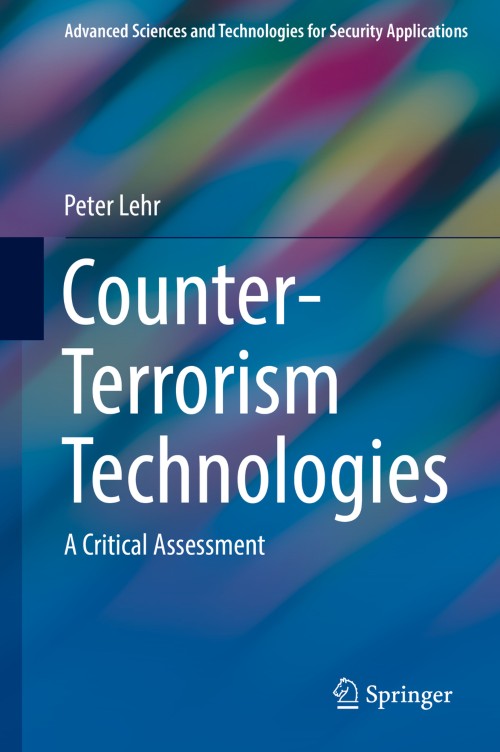
Counter-Terrorism Technologies [electronic resource] : A Critical Assessment / by Peter Lehr.
Erişim Adresi
ISBN
9783319909240
Dil Kodu
İngilizce
Yer Numarası
DK/20268
Yazar
Basım Bildirimi
1st ed. 2019.
Yayın Bilgisi
Cham : Springer International Publishing : Imprint: Springer, 2019.
Fiziksel Niteleme
VII, 217 p. online resource.
Dizi
Advanced Sciences and Technologies for Security Applications, 2363-9466
İçindekiler Notu
Introduction: Terrorism as a Threat to Open Societies -- Part 1: Barbarians at the Gates: ‘Sinful’ Cities -- Actions: The Return of Urban Guerillas -- Reactions: The New (Para-) Military Urbanism -- Consequences: The Urban Space as a (Limited) Battlespace. Part 2: ‘Our Silicon Will Win’: The Role of Technology in Urban Counter-Terrorism -- Identification: Biometrics, or a Real-Time 'Who is Who' -- Prediction and Postdiction: Real-Time Data Mining and Data Analytics -- Detection: Scanning and 'Sniffing' Technologies -- Surveillance and Observation: The All-Seeing Eye of Big Brother -- Protection: Defensible Spaces -- Threat Displacement Instead of Threat Eradication: Come Concluding Caveats -- Part 3: Brave New Cities: The Law of Unintended Consequences -- The Quest for Silver Bullets: Implications for our Construction of Citizenship -- Archipelagos of Fear: CT Technology and the Securitization of Everyday Life -- Undemocratic Means: The Rise of the Surveillance State -- Democracy Transfigured: The Dawn of the 'Umpire State' -- Outlook: The Need for 'Critical' Critical Infrastructure Studies.
Özet, vb.
This book critically discusses the role of technology for counter-terrorism in general, and for securing our vulnerable open societies in particular. It is set against the backdrop of the terrorist threat posed by the combined forces of Al Qaeda and ISIS/Daesh in the foreseeable future. The book commences by illuminating current and foreseeable tactics and weapons used by these implacable enemies – weapons that may well include chemical, biological, radiological and potentially even nuclear (CBRN) devices. In a second part, it introduces technologies already available or in development that promise an increase in safety and security when it comes to the dangers posed by these terrorists. This part also includes a critical discussion of advantages and disadvantages of such technologies that are, quite often, sold as a ‘silver bullet’ approach in the fight against terrorism. Controversies such as those triggered by the abuse of millimeter wave scanners deployed at severalWestern European airports will demonstrate that there are costs involved with regard to human rights. The third, analytical part takes the critical discussion further by arguing that the uncritical fielding of new surveillance and control technologies in parallel with the on-going outsourcing and privatization of key services of the state could well lead to dystopias as envisaged in a rather prescient way by the so-called cyperpunk novels of the 1980s. The book concludes with the question that any liberal democracy should ask itself: how far can we go with regard to hardening our societies against terrorist threats?
Konu
Terrorism.
Political violence.
Security systems.
Financial risk management.
Crime __ Sociological aspects.
Terrorism and Political Violence.
Security Science and Technology.
Risk Management.
Crime and Society.
Political violence.
Security systems.
Financial risk management.
Crime __ Sociological aspects.
Terrorism and Political Violence.
Security Science and Technology.
Risk Management.
Crime and Society.
Kurum Adı
Eseri Alıntıla
Referansları kullanmadan önce gözden geçirmeniz ve varsa gerekli düzeltmeleri yapmanız önerilir.
Dijital Kaynak
MARC Görünümü
LEADER 04783nam a22005655i 4500
001 819060
003 TR_AnAIT
005 20260130175028
007 cr nn 008mamaa
008 180710s2019 sz | s |||| 0|eng d
020 |a9783319909240|9978-3-319-90924-0
024 7 |a10.1007/978-3-319-90924-0|2doi
041 |aeng
049 |aTürk Tarih Kurumu Kütüphanesi
050 4|aJC328.6-.65
072 7|aJPWL|2bicssc
072 7|aPOL037000|2bisacsh
072 7|aJPWL|2thema
082 04|a327.117|223
082 04|a363.325|223
090 |aDK/20268
100 1 |aLehr, Peter.|eauthor.|4aut|4http://id.loc.gov/vocabulary/relators/aut
245 10|aCounter-Terrorism Technologies|h[electronic resource] :|bA Critical Assessment /|cby Peter Lehr.
250 |a1st ed. 2019.
264 1|aCham :|bSpringer International Publishing :|bImprint: Springer,|c2019.
300 |aVII, 217 p.|bonline resource.
336 |atext|btxt|2rdacontent
337 |acomputer|bc|2rdamedia
338 |aonline resource|bcr|2rdacarrier
347 |atext file|bPDF|2rda
490 1 |aAdvanced Sciences and Technologies for Security Applications,|x2363-9466
505 0 |aIntroduction: Terrorism as a Threat to Open Societies -- Part 1: Barbarians at the Gates: ‘Sinful’ Cities -- Actions: The Return of Urban Guerillas -- Reactions: The New (Para-) Military Urbanism -- Consequences: The Urban Space as a (Limited) Battlespace. Part 2: ‘Our Silicon Will Win’: The Role of Technology in Urban Counter-Terrorism -- Identification: Biometrics, or a Real-Time 'Who is Who' -- Prediction and Postdiction: Real-Time Data Mining and Data Analytics -- Detection: Scanning and 'Sniffing' Technologies -- Surveillance and Observation: The All-Seeing Eye of Big Brother -- Protection: Defensible Spaces -- Threat Displacement Instead of Threat Eradication: Come Concluding Caveats -- Part 3: Brave New Cities: The Law of Unintended Consequences -- The Quest for Silver Bullets: Implications for our Construction of Citizenship -- Archipelagos of Fear: CT Technology and the Securitization of Everyday Life -- Undemocratic Means: The Rise of the Surveillance State -- Democracy Transfigured: The Dawn of the 'Umpire State' -- Outlook: The Need for 'Critical' Critical Infrastructure Studies.
520 |aThis book critically discusses the role of technology for counter-terrorism in general, and for securing our vulnerable open societies in particular. It is set against the backdrop of the terrorist threat posed by the combined forces of Al Qaeda and ISIS/Daesh in the foreseeable future. The book commences by illuminating current and foreseeable tactics and weapons used by these implacable enemies – weapons that may well include chemical, biological, radiological and potentially even nuclear (CBRN) devices. In a second part, it introduces technologies already available or in development that promise an increase in safety and security when it comes to the dangers posed by these terrorists. This part also includes a critical discussion of advantages and disadvantages of such technologies that are, quite often, sold as a ‘silver bullet’ approach in the fight against terrorism. Controversies such as those triggered by the abuse of millimeter wave scanners deployed at severalWestern European airports will demonstrate that there are costs involved with regard to human rights. The third, analytical part takes the critical discussion further by arguing that the uncritical fielding of new surveillance and control technologies in parallel with the on-going outsourcing and privatization of key services of the state could well lead to dystopias as envisaged in a rather prescient way by the so-called cyperpunk novels of the 1980s. The book concludes with the question that any liberal democracy should ask itself: how far can we go with regard to hardening our societies against terrorist threats?
650 0|aTerrorism.
650 0|aPolitical violence.
650 0|aSecurity systems.
650 0|aFinancial risk management.
650 0|aCrime|xSociological aspects.
650 14|aTerrorism and Political Violence.
650 24|aSecurity Science and Technology.
650 24|aRisk Management.
650 24|aCrime and Society.
710 2 |aSpringerLink (Online service)
773 0 |tSpringer Nature eBook
776 08|iPrinted edition:|z9783319909233
776 08|iPrinted edition:|z9783319909257
776 08|iPrinted edition:|z9783030081324
830 0|aAdvanced Sciences and Technologies for Security Applications,|x2363-9466
856 40|uhttps://doi.org/10.1007/978-3-319-90924-0
912 |aZDB-2-POS
912 |aZDB-2-SXPI
950 |aPolitical Science and International Studies (SpringerNature-41174)
950 |aPolitical Science and International Studies (R0) (SpringerNature-43724)
001 819060
003 TR_AnAIT
005 20260130175028
007 cr nn 008mamaa
008 180710s2019 sz | s |||| 0|eng d
020 |a9783319909240|9978-3-319-90924-0
024 7 |a10.1007/978-3-319-90924-0|2doi
041 |aeng
049 |aTürk Tarih Kurumu Kütüphanesi
050 4|aJC328.6-.65
072 7|aJPWL|2bicssc
072 7|aPOL037000|2bisacsh
072 7|aJPWL|2thema
082 04|a327.117|223
082 04|a363.325|223
090 |aDK/20268
100 1 |aLehr, Peter.|eauthor.|4aut|4http://id.loc.gov/vocabulary/relators/aut
245 10|aCounter-Terrorism Technologies|h[electronic resource] :|bA Critical Assessment /|cby Peter Lehr.
250 |a1st ed. 2019.
264 1|aCham :|bSpringer International Publishing :|bImprint: Springer,|c2019.
300 |aVII, 217 p.|bonline resource.
336 |atext|btxt|2rdacontent
337 |acomputer|bc|2rdamedia
338 |aonline resource|bcr|2rdacarrier
347 |atext file|bPDF|2rda
490 1 |aAdvanced Sciences and Technologies for Security Applications,|x2363-9466
505 0 |aIntroduction: Terrorism as a Threat to Open Societies -- Part 1: Barbarians at the Gates: ‘Sinful’ Cities -- Actions: The Return of Urban Guerillas -- Reactions: The New (Para-) Military Urbanism -- Consequences: The Urban Space as a (Limited) Battlespace. Part 2: ‘Our Silicon Will Win’: The Role of Technology in Urban Counter-Terrorism -- Identification: Biometrics, or a Real-Time 'Who is Who' -- Prediction and Postdiction: Real-Time Data Mining and Data Analytics -- Detection: Scanning and 'Sniffing' Technologies -- Surveillance and Observation: The All-Seeing Eye of Big Brother -- Protection: Defensible Spaces -- Threat Displacement Instead of Threat Eradication: Come Concluding Caveats -- Part 3: Brave New Cities: The Law of Unintended Consequences -- The Quest for Silver Bullets: Implications for our Construction of Citizenship -- Archipelagos of Fear: CT Technology and the Securitization of Everyday Life -- Undemocratic Means: The Rise of the Surveillance State -- Democracy Transfigured: The Dawn of the 'Umpire State' -- Outlook: The Need for 'Critical' Critical Infrastructure Studies.
520 |aThis book critically discusses the role of technology for counter-terrorism in general, and for securing our vulnerable open societies in particular. It is set against the backdrop of the terrorist threat posed by the combined forces of Al Qaeda and ISIS/Daesh in the foreseeable future. The book commences by illuminating current and foreseeable tactics and weapons used by these implacable enemies – weapons that may well include chemical, biological, radiological and potentially even nuclear (CBRN) devices. In a second part, it introduces technologies already available or in development that promise an increase in safety and security when it comes to the dangers posed by these terrorists. This part also includes a critical discussion of advantages and disadvantages of such technologies that are, quite often, sold as a ‘silver bullet’ approach in the fight against terrorism. Controversies such as those triggered by the abuse of millimeter wave scanners deployed at severalWestern European airports will demonstrate that there are costs involved with regard to human rights. The third, analytical part takes the critical discussion further by arguing that the uncritical fielding of new surveillance and control technologies in parallel with the on-going outsourcing and privatization of key services of the state could well lead to dystopias as envisaged in a rather prescient way by the so-called cyperpunk novels of the 1980s. The book concludes with the question that any liberal democracy should ask itself: how far can we go with regard to hardening our societies against terrorist threats?
650 0|aTerrorism.
650 0|aPolitical violence.
650 0|aSecurity systems.
650 0|aFinancial risk management.
650 0|aCrime|xSociological aspects.
650 14|aTerrorism and Political Violence.
650 24|aSecurity Science and Technology.
650 24|aRisk Management.
650 24|aCrime and Society.
710 2 |aSpringerLink (Online service)
773 0 |tSpringer Nature eBook
776 08|iPrinted edition:|z9783319909233
776 08|iPrinted edition:|z9783319909257
776 08|iPrinted edition:|z9783030081324
830 0|aAdvanced Sciences and Technologies for Security Applications,|x2363-9466
856 40|uhttps://doi.org/10.1007/978-3-319-90924-0
912 |aZDB-2-POS
912 |aZDB-2-SXPI
950 |aPolitical Science and International Studies (SpringerNature-41174)
950 |aPolitical Science and International Studies (R0) (SpringerNature-43724)
Materyaller
Depodan talep edilen materyal sadece kütüphane içerisinde kullanılmaktadır.
Materyal dışarıya ödünç verilmemektedir.
Materyal dışarıya ödünç verilmemektedir.
