

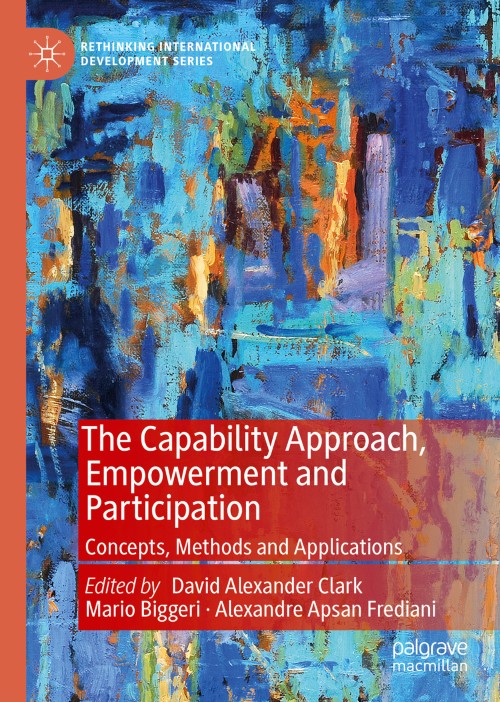
The Capability Approach, Empowerment and Participation [electronic resource] : Concepts, Methods and Applications / edited by David Alexander Clark, Mario Biggeri, Alexandre Apsan Frediani.
Erişim Adresi
ISBN
9781137352309
Dil Kodu
İngilizce
Yer Numarası
DK/20275
Basım Bildirimi
1st ed. 2019.
Yayın Bilgisi
London : Palgrave Macmillan UK : Imprint: Palgrave Macmillan, 2019.
Fiziksel Niteleme
XXV, 428 p. 16 illus., 2 illus. in color. online resource.
Dizi
Rethinking International Development series, 2946-224X
İçindekiler Notu
1. The Human Development and Capability Approach – The Role of Empowerment and Participation -- 2. The Practice of Participation and the Capability Approach -- 3. Power and Deliberative Participation in Sen’s Capability Approach -- 4. Balancing Pessimism of the Intellect and Optimism of the Will: Some Reflections on the Capability Approach, Gender, Empowerment and Education -- 5. Notions of Empowerment and Participation: Contributions from and to the Capability Approach -- 6. Process and Outcomes: participation and empowerment in a multidimensional poverty framework -- 7. Participatory Development: A Sustainable Approach for Reducing Inequality and Fighting Poverty? The Example of Disability Policies in Afghanistan -- 8. Children and Youth Participation in Decision Making and Research Processes -- 9. The Integrated Capabilities Framework: Exploring Multiculturalism and Human Well-Beingin Participatory Settings -- 10. Participatory Research Methods and the Capability Approach: Researching the Housing Dimensions of Squatter Upgrading Programmes in Salvador da Bahia, Brazil -- 11. Participatory Monitoring of Development Projects in the South Pacific -- 12. Planning and Managing for Human Development: What Contribution Can the Capability Approach Make? -- 13. Emancipatory Research as Empowerment: An Illustration from a Research Study of Persons with Disabilities in Palestine -- 14. Capability Development and Decentralisation -- 15. Participation, Empowerment and Capabilities: Key Lessons and Future Challenges.
Özet, vb.
“[The] eventual adoption [of the capability approach] by research and policy analysts depends on the development of methods and applications which demonstrate implementation of the approach in concrete settings. This excellent volume contributes to this important task by linking concepts, methods and application, and by highlighting both the uses and the challenges of the capability approach.” —Ravi Kanbur, Professor, Cornell University, USA “This timely, comprehensive and well-organised volume brings together new work by leading researchers and will be essential reading for all students and researchers interested in the capability approach and its application.” —Mozaffar Qizilbash, Professor, University of York, UK “The capability approach has been centrally influential in moving development policy towards highlighting the importance of processes of empowerment and participation. This book provides useful insights intohow theory translates into the practical application of these valuable concepts.” —Vijayendra Rao, Lead Economist, Development Research Group, World Bank, USA This book explores the linkages between Amartya Sen’s Capability Approach and participatory forms of development – especially those associated with critical pedagogy and empowerment from the bottom-up. It shows how the capability approach and the participatory movement can complement and reinforce each other helping to ensure that democratic principles are respected and become the foundation for sustainable human development. The Capability Approach provides guiding principles for protecting the transformative roots of participation (safeguarding ownership, accountability and empowerment), while participation delivers vital methods for making the Capability Approach operational. Divided into three overlapping parts that focus on concepts, methods and applications, this work draws on diverse fieldwork experiences to unpack power relations, address adaptive preferences, explore individual and collective agency, consider new partnerships for development, and develop innovative concepts. David Alexander Clark is Affiliated Lecturer in the Centre of Development Studies at the University of Cambridge, UK. Mario Biggeri is Associate Professor in the Department of Economics and Management at the University of Florence, Italy. Alexandre Apsan Frediani is Associate Professor in the Bartlett Development Planning Unit at University College London, UK.
Konu
Economic development.
International economic relations.
Development Studies.
International Political Economy’.
International economic relations.
Development Studies.
International Political Economy’.
Kurum Adı
Eseri Alıntıla
Referansları kullanmadan önce gözden geçirmeniz ve varsa gerekli düzeltmeleri yapmanız önerilir.
Dijital Kaynak
MARC Görünümü
LEADER 06818nam a22005535i 4500
001 819067
003 TR_AnAIT
005 20260130175015
007 cr nn 008mamaa
008 190515s2019 xxk| s |||| 0|eng d
020 |a9781137352309|9978-1-137-35230-9
024 7 |a10.1057/978-1-137-35230-9|2doi
041 |aeng
049 |aTürk Tarih Kurumu Kütüphanesi
050 4|aHD72-88
072 7|aGTF|2bicssc
072 7|aSOC042000|2bisacsh
072 7|aGTP|2thema
082 04|a338.9|223
090 |aDK/20275
245 14|aThe Capability Approach, Empowerment and Participation|h[electronic resource] :|bConcepts, Methods and Applications /|cedited by David Alexander Clark, Mario Biggeri, Alexandre Apsan Frediani.
250 |a1st ed. 2019.
264 1|aLondon :|bPalgrave Macmillan UK :|bImprint: Palgrave Macmillan,|c2019.
300 |aXXV, 428 p. 16 illus., 2 illus. in color.|bonline resource.
336 |atext|btxt|2rdacontent
337 |acomputer|bc|2rdamedia
338 |aonline resource|bcr|2rdacarrier
347 |atext file|bPDF|2rda
490 1 |aRethinking International Development series,|x2946-224X
505 0 |a1. The Human Development and Capability Approach – The Role of Empowerment and Participation -- 2. The Practice of Participation and the Capability Approach -- 3. Power and Deliberative Participation in Sen’s Capability Approach -- 4. Balancing Pessimism of the Intellect and Optimism of the Will: Some Reflections on the Capability Approach, Gender, Empowerment and Education -- 5. Notions of Empowerment and Participation: Contributions from and to the Capability Approach -- 6. Process and Outcomes: participation and empowerment in a multidimensional poverty framework -- 7. Participatory Development: A Sustainable Approach for Reducing Inequality and Fighting Poverty? The Example of Disability Policies in Afghanistan -- 8. Children and Youth Participation in Decision Making and Research Processes -- 9. The Integrated Capabilities Framework: Exploring Multiculturalism and Human Well-Beingin Participatory Settings -- 10. Participatory Research Methods and the Capability Approach: Researching the Housing Dimensions of Squatter Upgrading Programmes in Salvador da Bahia, Brazil -- 11. Participatory Monitoring of Development Projects in the South Pacific -- 12. Planning and Managing for Human Development: What Contribution Can the Capability Approach Make? -- 13. Emancipatory Research as Empowerment: An Illustration from a Research Study of Persons with Disabilities in Palestine -- 14. Capability Development and Decentralisation -- 15. Participation, Empowerment and Capabilities: Key Lessons and Future Challenges.
520 |a“[The] eventual adoption [of the capability approach] by research and policy analysts depends on the development of methods and applications which demonstrate implementation of the approach in concrete settings. This excellent volume contributes to this important task by linking concepts, methods and application, and by highlighting both the uses and the challenges of the capability approach.” —Ravi Kanbur, Professor, Cornell University, USA “This timely, comprehensive and well-organised volume brings together new work by leading researchers and will be essential reading for all students and researchers interested in the capability approach and its application.” —Mozaffar Qizilbash, Professor, University of York, UK “The capability approach has been centrally influential in moving development policy towards highlighting the importance of processes of empowerment and participation. This book provides useful insights intohow theory translates into the practical application of these valuable concepts.” —Vijayendra Rao, Lead Economist, Development Research Group, World Bank, USA This book explores the linkages between Amartya Sen’s Capability Approach and participatory forms of development – especially those associated with critical pedagogy and empowerment from the bottom-up. It shows how the capability approach and the participatory movement can complement and reinforce each other helping to ensure that democratic principles are respected and become the foundation for sustainable human development. The Capability Approach provides guiding principles for protecting the transformative roots of participation (safeguarding ownership, accountability and empowerment), while participation delivers vital methods for making the Capability Approach operational. Divided into three overlapping parts that focus on concepts, methods and applications, this work draws on diverse fieldwork experiences to unpack power relations, address adaptive preferences, explore individual and collective agency, consider new partnerships for development, and develop innovative concepts. David Alexander Clark is Affiliated Lecturer in the Centre of Development Studies at the University of Cambridge, UK. Mario Biggeri is Associate Professor in the Department of Economics and Management at the University of Florence, Italy. Alexandre Apsan Frediani is Associate Professor in the Bartlett Development Planning Unit at University College London, UK.
532 8 |aAccessibility summary: This PDF was produced prior to the implementation of current accessibility best practices. It supports searchable and selectable text. It may or may not include elements such as described non-text content (images, graphs etc), reflowable text or screen reader compatibility. Users with accessibility needs may experience limitations. Please contact us at accessibilitysupport@springernature.com if you require assistance or an alternative format.
532 8 |aNo reading system accessibility options actively disabled
532 8 |aPublisher contact for further accessibility information: accessibilitysupport@springernature.com
650 0|aEconomic development.
650 0|aInternational economic relations.
650 14|aDevelopment Studies.
650 24|aInternational Political Economy’.
700 1 |aClark, David Alexander.|eeditor.|4edt|4http://id.loc.gov/vocabulary/relators/edt
700 1 |aBiggeri, Mario.|eeditor.|4edt|4http://id.loc.gov/vocabulary/relators/edt
700 1 |aFrediani, Alexandre Apsan.|eeditor.|4edt|4http://id.loc.gov/vocabulary/relators/edt
710 2 |aSpringerLink (Online service)
773 0 |tSpringer Nature eBook
776 08|iPrinted edition:|z9781137352293
776 08|iPrinted edition:|z9781349674916
776 08|iPrinted edition:|z9781349674909
830 0|aRethinking International Development series,|x2946-224X
856 40|uhttps://doi.org/10.1057/978-1-137-35230-9
912 |aZDB-2-POS
912 |aZDB-2-SXPI
950 |aPolitical Science and International Studies (SpringerNature-41174)
950 |aPolitical Science and International Studies (R0) (SpringerNature-43724)
001 819067
003 TR_AnAIT
005 20260130175015
007 cr nn 008mamaa
008 190515s2019 xxk| s |||| 0|eng d
020 |a9781137352309|9978-1-137-35230-9
024 7 |a10.1057/978-1-137-35230-9|2doi
041 |aeng
049 |aTürk Tarih Kurumu Kütüphanesi
050 4|aHD72-88
072 7|aGTF|2bicssc
072 7|aSOC042000|2bisacsh
072 7|aGTP|2thema
082 04|a338.9|223
090 |aDK/20275
245 14|aThe Capability Approach, Empowerment and Participation|h[electronic resource] :|bConcepts, Methods and Applications /|cedited by David Alexander Clark, Mario Biggeri, Alexandre Apsan Frediani.
250 |a1st ed. 2019.
264 1|aLondon :|bPalgrave Macmillan UK :|bImprint: Palgrave Macmillan,|c2019.
300 |aXXV, 428 p. 16 illus., 2 illus. in color.|bonline resource.
336 |atext|btxt|2rdacontent
337 |acomputer|bc|2rdamedia
338 |aonline resource|bcr|2rdacarrier
347 |atext file|bPDF|2rda
490 1 |aRethinking International Development series,|x2946-224X
505 0 |a1. The Human Development and Capability Approach – The Role of Empowerment and Participation -- 2. The Practice of Participation and the Capability Approach -- 3. Power and Deliberative Participation in Sen’s Capability Approach -- 4. Balancing Pessimism of the Intellect and Optimism of the Will: Some Reflections on the Capability Approach, Gender, Empowerment and Education -- 5. Notions of Empowerment and Participation: Contributions from and to the Capability Approach -- 6. Process and Outcomes: participation and empowerment in a multidimensional poverty framework -- 7. Participatory Development: A Sustainable Approach for Reducing Inequality and Fighting Poverty? The Example of Disability Policies in Afghanistan -- 8. Children and Youth Participation in Decision Making and Research Processes -- 9. The Integrated Capabilities Framework: Exploring Multiculturalism and Human Well-Beingin Participatory Settings -- 10. Participatory Research Methods and the Capability Approach: Researching the Housing Dimensions of Squatter Upgrading Programmes in Salvador da Bahia, Brazil -- 11. Participatory Monitoring of Development Projects in the South Pacific -- 12. Planning and Managing for Human Development: What Contribution Can the Capability Approach Make? -- 13. Emancipatory Research as Empowerment: An Illustration from a Research Study of Persons with Disabilities in Palestine -- 14. Capability Development and Decentralisation -- 15. Participation, Empowerment and Capabilities: Key Lessons and Future Challenges.
520 |a“[The] eventual adoption [of the capability approach] by research and policy analysts depends on the development of methods and applications which demonstrate implementation of the approach in concrete settings. This excellent volume contributes to this important task by linking concepts, methods and application, and by highlighting both the uses and the challenges of the capability approach.” —Ravi Kanbur, Professor, Cornell University, USA “This timely, comprehensive and well-organised volume brings together new work by leading researchers and will be essential reading for all students and researchers interested in the capability approach and its application.” —Mozaffar Qizilbash, Professor, University of York, UK “The capability approach has been centrally influential in moving development policy towards highlighting the importance of processes of empowerment and participation. This book provides useful insights intohow theory translates into the practical application of these valuable concepts.” —Vijayendra Rao, Lead Economist, Development Research Group, World Bank, USA This book explores the linkages between Amartya Sen’s Capability Approach and participatory forms of development – especially those associated with critical pedagogy and empowerment from the bottom-up. It shows how the capability approach and the participatory movement can complement and reinforce each other helping to ensure that democratic principles are respected and become the foundation for sustainable human development. The Capability Approach provides guiding principles for protecting the transformative roots of participation (safeguarding ownership, accountability and empowerment), while participation delivers vital methods for making the Capability Approach operational. Divided into three overlapping parts that focus on concepts, methods and applications, this work draws on diverse fieldwork experiences to unpack power relations, address adaptive preferences, explore individual and collective agency, consider new partnerships for development, and develop innovative concepts. David Alexander Clark is Affiliated Lecturer in the Centre of Development Studies at the University of Cambridge, UK. Mario Biggeri is Associate Professor in the Department of Economics and Management at the University of Florence, Italy. Alexandre Apsan Frediani is Associate Professor in the Bartlett Development Planning Unit at University College London, UK.
532 8 |aAccessibility summary: This PDF was produced prior to the implementation of current accessibility best practices. It supports searchable and selectable text. It may or may not include elements such as described non-text content (images, graphs etc), reflowable text or screen reader compatibility. Users with accessibility needs may experience limitations. Please contact us at accessibilitysupport@springernature.com if you require assistance or an alternative format.
532 8 |aNo reading system accessibility options actively disabled
532 8 |aPublisher contact for further accessibility information: accessibilitysupport@springernature.com
650 0|aEconomic development.
650 0|aInternational economic relations.
650 14|aDevelopment Studies.
650 24|aInternational Political Economy’.
700 1 |aClark, David Alexander.|eeditor.|4edt|4http://id.loc.gov/vocabulary/relators/edt
700 1 |aBiggeri, Mario.|eeditor.|4edt|4http://id.loc.gov/vocabulary/relators/edt
700 1 |aFrediani, Alexandre Apsan.|eeditor.|4edt|4http://id.loc.gov/vocabulary/relators/edt
710 2 |aSpringerLink (Online service)
773 0 |tSpringer Nature eBook
776 08|iPrinted edition:|z9781137352293
776 08|iPrinted edition:|z9781349674916
776 08|iPrinted edition:|z9781349674909
830 0|aRethinking International Development series,|x2946-224X
856 40|uhttps://doi.org/10.1057/978-1-137-35230-9
912 |aZDB-2-POS
912 |aZDB-2-SXPI
950 |aPolitical Science and International Studies (SpringerNature-41174)
950 |aPolitical Science and International Studies (R0) (SpringerNature-43724)
Materyaller
Depodan talep edilen materyal sadece kütüphane içerisinde kullanılmaktadır.
Materyal dışarıya ödünç verilmemektedir.
Materyal dışarıya ödünç verilmemektedir.
