LEADER 03872nam a22005295i 4500
001 819139
003 TR_AnAIT
005 20260130174836
007 cr nn 008mamaa
008 170622s2017 sz | s |||| 0|eng d
020 |a9783319516110|9978-3-319-51611-0
024 7 |a10.1007/978-3-319-51611-0|2doi
041 |aeng
049 |aTürk Tarih Kurumu Kütüphanesi
050 4|aJN1-9692.2
072 7|aJP|2bicssc
072 7|a1D|2bicssc
072 7|aPOL058000|2bisacsh
072 7|aJP|x1D|2thema
082 04|a320.94|223
090 |aDK/20347
100 1 |aGalpin, Charlotte.|eauthor.|4aut|4http://id.loc.gov/vocabulary/relators/aut
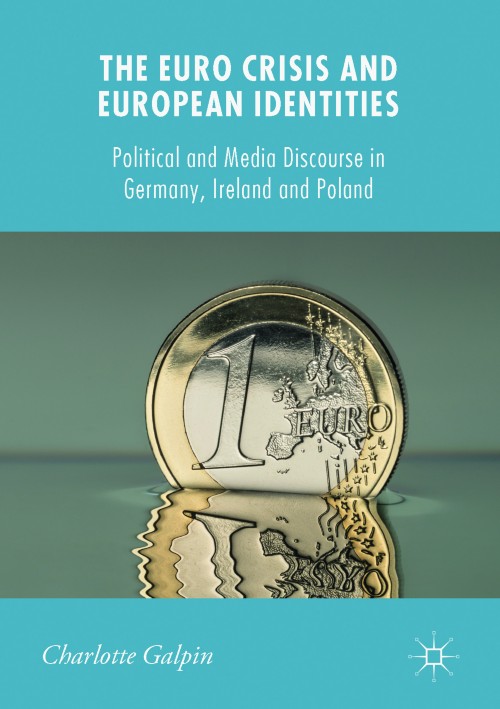
245 14|aThe Euro Crisis and European Identities|h[electronic resource] :|bPolitical and Media Discourse in Germany, Ireland and Poland /|cby Charlotte Galpin.
250 |a1st ed. 2017.
264 1|aCham :|bSpringer International Publishing :|bImprint: Palgrave Macmillan,|c2017.
300 |aXV, 259 p.|bonline resource.
336 |atext|btxt|2rdacontent
337 |acomputer|bc|2rdamedia
338 |aonline resource|bcr|2rdacarrier
347 |atext file|bPDF|2rda
490 1 |aNew Perspectives in German Political Studies,|x2947-6755
505 0 |aChapter 1. Introduction -- Chapter 2. European Identities at Times of Crisis -- Chapter 3. European Identity Discourses in Germany, Ireland and Poland -- Chapter 4. Has Germany Fallen Out of Love with Europe? -- Chapter 5. Irish Identity and the Utility of Europe -- Chapter 6. The Battle for the European Core: Polishness as Europeanness? -- Chapter 7. Identity Continuity, Policy Change? Actors, Institutions and Identities -- Chapter 8. Euroscepticism, Identity and Democracy in the EU. .
520 |aThis book builds upon our knowledge of the far-reaching economic, political and social effects of the Euro crisis on the European Union by providing a unique study of European identities. In particular, it considers the impact on the construction of European identities in political and media discourse in Germany, Ireland and Poland—three countries with profoundly different experiences of the crisis and never before compared in a single study. Offering an original insight into the dynamics of identity change at moments of upheaval, the author argues that political and media actors in the early stages of the crisis drew on long-standing identities in order to make sense of the crisis in the public sphere. European identity discourses are thus resilient to change but become central to legitimising and contesting bailouts and further economic integration. As such, the author challenges the commonly held view that identities change dramatically at times of crisis but argues that this very resilience helps to understand the EU’s current divisions. The study of identity during the Euro crisis sheds important light on the prospects for European solidarity as well as on the future of the single currency as an identity-building project. The book will be of particular interest to students and scholars in the fields of EU politics, comparative European politics, and identity politics.
650 0|aEurope|xPolitics and government.
650 0|aComparative government.
650 0|aCommunication in politics.
650 14|aEuropean Politics.
650 24|aComparative Politics.
650 24|aPolitical Communication.
710 2 |aSpringerLink (Online service)
773 0 |tSpringer Nature eBook
776 08|iPrinted edition:|z9783319516103
776 08|iPrinted edition:|z9783319516127
776 08|iPrinted edition:|z9783319846989
830 0|aNew Perspectives in German Political Studies,|x2947-6755
856 40|uhttps://doi.org/10.1007/978-3-319-51611-0
912 |aZDB-2-POS
912 |aZDB-2-SXPI
950 |aPolitical Science and International Studies (SpringerNature-41174)
950 |aPolitical Science and International Studies (R0) (SpringerNature-43724)