

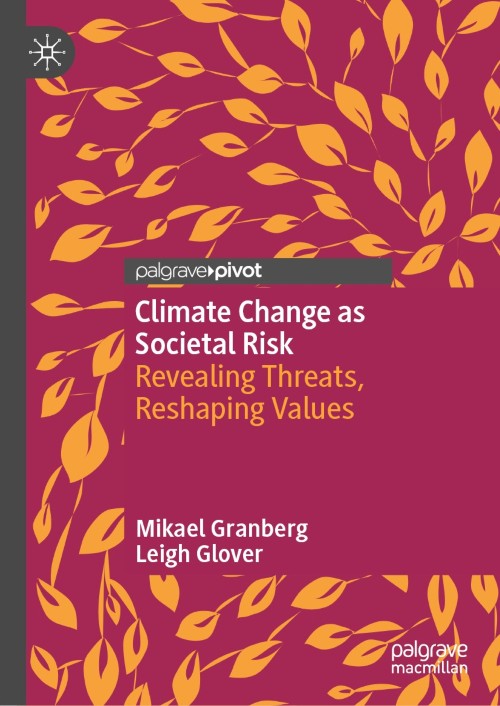
Climate Change as Societal Risk [electronic resource] : Revealing Threats, Reshaping Values / by Mikael Granberg, Leigh Glover.
Erişim Adresi
ISBN
9783031439612
Dil Kodu
İngilizce
Yer Numarası
DK/20403
Basım Bildirimi
1st ed. 2023.
Yayın Bilgisi
Cham : Springer International Publishing : Imprint: Palgrave Macmillan, 2023.
Fiziksel Niteleme
XIII, 177 p. 2 illus., 1 illus. in color. online resource.
İçindekiler Notu
Chapter 1: Introduction -- Chapter 2: Characterizing Risk -- Chapter 3: Competing Concepts of Risk -- Chapter 4: Risk, Equity and Politics -- Chapter 5: Climate Change and Risk -- Chapter 6: Risk and the Climate Change Discourse -- Chapter 7: Discussion and Conclusions.
Özet, vb.
This book analyzes climate change from a societal risk perspective, considering IPCC data, harm reduction, and global impact. Climate change is a globalised agent of social disruption whose impacts will worsen societal inequities and inequalities around the world. For some unfortunate societies already precariously exposed, climate change will tip them into societal collapse. Devastation will also occur to many ecological values in which all societies are embedded. But effective social action can limit the extent of these costs and losses. Ultimately, only social transformation can limit the social and environmental harms of climate change. But what does this mean? To what extent is society at risk? Are such risks particularized and restricted to specific segments and localities? Or is society at risk in a more universal way? Climate risks are re-shaping the practices of households, communities, governments and businesses. In this way, climate risks are a dynamic element in social change and social processes. Risk holds a mirror to society, revealing who and what is prioritized, recognized and valued. It also provides a reckoning of our perceived strengths, vulnerabilities and weaknesses. This volume examines how we understand the societal risks of contemporary and forecast climate change impacts—and those risks inherent in dealing with these impacts. We know that society is fashioning a new global climate—but climate change is also re-fashioning society; this book explores this dynamic process and considers its implications for future society. Mikael Granberg is Professor of Political Science and a Senior Research Fellow at Centre for Societal Risk Research at Karlstad University, Sweden, and a Senior Research Fellow at the Center for Natural Hazards & Disaster Science (CNDS) at Uppsala University, Sweden. Leigh Glover is Senior Research Fellow at the Centre for Societal Risk Research at Karlstad University,Sweden. He is the former Director of the Australasian Centre for the Governance & Management of Urban Transport (GAMUT) at the University of Melbourne, Australia.
Konu
Environmental policy.
Financial risk management.
Climatology.
Social justice.
Environmental Policy.
Risk Management.
Climate Sciences.
Social Justice.
Financial risk management.
Climatology.
Social justice.
Environmental Policy.
Risk Management.
Climate Sciences.
Social Justice.
Diğer Yazarlar
Kurum Adı
Eseri Alıntıla
Referansları kullanmadan önce gözden geçirmeniz ve varsa gerekli düzeltmeleri yapmanız önerilir.
Dijital Kaynak
MARC Görünümü
LEADER 05620nam a22006495i 4500
001 819195
003 TR_AnAIT
005 20260130174645
007 cr nn 008mamaa
008 231102s2023 sz | s |||| 0|eng d
020 |a9783031439612|9978-3-031-43961-2
024 7 |a10.1007/978-3-031-43961-2|2doi
041 |aeng
049 |aTürk Tarih Kurumu Kütüphanesi
050 4|aGE170-190
072 7|aJPQB|2bicssc
072 7|aPOL044000|2bisacsh
072 7|aJPQB|2thema
082 04|a363.70561|223
090 |aDK/20403
100 1 |aGranberg, Mikael.|eauthor.|0(orcid)0000-0002-5356-4112|1https://orcid.org/0000-0002-5356-4112|4aut|4http://id.loc.gov/vocabulary/relators/aut
245 10|aClimate Change as Societal Risk|h[electronic resource] :|bRevealing Threats, Reshaping Values /|cby Mikael Granberg, Leigh Glover.
250 |a1st ed. 2023.
264 1|aCham :|bSpringer International Publishing :|bImprint: Palgrave Macmillan,|c2023.
300 |aXIII, 177 p. 2 illus., 1 illus. in color.|bonline resource.
336 |atext|btxt|2rdacontent
337 |acomputer|bc|2rdamedia
338 |aonline resource|bcr|2rdacarrier
341 0 |bTable of contents navigation|2onix
341 0 |bSingle logical reading order|2onix
341 0 |bShort alternative textual descriptions|2onix
341 0 |bUse of color is not sole means of conveying information|2onix
341 0 |bUse of high contrast between text and background color|2onix
341 0 |bNext / Previous structural navigation|2onix
341 0 |bAll non-decorative content supports reading without sight|2onix
347 |atext file|bPDF|2rda
505 0 |aChapter 1: Introduction -- Chapter 2: Characterizing Risk -- Chapter 3: Competing Concepts of Risk -- Chapter 4: Risk, Equity and Politics -- Chapter 5: Climate Change and Risk -- Chapter 6: Risk and the Climate Change Discourse -- Chapter 7: Discussion and Conclusions.
520 |aThis book analyzes climate change from a societal risk perspective, considering IPCC data, harm reduction, and global impact. Climate change is a globalised agent of social disruption whose impacts will worsen societal inequities and inequalities around the world. For some unfortunate societies already precariously exposed, climate change will tip them into societal collapse. Devastation will also occur to many ecological values in which all societies are embedded. But effective social action can limit the extent of these costs and losses. Ultimately, only social transformation can limit the social and environmental harms of climate change. But what does this mean? To what extent is society at risk? Are such risks particularized and restricted to specific segments and localities? Or is society at risk in a more universal way? Climate risks are re-shaping the practices of households, communities, governments and businesses. In this way, climate risks are a dynamic element in social change and social processes. Risk holds a mirror to society, revealing who and what is prioritized, recognized and valued. It also provides a reckoning of our perceived strengths, vulnerabilities and weaknesses. This volume examines how we understand the societal risks of contemporary and forecast climate change impacts—and those risks inherent in dealing with these impacts. We know that society is fashioning a new global climate—but climate change is also re-fashioning society; this book explores this dynamic process and considers its implications for future society. Mikael Granberg is Professor of Political Science and a Senior Research Fellow at Centre for Societal Risk Research at Karlstad University, Sweden, and a Senior Research Fellow at the Center for Natural Hazards & Disaster Science (CNDS) at Uppsala University, Sweden. Leigh Glover is Senior Research Fellow at the Centre for Societal Risk Research at Karlstad University,Sweden. He is the former Director of the Australasian Centre for the Governance & Management of Urban Transport (GAMUT) at the University of Melbourne, Australia.
532 8 |aAccessibility summary: This PDF does not fully comply with PDF/UA standards, but does feature limited screen reader support, described non-text content (images, graphs), bookmarks for easy navigation and searchable, selectable text. Users of assistive technologies may experience difficulty navigating or interpreting content in this document. We recognize the importance of accessibility, and we welcome queries about accessibility for any of our products. If you have a question or an access need, please get in touch with us at accessibilitysupport@springernature.com.
532 8 |aNo reading system accessibility options actively disabled
532 8 |aPublisher contact for further accessibility information: accessibilitysupport@springernature.com
650 0|aEnvironmental policy.
650 0|aFinancial risk management.
650 0|aClimatology.
650 0|aSocial justice.
650 14|aEnvironmental Policy.
650 24|aRisk Management.
650 24|aClimate Sciences.
650 24|aSocial Justice.
700 1 |aGlover, Leigh.|eauthor.|4aut|4http://id.loc.gov/vocabulary/relators/aut
710 2 |aSpringerLink (Online service)
773 0 |tSpringer Nature eBook
776 08|iPrinted edition:|z9783031439605
776 08|iPrinted edition:|z9783031439629
776 08|iPrinted edition:|z9783031439636
856 40|uhttps://doi.org/10.1007/978-3-031-43961-2
912 |aZDB-2-POS
912 |aZDB-2-SXPI
950 |aPolitical Science and International Studies (SpringerNature-41174)
950 |aPolitical Science and International Studies (R0) (SpringerNature-43724)
001 819195
003 TR_AnAIT
005 20260130174645
007 cr nn 008mamaa
008 231102s2023 sz | s |||| 0|eng d
020 |a9783031439612|9978-3-031-43961-2
024 7 |a10.1007/978-3-031-43961-2|2doi
041 |aeng
049 |aTürk Tarih Kurumu Kütüphanesi
050 4|aGE170-190
072 7|aJPQB|2bicssc
072 7|aPOL044000|2bisacsh
072 7|aJPQB|2thema
082 04|a363.70561|223
090 |aDK/20403
100 1 |aGranberg, Mikael.|eauthor.|0(orcid)0000-0002-5356-4112|1https://orcid.org/0000-0002-5356-4112|4aut|4http://id.loc.gov/vocabulary/relators/aut
245 10|aClimate Change as Societal Risk|h[electronic resource] :|bRevealing Threats, Reshaping Values /|cby Mikael Granberg, Leigh Glover.
250 |a1st ed. 2023.
264 1|aCham :|bSpringer International Publishing :|bImprint: Palgrave Macmillan,|c2023.
300 |aXIII, 177 p. 2 illus., 1 illus. in color.|bonline resource.
336 |atext|btxt|2rdacontent
337 |acomputer|bc|2rdamedia
338 |aonline resource|bcr|2rdacarrier
341 0 |bTable of contents navigation|2onix
341 0 |bSingle logical reading order|2onix
341 0 |bShort alternative textual descriptions|2onix
341 0 |bUse of color is not sole means of conveying information|2onix
341 0 |bUse of high contrast between text and background color|2onix
341 0 |bNext / Previous structural navigation|2onix
341 0 |bAll non-decorative content supports reading without sight|2onix
347 |atext file|bPDF|2rda
505 0 |aChapter 1: Introduction -- Chapter 2: Characterizing Risk -- Chapter 3: Competing Concepts of Risk -- Chapter 4: Risk, Equity and Politics -- Chapter 5: Climate Change and Risk -- Chapter 6: Risk and the Climate Change Discourse -- Chapter 7: Discussion and Conclusions.
520 |aThis book analyzes climate change from a societal risk perspective, considering IPCC data, harm reduction, and global impact. Climate change is a globalised agent of social disruption whose impacts will worsen societal inequities and inequalities around the world. For some unfortunate societies already precariously exposed, climate change will tip them into societal collapse. Devastation will also occur to many ecological values in which all societies are embedded. But effective social action can limit the extent of these costs and losses. Ultimately, only social transformation can limit the social and environmental harms of climate change. But what does this mean? To what extent is society at risk? Are such risks particularized and restricted to specific segments and localities? Or is society at risk in a more universal way? Climate risks are re-shaping the practices of households, communities, governments and businesses. In this way, climate risks are a dynamic element in social change and social processes. Risk holds a mirror to society, revealing who and what is prioritized, recognized and valued. It also provides a reckoning of our perceived strengths, vulnerabilities and weaknesses. This volume examines how we understand the societal risks of contemporary and forecast climate change impacts—and those risks inherent in dealing with these impacts. We know that society is fashioning a new global climate—but climate change is also re-fashioning society; this book explores this dynamic process and considers its implications for future society. Mikael Granberg is Professor of Political Science and a Senior Research Fellow at Centre for Societal Risk Research at Karlstad University, Sweden, and a Senior Research Fellow at the Center for Natural Hazards & Disaster Science (CNDS) at Uppsala University, Sweden. Leigh Glover is Senior Research Fellow at the Centre for Societal Risk Research at Karlstad University,Sweden. He is the former Director of the Australasian Centre for the Governance & Management of Urban Transport (GAMUT) at the University of Melbourne, Australia.
532 8 |aAccessibility summary: This PDF does not fully comply with PDF/UA standards, but does feature limited screen reader support, described non-text content (images, graphs), bookmarks for easy navigation and searchable, selectable text. Users of assistive technologies may experience difficulty navigating or interpreting content in this document. We recognize the importance of accessibility, and we welcome queries about accessibility for any of our products. If you have a question or an access need, please get in touch with us at accessibilitysupport@springernature.com.
532 8 |aNo reading system accessibility options actively disabled
532 8 |aPublisher contact for further accessibility information: accessibilitysupport@springernature.com
650 0|aEnvironmental policy.
650 0|aFinancial risk management.
650 0|aClimatology.
650 0|aSocial justice.
650 14|aEnvironmental Policy.
650 24|aRisk Management.
650 24|aClimate Sciences.
650 24|aSocial Justice.
700 1 |aGlover, Leigh.|eauthor.|4aut|4http://id.loc.gov/vocabulary/relators/aut
710 2 |aSpringerLink (Online service)
773 0 |tSpringer Nature eBook
776 08|iPrinted edition:|z9783031439605
776 08|iPrinted edition:|z9783031439629
776 08|iPrinted edition:|z9783031439636
856 40|uhttps://doi.org/10.1007/978-3-031-43961-2
912 |aZDB-2-POS
912 |aZDB-2-SXPI
950 |aPolitical Science and International Studies (SpringerNature-41174)
950 |aPolitical Science and International Studies (R0) (SpringerNature-43724)
Materyaller
Depodan talep edilen materyal sadece kütüphane içerisinde kullanılmaktadır.
Materyal dışarıya ödünç verilmemektedir.
Materyal dışarıya ödünç verilmemektedir.
