LEADER 03406nam a22005295i 4500
001 819251
003 TR_AnAIT
005 20260130174452
007 cr nn 008mamaa
008 171020s2018 sz | s |||| 0|eng d
020 |a9783319658858|9978-3-319-65885-8
024 7 |a10.1007/978-3-319-65885-8|2doi
041 |aeng
049 |aTürk Tarih Kurumu Kütüphanesi
050 4|aJC11-607
072 7|aJPA|2bicssc
072 7|aPOL010000|2bisacsh
072 7|aJPA|2thema
082 04|a320.01|223
090 |aDK/20459
100 1 |aReinhoudt, Jurgen.|eauthor.|4aut|4http://id.loc.gov/vocabulary/relators/aut
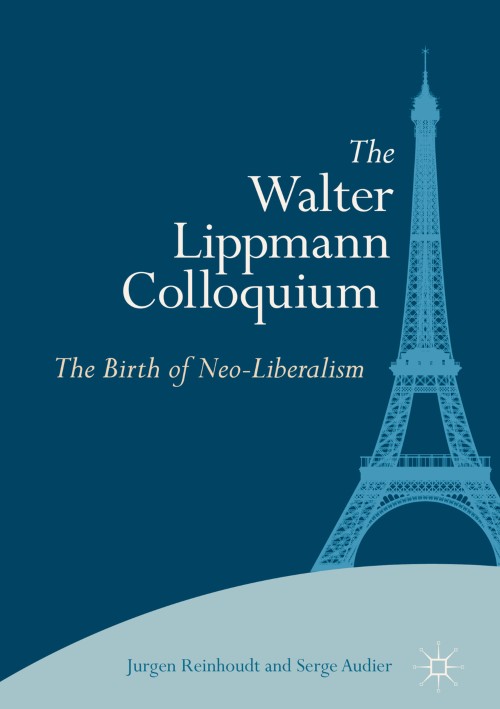
245 14|aThe Walter Lippmann Colloquium|h[electronic resource] :|bThe Birth of Neo-Liberalism /|cby Jurgen Reinhoudt, Serge Audier.
250 |a1st ed. 2018.
264 1|aCham :|bSpringer International Publishing :|bImprint: Palgrave Macmillan,|c2018.
300 |aVIII, 212 p.|bonline resource.
336 |atext|btxt|2rdacontent
337 |acomputer|bc|2rdamedia
338 |aonline resource|bcr|2rdacarrier
347 |atext file|bPDF|2rda
505 0 |a1. Introduction -- 2. Colloquium Participants -- 3. Foreword and Opening Lectures of the Walter Lippmann Colloquium -- 4. Is the Decline of Liberalism Due to Endogenous Causes? -- 5. Liberalism and the War Economy -- 6 Liberalism and Economic Nationalism -- 7. Liberalism and the Social Question -- 8. Psychological and Social Causes, Political and Ideological Causes of the Decline of Liberalism -- 9. The Agenda of Liberalism -- 10. The Theoretical and Practical Problems of the Return to Liberalism.
520 |aThis book is a introduction to and translation of the 1938 Walter Lippmann Colloquium held in Paris, which became known the intellectual birthplace of “neo-liberalism.” Although the Lippmann Colloquium has been the subject of significant recent interest, this book makes this crucial primary source available to a wide, English-speaking audience for the first time. The Colloquium features important—often passionate—debates involving well-known intellectual figures such as Walter Lippmann, Louis Rougier, Friedrich Hayek, Ludwig von Mises, Michael Polanyi, Jacques Rueff, Alexander Rüstow and Wilhelm Röpke. The Colloquium is not only of historical importance. Many of the topics addressed at the Colloquium, such as the proper methods of economic intervention, the relationship between the market economy and democracy, and the relationship between economic liberalism and political liberalism are issues that still vie for our attention in the aftermath of the Great Recession. v>.
650 0|aPolitical science.
650 0|aPolitical science|xPhilosophy.
650 0|aWorld politics.
650 0|aHistory, Modern.
650 14|aPolitical Theory.
650 24|aPolitical Philosophy.
650 24|aPolitical History.
650 24|aModern History.
700 1 |aAudier, Serge.|eauthor.|4aut|4http://id.loc.gov/vocabulary/relators/aut
710 2 |aSpringerLink (Online service)
773 0 |tSpringer Nature eBook
776 08|iPrinted edition:|z9783319658841
776 08|iPrinted edition:|z9783319658865
776 08|iPrinted edition:|z9783319881232
856 40|uhttps://doi.org/10.1007/978-3-319-65885-8
912 |aZDB-2-POS
912 |aZDB-2-SXPI
950 |aPolitical Science and International Studies (SpringerNature-41174)
950 |aPolitical Science and International Studies (R0) (SpringerNature-43724)