

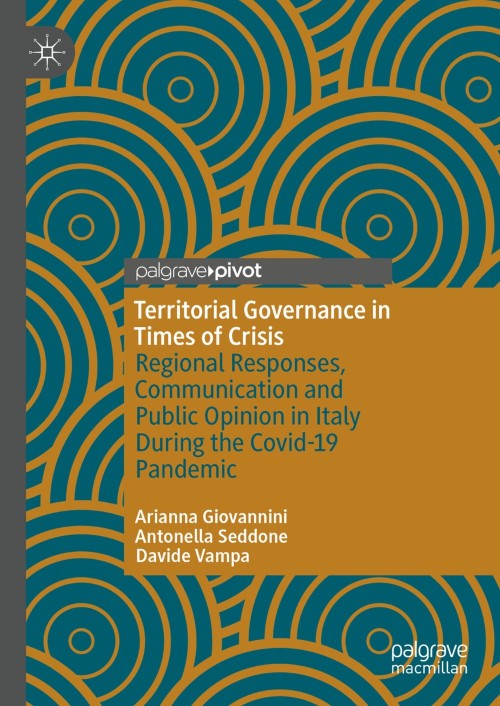
Territorial Governance in Times of Crisis [electronic resource] : Regional Responses, Communication and Public Opinion in Italy During the Covid-19 Pandemic / by Arianna Giovannini, Antonella Seddone, Davide Vampa.
Erişim Adresi
ISBN
9783031480317
Dil Kodu
İngilizce
Yer Numarası
DK/20789
Yazar
Basım Bildirimi
1st ed. 2024.
Yayın Bilgisi
Cham : Springer Nature Switzerland : Imprint: Palgrave Macmillan, 2024.
Fiziksel Niteleme
XVII, 134 p. 10 illus. online resource.
İçindekiler Notu
1. Introduction -- 2. Linking regional responses to citizens’ perceptions: a framework -- 3. The Covid-19 crisis: global challenges and regional answers? -- 4. Communicating the crisis: between regional and national logics -- 5. Citizens’ perceptions: the impact of Covid-19 on public opinion -- 6. Conclusions.
Özet, vb.
"The Covid19 pandemic contributed to shed light on the unresolved issues that have long underpinned Italian regionalism. This book re-constructs and assesses them from a multi-dimensional perspective, offering an original, rigorous and timely analysis of territorial governance dynamics that will be valuable also for other countries." —Gianfranco Viesti, Professor of Applied Economics, University of Bari, Italy. This book offers a comprehensive analysis of multi-level governance, political communication and public opinion in Italy during the Covid-19 pandemic. It demonstrates how the crisis acted as a catalyst in amplifying and exacerbating existing territorial disparities, while also highlighting the resilience and adaptability of some regions to cope with the emergency. The book also delves into the national and sub-national responses to the pandemic, examines how politicians and regional leaders presented them to the public, and how they were perceived by citizens. Through this analysis, it provides deeper insights into the intricate interplay between centralization and decentralization, as well as the diverse strategies employed by policymakers to address a wide spectrum of health, social, and economic challenges. Ultimately, by shifting the focus from institutions to citizens, the book reflects on how external shocks can both challenge the democratic underpinnings of decentralization and offer opportunities to strengthen them. These findings have important repercussions for many other nations, where debates over centralization and decentralization remain a pertinent and important issue. Arianna Giovannini is Associate Professor in Political Sociology in the Department of Economy, Society and Politics, University of Urbino Carlo Bo, Italy. Antonella Seddone is Associate Professor in Political Science in the Department of Cultures, Politics and Society, University of Turin, Italy. Davide Vampa is Senior Lecturer in Territorial Politics and co-director of the Centre on Constitutional Change, University of Edinburgh, UK.
Konu
Political planning.
Political science.
Europe __ Politics and government.
Public Policy.
Governance and Government.
European Politics.
Political science.
Europe __ Politics and government.
Public Policy.
Governance and Government.
European Politics.
Diğer Yazarlar
Kurum Adı
Eseri Alıntıla
Referansları kullanmadan önce gözden geçirmeniz ve varsa gerekli düzeltmeleri yapmanız önerilir.
Dijital Kaynak
MARC Görünümü
LEADER 05602nam a22006255i 4500
001 819582
003 TR_AnAIT
005 20260130173101
007 cr nn 008mamaa
008 240409s2024 sz | s |||| 0|eng d
020 |a9783031480317|9978-3-031-48031-7
024 7 |a10.1007/978-3-031-48031-7|2doi
041 |aeng
049 |aTürk Tarih Kurumu Kütüphanesi
050 4|aJF1525.P6
072 7|aJPP|2bicssc
072 7|aPOL028000|2bisacsh
072 7|aJPP|2thema
082 04|a320.6|223
090 |aDK/20789
100 1 |aGiovannini, Arianna.|eauthor.|4aut|4http://id.loc.gov/vocabulary/relators/aut
245 10|aTerritorial Governance in Times of Crisis|h[electronic resource] :|bRegional Responses, Communication and Public Opinion in Italy During the Covid-19 Pandemic /|cby Arianna Giovannini, Antonella Seddone, Davide Vampa.
250 |a1st ed. 2024.
264 1|aCham :|bSpringer Nature Switzerland :|bImprint: Palgrave Macmillan,|c2024.
300 |aXVII, 134 p. 10 illus.|bonline resource.
336 |atext|btxt|2rdacontent
337 |acomputer|bc|2rdamedia
338 |aonline resource|bcr|2rdacarrier
341 0 |bTable of contents navigation|2onix
341 0 |bSingle logical reading order|2onix
341 0 |bShort alternative textual descriptions|2onix
341 0 |bUse of color is not sole means of conveying information|2onix
341 0 |bUse of high contrast between text and background color|2onix
341 0 |bNext / Previous structural navigation|2onix
341 0 |bAll non-decorative content supports reading without sight|2onix
347 |atext file|bPDF|2rda
505 0 |a1. Introduction -- 2. Linking regional responses to citizens’ perceptions: a framework -- 3. The Covid-19 crisis: global challenges and regional answers? -- 4. Communicating the crisis: between regional and national logics -- 5. Citizens’ perceptions: the impact of Covid-19 on public opinion -- 6. Conclusions.
520 |a"The Covid19 pandemic contributed to shed light on the unresolved issues that have long underpinned Italian regionalism. This book re-constructs and assesses them from a multi-dimensional perspective, offering an original, rigorous and timely analysis of territorial governance dynamics that will be valuable also for other countries." —Gianfranco Viesti, Professor of Applied Economics, University of Bari, Italy. This book offers a comprehensive analysis of multi-level governance, political communication and public opinion in Italy during the Covid-19 pandemic. It demonstrates how the crisis acted as a catalyst in amplifying and exacerbating existing territorial disparities, while also highlighting the resilience and adaptability of some regions to cope with the emergency. The book also delves into the national and sub-national responses to the pandemic, examines how politicians and regional leaders presented them to the public, and how they were perceived by citizens. Through this analysis, it provides deeper insights into the intricate interplay between centralization and decentralization, as well as the diverse strategies employed by policymakers to address a wide spectrum of health, social, and economic challenges. Ultimately, by shifting the focus from institutions to citizens, the book reflects on how external shocks can both challenge the democratic underpinnings of decentralization and offer opportunities to strengthen them. These findings have important repercussions for many other nations, where debates over centralization and decentralization remain a pertinent and important issue. Arianna Giovannini is Associate Professor in Political Sociology in the Department of Economy, Society and Politics, University of Urbino Carlo Bo, Italy. Antonella Seddone is Associate Professor in Political Science in the Department of Cultures, Politics and Society, University of Turin, Italy. Davide Vampa is Senior Lecturer in Territorial Politics and co-director of the Centre on Constitutional Change, University of Edinburgh, UK.
532 8 |aAccessibility summary: This PDF does not fully comply with PDF/UA standards, but does feature limited screen reader support, described non-text content (images, graphs), bookmarks for easy navigation and searchable, selectable text. Users of assistive technologies may experience difficulty navigating or interpreting content in this document. We recognize the importance of accessibility, and we welcome queries about accessibility for any of our products. If you have a question or an access need, please get in touch with us at accessibilitysupport@springernature.com.
532 8 |aNo reading system accessibility options actively disabled
532 8 |aPublisher contact for further accessibility information: accessibilitysupport@springernature.com
650 0|aPolitical planning.
650 0|aPolitical science.
650 0|aEurope|xPolitics and government.
650 14|aPublic Policy.
650 24|aGovernance and Government.
650 24|aEuropean Politics.
700 1 |aSeddone, Antonella.|eauthor.|4aut|4http://id.loc.gov/vocabulary/relators/aut
700 1 |aVampa, Davide.|eauthor.|4aut|4http://id.loc.gov/vocabulary/relators/aut
710 2 |aSpringerLink (Online service)
773 0 |tSpringer Nature eBook
776 08|iPrinted edition:|z9783031480300
776 08|iPrinted edition:|z9783031480324
856 40|uhttps://doi.org/10.1007/978-3-031-48031-7
912 |aZDB-2-POS
912 |aZDB-2-SXPI
950 |aPolitical Science and International Studies (SpringerNature-41174)
950 |aPolitical Science and International Studies (R0) (SpringerNature-43724)
001 819582
003 TR_AnAIT
005 20260130173101
007 cr nn 008mamaa
008 240409s2024 sz | s |||| 0|eng d
020 |a9783031480317|9978-3-031-48031-7
024 7 |a10.1007/978-3-031-48031-7|2doi
041 |aeng
049 |aTürk Tarih Kurumu Kütüphanesi
050 4|aJF1525.P6
072 7|aJPP|2bicssc
072 7|aPOL028000|2bisacsh
072 7|aJPP|2thema
082 04|a320.6|223
090 |aDK/20789
100 1 |aGiovannini, Arianna.|eauthor.|4aut|4http://id.loc.gov/vocabulary/relators/aut
245 10|aTerritorial Governance in Times of Crisis|h[electronic resource] :|bRegional Responses, Communication and Public Opinion in Italy During the Covid-19 Pandemic /|cby Arianna Giovannini, Antonella Seddone, Davide Vampa.
250 |a1st ed. 2024.
264 1|aCham :|bSpringer Nature Switzerland :|bImprint: Palgrave Macmillan,|c2024.
300 |aXVII, 134 p. 10 illus.|bonline resource.
336 |atext|btxt|2rdacontent
337 |acomputer|bc|2rdamedia
338 |aonline resource|bcr|2rdacarrier
341 0 |bTable of contents navigation|2onix
341 0 |bSingle logical reading order|2onix
341 0 |bShort alternative textual descriptions|2onix
341 0 |bUse of color is not sole means of conveying information|2onix
341 0 |bUse of high contrast between text and background color|2onix
341 0 |bNext / Previous structural navigation|2onix
341 0 |bAll non-decorative content supports reading without sight|2onix
347 |atext file|bPDF|2rda
505 0 |a1. Introduction -- 2. Linking regional responses to citizens’ perceptions: a framework -- 3. The Covid-19 crisis: global challenges and regional answers? -- 4. Communicating the crisis: between regional and national logics -- 5. Citizens’ perceptions: the impact of Covid-19 on public opinion -- 6. Conclusions.
520 |a"The Covid19 pandemic contributed to shed light on the unresolved issues that have long underpinned Italian regionalism. This book re-constructs and assesses them from a multi-dimensional perspective, offering an original, rigorous and timely analysis of territorial governance dynamics that will be valuable also for other countries." —Gianfranco Viesti, Professor of Applied Economics, University of Bari, Italy. This book offers a comprehensive analysis of multi-level governance, political communication and public opinion in Italy during the Covid-19 pandemic. It demonstrates how the crisis acted as a catalyst in amplifying and exacerbating existing territorial disparities, while also highlighting the resilience and adaptability of some regions to cope with the emergency. The book also delves into the national and sub-national responses to the pandemic, examines how politicians and regional leaders presented them to the public, and how they were perceived by citizens. Through this analysis, it provides deeper insights into the intricate interplay between centralization and decentralization, as well as the diverse strategies employed by policymakers to address a wide spectrum of health, social, and economic challenges. Ultimately, by shifting the focus from institutions to citizens, the book reflects on how external shocks can both challenge the democratic underpinnings of decentralization and offer opportunities to strengthen them. These findings have important repercussions for many other nations, where debates over centralization and decentralization remain a pertinent and important issue. Arianna Giovannini is Associate Professor in Political Sociology in the Department of Economy, Society and Politics, University of Urbino Carlo Bo, Italy. Antonella Seddone is Associate Professor in Political Science in the Department of Cultures, Politics and Society, University of Turin, Italy. Davide Vampa is Senior Lecturer in Territorial Politics and co-director of the Centre on Constitutional Change, University of Edinburgh, UK.
532 8 |aAccessibility summary: This PDF does not fully comply with PDF/UA standards, but does feature limited screen reader support, described non-text content (images, graphs), bookmarks for easy navigation and searchable, selectable text. Users of assistive technologies may experience difficulty navigating or interpreting content in this document. We recognize the importance of accessibility, and we welcome queries about accessibility for any of our products. If you have a question or an access need, please get in touch with us at accessibilitysupport@springernature.com.
532 8 |aNo reading system accessibility options actively disabled
532 8 |aPublisher contact for further accessibility information: accessibilitysupport@springernature.com
650 0|aPolitical planning.
650 0|aPolitical science.
650 0|aEurope|xPolitics and government.
650 14|aPublic Policy.
650 24|aGovernance and Government.
650 24|aEuropean Politics.
700 1 |aSeddone, Antonella.|eauthor.|4aut|4http://id.loc.gov/vocabulary/relators/aut
700 1 |aVampa, Davide.|eauthor.|4aut|4http://id.loc.gov/vocabulary/relators/aut
710 2 |aSpringerLink (Online service)
773 0 |tSpringer Nature eBook
776 08|iPrinted edition:|z9783031480300
776 08|iPrinted edition:|z9783031480324
856 40|uhttps://doi.org/10.1007/978-3-031-48031-7
912 |aZDB-2-POS
912 |aZDB-2-SXPI
950 |aPolitical Science and International Studies (SpringerNature-41174)
950 |aPolitical Science and International Studies (R0) (SpringerNature-43724)
Materyaller
Depodan talep edilen materyal sadece kütüphane içerisinde kullanılmaktadır.
Materyal dışarıya ödünç verilmemektedir.
Materyal dışarıya ödünç verilmemektedir.
