

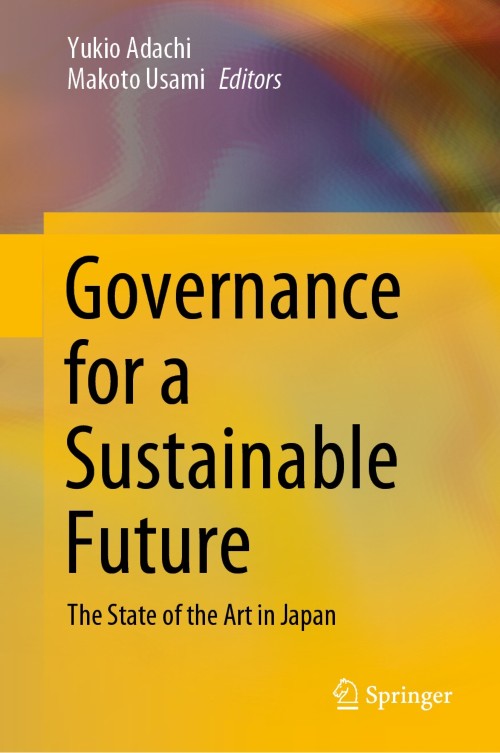
Governance for a Sustainable Future [electronic resource] : The State of the Art in Japan / edited by Yukio Adachi, Makoto Usami.
Erişim Adresi
ISBN
9789819947713
Dil Kodu
İngilizce
Yer Numarası
DK/20847
Basım Bildirimi
1st ed. 2023.
Yayın Bilgisi
Singapore : Springer Nature Singapore : Imprint: Springer, 2023.
Fiziksel Niteleme
VIII, 364 p. 25 illus., 12 illus. in color. online resource.
İçindekiler Notu
Preface -- Chapter 1 Introduction -- Part I Principles for Sustainability -- Chapter 2 Role of Legislators in Creating and Sustaining Governance for a Sustainable Future -- Chapter 3 Another Boundary Problem: Democracy, Future Generations, and the All-affected Principle -- Chapter 4 Another Reason for Caring about Future Generations -- Chapter 5 Responding to Existential Risks: Grounds, Targets, and Strategies -- Chapter 6 Trade-off between Repugnant and Sadistic Conclusions under the Separability of People’s Lives -- Chapter 7 Dealing with “Wickedness” in Long-term Problem-solving -- Chapter 8 Governing Long-term Structural Changes in Socio-technological Systems and Their Difficulties: What do Sustainability Transition Studies Have to Address? -- Chapter 9 The Politics of Eco-nomics: A Critical Investigation of ‘the Governance for a Sustainable Future’ from the Perspective of Heterodox Economics -- Part II Strategies for Futurity -- Chapter 10 Tokyo’s Linked CO2 Cap-and-Trade Program: A Blueprint for Cooperative Market-based Megacity Climate Policy? -- Chapter 11 Multidimensional Policy Analysis of the Energy System Transition in Japan: Case Studies of Local Energy Systems and Lessons to Improve Sustainability -- Chapter 12 Climate Change Adaptation for Futurity: Public-Private Partnerships in the Japanese Insurance Sector -- Chapter 13 Keeping Your Fossil-fuel Cake While Eating It? Comparing the Decarbonization Approach of BP, Chevron, ExxonMobil and Shell -- Chapter 14 Decarbonization and Critical Raw Materials -- Chapter 15 The Politics of Evidence in Japan: Struggling between Efficiency and Effectiveness and Beyond -- Chapter 16 Governance under Uncertainties for the COVID-19 Pandemic: Policy Lessons Learned in Japan from Resilience Perspectives -- Chapter 17 The Challenges for Health Systems and Policies: Growing Medicalization and Global Risks.
Özet, vb.
Although the expression “responsibility to future generations” is firmly established in public and political vocabulary, its operational meaning and practice are inadequately understood and yet to be systematically evaluated. Moreover, the term has not been successfully translated into viable ethical and theoretical concepts that can guide public policies and actions. How can the modes of governance and established policy priorities become compatible with the well-being of future generations? The primary objective of this book is to identify the conditions of and obstacles to governance for a sustainable future, or future-regarding governance. Governance concerns steering a society over extended periods of time, not responding to particular policy issues. The ideas and strategies proposed by contributors in this book to establish future-regarding governance are based on the theoretical and empirical analyses of the major long-term problems facing advanced democracies in general, and Japan in particular. Japan is an interesting case indeed. Relatively poor climate policy, rapidly decreasing birth rate, aging population, extensive public debt, prolonged economic recession, healthcare and pension systems that urgently require redesigning, hollowing-out of industries and subsequent loss of jobs, deteriorating infrastructures, increasing nuclear waste, and intensifying social polarization have caused a decline in people’s trust in the government and democratic processes. Currently, Japanese citizens are widely circulating their doubts about the social system’s sustainability. This book comprises two parts. In Part I, authors from various disciplinary backgrounds examine the idea of governance for a sustainable future from theoretical perspectives. This part discusses issues associated with future-regarding governance that are wicked in nature, such as the philosophical/ethical foundation on which to base the idea of governance for a sustainable future, major impediments to the development of future-regarding governance, and the modes of thinking and action required by leaders and citizens to realize such governance. Chapters in Part II largely focus on the state of long-term governance in Japan. This part uses empirical and in-depth analyses with cross-sectoral and cross-national policy perspectives to identify the state of future-regarding governance in various policy fields and major sectors or organizations mainly in Japan, while also examining strategies and measures to improve their performance. From this perspective, Western democracies and weak democratic regimes elsewhere will be provided with valuable lessons to avoid fatal policy mistakes, thereby improving future-oriented governance worldwide. By combining theoretical discussions on far-reaching issues and empirical analyses of Japanese cases, the book will shed a new light on governance for a sustainable future.
Konu
Political planning.
Political science __ Philosophy.
Political science.
Environmental economics.
Energy policy.
Energy and state.
Medical policy.
Public Policy.
Political Philosophy.
Governance and Government.
Environmental Economics.
Energy Policy, Economics and Management.
Health Policy.
Political science __ Philosophy.
Political science.
Environmental economics.
Energy policy.
Energy and state.
Medical policy.
Public Policy.
Political Philosophy.
Governance and Government.
Environmental Economics.
Energy Policy, Economics and Management.
Health Policy.
Diğer Yazarlar
Kurum Adı
Eseri Alıntıla
Referansları kullanmadan önce gözden geçirmeniz ve varsa gerekli düzeltmeleri yapmanız önerilir.
Dijital Kaynak
MARC Görünümü
LEADER 08266nam a22007095i 4500
001 819640
003 TR_AnAIT
005 20260130172825
007 cr nn 008mamaa
008 230923s2023 si | s |||| 0|eng d
020 |a9789819947713|9978-981-99-4771-3
024 7 |a10.1007/978-981-99-4771-3|2doi
041 |aeng
049 |aTürk Tarih Kurumu Kütüphanesi
050 4|aJF1525.P6
072 7|aJPP|2bicssc
072 7|aPOL028000|2bisacsh
072 7|aJPP|2thema
082 04|a320.6|223
090 |aDK/20847
245 10|aGovernance for a Sustainable Future|h[electronic resource] :|bThe State of the Art in Japan /|cedited by Yukio Adachi, Makoto Usami.
250 |a1st ed. 2023.
264 1|aSingapore :|bSpringer Nature Singapore :|bImprint: Springer,|c2023.
300 |aVIII, 364 p. 25 illus., 12 illus. in color.|bonline resource.
336 |atext|btxt|2rdacontent
337 |acomputer|bc|2rdamedia
338 |aonline resource|bcr|2rdacarrier
341 0 |bTable of contents navigation|2onix
341 0 |bSingle logical reading order|2onix
341 0 |bShort alternative textual descriptions|2onix
341 0 |bUse of color is not sole means of conveying information|2onix
341 0 |bUse of high contrast between text and background color|2onix
341 0 |bNext / Previous structural navigation|2onix
341 0 |bAll non-decorative content supports reading without sight|2onix
347 |atext file|bPDF|2rda
505 0 |aPreface -- Chapter 1 Introduction -- Part I Principles for Sustainability -- Chapter 2 Role of Legislators in Creating and Sustaining Governance for a Sustainable Future -- Chapter 3 Another Boundary Problem: Democracy, Future Generations, and the All-affected Principle -- Chapter 4 Another Reason for Caring about Future Generations -- Chapter 5 Responding to Existential Risks: Grounds, Targets, and Strategies -- Chapter 6 Trade-off between Repugnant and Sadistic Conclusions under the Separability of People’s Lives -- Chapter 7 Dealing with “Wickedness” in Long-term Problem-solving -- Chapter 8 Governing Long-term Structural Changes in Socio-technological Systems and Their Difficulties: What do Sustainability Transition Studies Have to Address? -- Chapter 9 The Politics of Eco-nomics: A Critical Investigation of ‘the Governance for a Sustainable Future’ from the Perspective of Heterodox Economics -- Part II Strategies for Futurity -- Chapter 10 Tokyo’s Linked CO2 Cap-and-Trade Program: A Blueprint for Cooperative Market-based Megacity Climate Policy? -- Chapter 11 Multidimensional Policy Analysis of the Energy System Transition in Japan: Case Studies of Local Energy Systems and Lessons to Improve Sustainability -- Chapter 12 Climate Change Adaptation for Futurity: Public-Private Partnerships in the Japanese Insurance Sector -- Chapter 13 Keeping Your Fossil-fuel Cake While Eating It? Comparing the Decarbonization Approach of BP, Chevron, ExxonMobil and Shell -- Chapter 14 Decarbonization and Critical Raw Materials -- Chapter 15 The Politics of Evidence in Japan: Struggling between Efficiency and Effectiveness and Beyond -- Chapter 16 Governance under Uncertainties for the COVID-19 Pandemic: Policy Lessons Learned in Japan from Resilience Perspectives -- Chapter 17 The Challenges for Health Systems and Policies: Growing Medicalization and Global Risks.
520 |aAlthough the expression “responsibility to future generations” is firmly established in public and political vocabulary, its operational meaning and practice are inadequately understood and yet to be systematically evaluated. Moreover, the term has not been successfully translated into viable ethical and theoretical concepts that can guide public policies and actions. How can the modes of governance and established policy priorities become compatible with the well-being of future generations? The primary objective of this book is to identify the conditions of and obstacles to governance for a sustainable future, or future-regarding governance. Governance concerns steering a society over extended periods of time, not responding to particular policy issues. The ideas and strategies proposed by contributors in this book to establish future-regarding governance are based on the theoretical and empirical analyses of the major long-term problems facing advanced democracies in general, and Japan in particular. Japan is an interesting case indeed. Relatively poor climate policy, rapidly decreasing birth rate, aging population, extensive public debt, prolonged economic recession, healthcare and pension systems that urgently require redesigning, hollowing-out of industries and subsequent loss of jobs, deteriorating infrastructures, increasing nuclear waste, and intensifying social polarization have caused a decline in people’s trust in the government and democratic processes. Currently, Japanese citizens are widely circulating their doubts about the social system’s sustainability. This book comprises two parts. In Part I, authors from various disciplinary backgrounds examine the idea of governance for a sustainable future from theoretical perspectives. This part discusses issues associated with future-regarding governance that are wicked in nature, such as the philosophical/ethical foundation on which to base the idea of governance for a sustainable future, major impediments to the development of future-regarding governance, and the modes of thinking and action required by leaders and citizens to realize such governance. Chapters in Part II largely focus on the state of long-term governance in Japan. This part uses empirical and in-depth analyses with cross-sectoral and cross-national policy perspectives to identify the state of future-regarding governance in various policy fields and major sectors or organizations mainly in Japan, while also examining strategies and measures to improve their performance. From this perspective, Western democracies and weak democratic regimes elsewhere will be provided with valuable lessons to avoid fatal policy mistakes, thereby improving future-oriented governance worldwide. By combining theoretical discussions on far-reaching issues and empirical analyses of Japanese cases, the book will shed a new light on governance for a sustainable future.
532 8 |aAccessibility summary: This PDF does not fully comply with PDF/UA standards, but does feature limited screen reader support, described non-text content (images, graphs), bookmarks for easy navigation and searchable, selectable text. Users of assistive technologies may experience difficulty navigating or interpreting content in this document. We recognize the importance of accessibility, and we welcome queries about accessibility for any of our products. If you have a question or an access need, please get in touch with us at accessibilitysupport@springernature.com.
532 8 |aNo reading system accessibility options actively disabled
532 8 |aPublisher contact for further accessibility information: accessibilitysupport@springernature.com
650 0|aPolitical planning.
650 0|aPolitical science|xPhilosophy.
650 0|aPolitical science.
650 0|aEnvironmental economics.
650 0|aEnergy policy.
650 0|aEnergy and state.
650 0|aMedical policy.
650 14|aPublic Policy.
650 24|aPolitical Philosophy.
650 24|aGovernance and Government.
650 24|aEnvironmental Economics.
650 24|aEnergy Policy, Economics and Management.
650 24|aHealth Policy.
700 1 |aAdachi, Yukio.|eeditor.|4edt|4http://id.loc.gov/vocabulary/relators/edt
700 1 |aUsami, Makoto.|eeditor.|0(orcid)0000-0001-7663-7110|1https://orcid.org/0000-0001-7663-7110|4edt|4http://id.loc.gov/vocabulary/relators/edt
710 2 |aSpringerLink (Online service)
773 0 |tSpringer Nature eBook
776 08|iPrinted edition:|z9789819947706
776 08|iPrinted edition:|z9789819947720
776 08|iPrinted edition:|z9789819947737
856 40|uhttps://doi.org/10.1007/978-981-99-4771-3
912 |aZDB-2-POS
912 |aZDB-2-SXPI
950 |aPolitical Science and International Studies (SpringerNature-41174)
950 |aPolitical Science and International Studies (R0) (SpringerNature-43724)
001 819640
003 TR_AnAIT
005 20260130172825
007 cr nn 008mamaa
008 230923s2023 si | s |||| 0|eng d
020 |a9789819947713|9978-981-99-4771-3
024 7 |a10.1007/978-981-99-4771-3|2doi
041 |aeng
049 |aTürk Tarih Kurumu Kütüphanesi
050 4|aJF1525.P6
072 7|aJPP|2bicssc
072 7|aPOL028000|2bisacsh
072 7|aJPP|2thema
082 04|a320.6|223
090 |aDK/20847
245 10|aGovernance for a Sustainable Future|h[electronic resource] :|bThe State of the Art in Japan /|cedited by Yukio Adachi, Makoto Usami.
250 |a1st ed. 2023.
264 1|aSingapore :|bSpringer Nature Singapore :|bImprint: Springer,|c2023.
300 |aVIII, 364 p. 25 illus., 12 illus. in color.|bonline resource.
336 |atext|btxt|2rdacontent
337 |acomputer|bc|2rdamedia
338 |aonline resource|bcr|2rdacarrier
341 0 |bTable of contents navigation|2onix
341 0 |bSingle logical reading order|2onix
341 0 |bShort alternative textual descriptions|2onix
341 0 |bUse of color is not sole means of conveying information|2onix
341 0 |bUse of high contrast between text and background color|2onix
341 0 |bNext / Previous structural navigation|2onix
341 0 |bAll non-decorative content supports reading without sight|2onix
347 |atext file|bPDF|2rda
505 0 |aPreface -- Chapter 1 Introduction -- Part I Principles for Sustainability -- Chapter 2 Role of Legislators in Creating and Sustaining Governance for a Sustainable Future -- Chapter 3 Another Boundary Problem: Democracy, Future Generations, and the All-affected Principle -- Chapter 4 Another Reason for Caring about Future Generations -- Chapter 5 Responding to Existential Risks: Grounds, Targets, and Strategies -- Chapter 6 Trade-off between Repugnant and Sadistic Conclusions under the Separability of People’s Lives -- Chapter 7 Dealing with “Wickedness” in Long-term Problem-solving -- Chapter 8 Governing Long-term Structural Changes in Socio-technological Systems and Their Difficulties: What do Sustainability Transition Studies Have to Address? -- Chapter 9 The Politics of Eco-nomics: A Critical Investigation of ‘the Governance for a Sustainable Future’ from the Perspective of Heterodox Economics -- Part II Strategies for Futurity -- Chapter 10 Tokyo’s Linked CO2 Cap-and-Trade Program: A Blueprint for Cooperative Market-based Megacity Climate Policy? -- Chapter 11 Multidimensional Policy Analysis of the Energy System Transition in Japan: Case Studies of Local Energy Systems and Lessons to Improve Sustainability -- Chapter 12 Climate Change Adaptation for Futurity: Public-Private Partnerships in the Japanese Insurance Sector -- Chapter 13 Keeping Your Fossil-fuel Cake While Eating It? Comparing the Decarbonization Approach of BP, Chevron, ExxonMobil and Shell -- Chapter 14 Decarbonization and Critical Raw Materials -- Chapter 15 The Politics of Evidence in Japan: Struggling between Efficiency and Effectiveness and Beyond -- Chapter 16 Governance under Uncertainties for the COVID-19 Pandemic: Policy Lessons Learned in Japan from Resilience Perspectives -- Chapter 17 The Challenges for Health Systems and Policies: Growing Medicalization and Global Risks.
520 |aAlthough the expression “responsibility to future generations” is firmly established in public and political vocabulary, its operational meaning and practice are inadequately understood and yet to be systematically evaluated. Moreover, the term has not been successfully translated into viable ethical and theoretical concepts that can guide public policies and actions. How can the modes of governance and established policy priorities become compatible with the well-being of future generations? The primary objective of this book is to identify the conditions of and obstacles to governance for a sustainable future, or future-regarding governance. Governance concerns steering a society over extended periods of time, not responding to particular policy issues. The ideas and strategies proposed by contributors in this book to establish future-regarding governance are based on the theoretical and empirical analyses of the major long-term problems facing advanced democracies in general, and Japan in particular. Japan is an interesting case indeed. Relatively poor climate policy, rapidly decreasing birth rate, aging population, extensive public debt, prolonged economic recession, healthcare and pension systems that urgently require redesigning, hollowing-out of industries and subsequent loss of jobs, deteriorating infrastructures, increasing nuclear waste, and intensifying social polarization have caused a decline in people’s trust in the government and democratic processes. Currently, Japanese citizens are widely circulating their doubts about the social system’s sustainability. This book comprises two parts. In Part I, authors from various disciplinary backgrounds examine the idea of governance for a sustainable future from theoretical perspectives. This part discusses issues associated with future-regarding governance that are wicked in nature, such as the philosophical/ethical foundation on which to base the idea of governance for a sustainable future, major impediments to the development of future-regarding governance, and the modes of thinking and action required by leaders and citizens to realize such governance. Chapters in Part II largely focus on the state of long-term governance in Japan. This part uses empirical and in-depth analyses with cross-sectoral and cross-national policy perspectives to identify the state of future-regarding governance in various policy fields and major sectors or organizations mainly in Japan, while also examining strategies and measures to improve their performance. From this perspective, Western democracies and weak democratic regimes elsewhere will be provided with valuable lessons to avoid fatal policy mistakes, thereby improving future-oriented governance worldwide. By combining theoretical discussions on far-reaching issues and empirical analyses of Japanese cases, the book will shed a new light on governance for a sustainable future.
532 8 |aAccessibility summary: This PDF does not fully comply with PDF/UA standards, but does feature limited screen reader support, described non-text content (images, graphs), bookmarks for easy navigation and searchable, selectable text. Users of assistive technologies may experience difficulty navigating or interpreting content in this document. We recognize the importance of accessibility, and we welcome queries about accessibility for any of our products. If you have a question or an access need, please get in touch with us at accessibilitysupport@springernature.com.
532 8 |aNo reading system accessibility options actively disabled
532 8 |aPublisher contact for further accessibility information: accessibilitysupport@springernature.com
650 0|aPolitical planning.
650 0|aPolitical science|xPhilosophy.
650 0|aPolitical science.
650 0|aEnvironmental economics.
650 0|aEnergy policy.
650 0|aEnergy and state.
650 0|aMedical policy.
650 14|aPublic Policy.
650 24|aPolitical Philosophy.
650 24|aGovernance and Government.
650 24|aEnvironmental Economics.
650 24|aEnergy Policy, Economics and Management.
650 24|aHealth Policy.
700 1 |aAdachi, Yukio.|eeditor.|4edt|4http://id.loc.gov/vocabulary/relators/edt
700 1 |aUsami, Makoto.|eeditor.|0(orcid)0000-0001-7663-7110|1https://orcid.org/0000-0001-7663-7110|4edt|4http://id.loc.gov/vocabulary/relators/edt
710 2 |aSpringerLink (Online service)
773 0 |tSpringer Nature eBook
776 08|iPrinted edition:|z9789819947706
776 08|iPrinted edition:|z9789819947720
776 08|iPrinted edition:|z9789819947737
856 40|uhttps://doi.org/10.1007/978-981-99-4771-3
912 |aZDB-2-POS
912 |aZDB-2-SXPI
950 |aPolitical Science and International Studies (SpringerNature-41174)
950 |aPolitical Science and International Studies (R0) (SpringerNature-43724)
Materyaller
Depodan talep edilen materyal sadece kütüphane içerisinde kullanılmaktadır.
Materyal dışarıya ödünç verilmemektedir.
Materyal dışarıya ödünç verilmemektedir.
