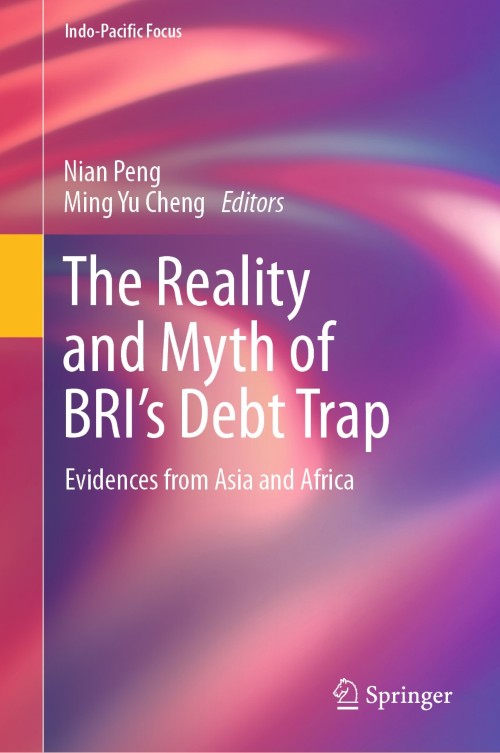
The Reality and Myth of BRI’s Debt Trap [electronic resource] : Evidences from Asia and Africa / edited by Nian Peng, Ming Yu Cheng.
Erişim Adresi
ISBN
9789819710560
Dil Kodu
İngilizce
Yer Numarası
DK/20850
Basım Bildirimi
1st ed. 2024.
Yayın Bilgisi
Singapore : Springer Nature Singapore : Imprint: Springer, 2024.
Fiziksel Niteleme
IX, 229 p. 35 illus., 27 illus. in color. online resource.
Dizi
Indo-Pacific Focus, 2731-8877
İçindekiler Notu
Introduction -- Misunderstandings on BRI’s Debt Trap -- India and BRI’s Debt Trap -- Debt Issue/Debt Management and BRI in Myanmar -- Debt Issue/Debt Management and BRI in Cambodia -- Debt Issue/Debt Management and BRI in Laos -- From Aquino to Duterte: Examining the Reality and Myth of the “Debt Trap” in the Philippines.
Özet, vb.
This edited book aims to present a well-balanced view on the heated debate about BRI’s “debt trap” controversy within the route states by presenting compelling evidence from Asian and African countries. It is contributed by the university scholars, think tank experts, and governmental officials from the concerned parties such as China, USA, South/Southeast Asia, and Africa to discuss this new topic from their perspectives. It not only examines the origins and changes in external debt among the BRI route states before and after the launch of the BRI, but also analyzes the outcomes stemming from BRI projects. The book covers 12 chapters, in which the first chapter briefly introduces the aims and scope of this book. The following 2 chapters look at Chinese and Indian perspectives on the “debt trap”, respectively. The next 9 chapters examine the debt issue and BRI projects in Southeast Asian, South Asian, and African states, which mainly involve Myanmar, Cambodia, Laos, the Philippines, Malaysia, Indonesia, Bangladesh, Nepal, and Nigeria, and give some useful policy suggestions to reduce the debt burden and promote the socioeconomic development in these countries.
Konu
International economic relations.
Asia __ Politics and government.
International relations.
Asia __ Economic conditions.
International Political Economy’.
Asian Politics.
International Relations.
Asian Economics.
Asia __ Politics and government.
International relations.
Asia __ Economic conditions.
International Political Economy’.
Asian Politics.
International Relations.
Asian Economics.
Diğer Yazarlar
Kurum Adı

Eseri Alıntıla
Referansları kullanmadan önce gözden geçirmeniz ve varsa gerekli düzeltmeleri yapmanız önerilir.
Dijital Kaynak
MARC Görünümü
LEADER 05019nam a22006975i 4500
001 819643
003 TR_AnAIT
005 20260130172816
007 cr nn 008mamaa
008 240417s2024 si | s |||| 0|eng d
020 |a9789819710560|9978-981-97-1056-0
024 7 |a10.1007/978-981-97-1056-0|2doi
041 |aeng
049 |aTürk Tarih Kurumu Kütüphanesi
050 4|aJZ1252
072 7|aJPS|2bicssc
072 7|aKCP|2bicssc
072 7|aPOL011020|2bisacsh
072 7|aJPS|2thema
072 7|aKCP|2thema
082 04|a327.111|223
090 |aDK/20850
245 14|aThe Reality and Myth of BRI’s Debt Trap|h[electronic resource] :|bEvidences from Asia and Africa /|cedited by Nian Peng, Ming Yu Cheng.
250 |a1st ed. 2024.
264 1|aSingapore :|bSpringer Nature Singapore :|bImprint: Springer,|c2024.
300 |aIX, 229 p. 35 illus., 27 illus. in color.|bonline resource.
336 |atext|btxt|2rdacontent
337 |acomputer|bc|2rdamedia
338 |aonline resource|bcr|2rdacarrier
341 0 |bTable of contents navigation|2onix
341 0 |bSingle logical reading order|2onix
341 0 |bShort alternative textual descriptions|2onix
341 0 |bUse of color is not sole means of conveying information|2onix
341 0 |bUse of high contrast between text and background color|2onix
341 0 |bNext / Previous structural navigation|2onix
341 0 |bAll non-decorative content supports reading without sight|2onix
347 |atext file|bPDF|2rda
490 1 |aIndo-Pacific Focus,|x2731-8877
505 0 |aIntroduction -- Misunderstandings on BRI’s Debt Trap -- India and BRI’s Debt Trap -- Debt Issue/Debt Management and BRI in Myanmar -- Debt Issue/Debt Management and BRI in Cambodia -- Debt Issue/Debt Management and BRI in Laos -- From Aquino to Duterte: Examining the Reality and Myth of the “Debt Trap” in the Philippines.
520 |aThis edited book aims to present a well-balanced view on the heated debate about BRI’s “debt trap” controversy within the route states by presenting compelling evidence from Asian and African countries. It is contributed by the university scholars, think tank experts, and governmental officials from the concerned parties such as China, USA, South/Southeast Asia, and Africa to discuss this new topic from their perspectives. It not only examines the origins and changes in external debt among the BRI route states before and after the launch of the BRI, but also analyzes the outcomes stemming from BRI projects. The book covers 12 chapters, in which the first chapter briefly introduces the aims and scope of this book. The following 2 chapters look at Chinese and Indian perspectives on the “debt trap”, respectively. The next 9 chapters examine the debt issue and BRI projects in Southeast Asian, South Asian, and African states, which mainly involve Myanmar, Cambodia, Laos, the Philippines, Malaysia, Indonesia, Bangladesh, Nepal, and Nigeria, and give some useful policy suggestions to reduce the debt burden and promote the socioeconomic development in these countries.
532 8 |aAccessibility summary: This PDF does not fully comply with PDF/UA standards, but does feature limited screen reader support, described non-text content (images, graphs), bookmarks for easy navigation and searchable, selectable text. Users of assistive technologies may experience difficulty navigating or interpreting content in this document. We recognize the importance of accessibility, and we welcome queries about accessibility for any of our products. If you have a question or an access need, please get in touch with us at accessibilitysupport@springernature.com.
532 8 |aNo reading system accessibility options actively disabled
532 8 |aPublisher contact for further accessibility information: accessibilitysupport@springernature.com
650 0|aInternational economic relations.
650 0|aAsia|xPolitics and government.
650 0|aInternational relations.
650 0|aAsia|xEconomic conditions.
650 14|aInternational Political Economy’.
650 24|aAsian Politics.
650 24|aInternational Relations.
650 24|aAsian Economics.
700 1 |aPeng, Nian.|eeditor.|0(orcid)0000-0001-6641-0430|1https://orcid.org/0000-0001-6641-0430|4edt|4http://id.loc.gov/vocabulary/relators/edt
700 1 |aCheng, Ming Yu.|eeditor.|0(orcid)0000-0002-5638-3966|1https://orcid.org/0000-0002-5638-3966|4edt|4http://id.loc.gov/vocabulary/relators/edt
710 2 |aSpringerLink (Online service)
773 0 |tSpringer Nature eBook
776 08|iPrinted edition:|z9789819710553
776 08|iPrinted edition:|z9789819710577
776 08|iPrinted edition:|z9789819710584
830 0|aIndo-Pacific Focus,|x2731-8877
856 40|uhttps://doi.org/10.1007/978-981-97-1056-0
912 |aZDB-2-POS
912 |aZDB-2-SXPI
950 |aPolitical Science and International Studies (SpringerNature-41174)
950 |aPolitical Science and International Studies (R0) (SpringerNature-43724)
001 819643
003 TR_AnAIT
005 20260130172816
007 cr nn 008mamaa
008 240417s2024 si | s |||| 0|eng d
020 |a9789819710560|9978-981-97-1056-0
024 7 |a10.1007/978-981-97-1056-0|2doi
041 |aeng
049 |aTürk Tarih Kurumu Kütüphanesi
050 4|aJZ1252
072 7|aJPS|2bicssc
072 7|aKCP|2bicssc
072 7|aPOL011020|2bisacsh
072 7|aJPS|2thema
072 7|aKCP|2thema
082 04|a327.111|223
090 |aDK/20850
245 14|aThe Reality and Myth of BRI’s Debt Trap|h[electronic resource] :|bEvidences from Asia and Africa /|cedited by Nian Peng, Ming Yu Cheng.
250 |a1st ed. 2024.
264 1|aSingapore :|bSpringer Nature Singapore :|bImprint: Springer,|c2024.
300 |aIX, 229 p. 35 illus., 27 illus. in color.|bonline resource.
336 |atext|btxt|2rdacontent
337 |acomputer|bc|2rdamedia
338 |aonline resource|bcr|2rdacarrier
341 0 |bTable of contents navigation|2onix
341 0 |bSingle logical reading order|2onix
341 0 |bShort alternative textual descriptions|2onix
341 0 |bUse of color is not sole means of conveying information|2onix
341 0 |bUse of high contrast between text and background color|2onix
341 0 |bNext / Previous structural navigation|2onix
341 0 |bAll non-decorative content supports reading without sight|2onix
347 |atext file|bPDF|2rda
490 1 |aIndo-Pacific Focus,|x2731-8877
505 0 |aIntroduction -- Misunderstandings on BRI’s Debt Trap -- India and BRI’s Debt Trap -- Debt Issue/Debt Management and BRI in Myanmar -- Debt Issue/Debt Management and BRI in Cambodia -- Debt Issue/Debt Management and BRI in Laos -- From Aquino to Duterte: Examining the Reality and Myth of the “Debt Trap” in the Philippines.
520 |aThis edited book aims to present a well-balanced view on the heated debate about BRI’s “debt trap” controversy within the route states by presenting compelling evidence from Asian and African countries. It is contributed by the university scholars, think tank experts, and governmental officials from the concerned parties such as China, USA, South/Southeast Asia, and Africa to discuss this new topic from their perspectives. It not only examines the origins and changes in external debt among the BRI route states before and after the launch of the BRI, but also analyzes the outcomes stemming from BRI projects. The book covers 12 chapters, in which the first chapter briefly introduces the aims and scope of this book. The following 2 chapters look at Chinese and Indian perspectives on the “debt trap”, respectively. The next 9 chapters examine the debt issue and BRI projects in Southeast Asian, South Asian, and African states, which mainly involve Myanmar, Cambodia, Laos, the Philippines, Malaysia, Indonesia, Bangladesh, Nepal, and Nigeria, and give some useful policy suggestions to reduce the debt burden and promote the socioeconomic development in these countries.
532 8 |aAccessibility summary: This PDF does not fully comply with PDF/UA standards, but does feature limited screen reader support, described non-text content (images, graphs), bookmarks for easy navigation and searchable, selectable text. Users of assistive technologies may experience difficulty navigating or interpreting content in this document. We recognize the importance of accessibility, and we welcome queries about accessibility for any of our products. If you have a question or an access need, please get in touch with us at accessibilitysupport@springernature.com.
532 8 |aNo reading system accessibility options actively disabled
532 8 |aPublisher contact for further accessibility information: accessibilitysupport@springernature.com
650 0|aInternational economic relations.
650 0|aAsia|xPolitics and government.
650 0|aInternational relations.
650 0|aAsia|xEconomic conditions.
650 14|aInternational Political Economy’.
650 24|aAsian Politics.
650 24|aInternational Relations.
650 24|aAsian Economics.
700 1 |aPeng, Nian.|eeditor.|0(orcid)0000-0001-6641-0430|1https://orcid.org/0000-0001-6641-0430|4edt|4http://id.loc.gov/vocabulary/relators/edt
700 1 |aCheng, Ming Yu.|eeditor.|0(orcid)0000-0002-5638-3966|1https://orcid.org/0000-0002-5638-3966|4edt|4http://id.loc.gov/vocabulary/relators/edt
710 2 |aSpringerLink (Online service)
773 0 |tSpringer Nature eBook
776 08|iPrinted edition:|z9789819710553
776 08|iPrinted edition:|z9789819710577
776 08|iPrinted edition:|z9789819710584
830 0|aIndo-Pacific Focus,|x2731-8877
856 40|uhttps://doi.org/10.1007/978-981-97-1056-0
912 |aZDB-2-POS
912 |aZDB-2-SXPI
950 |aPolitical Science and International Studies (SpringerNature-41174)
950 |aPolitical Science and International Studies (R0) (SpringerNature-43724)
Materyaller
Depodan talep edilen materyal sadece kütüphane içerisinde kullanılmaktadır.
Materyal dışarıya ödünç verilmemektedir.
