

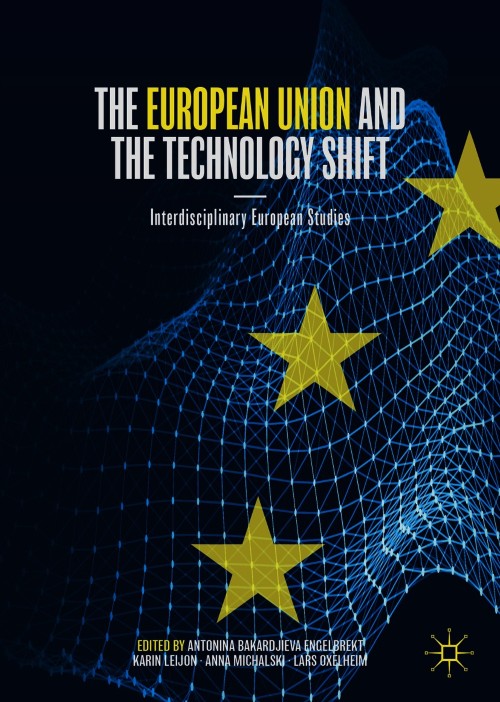
The European Union and the Technology Shift [electronic resource] / edited by Antonina Bakardjieva Engelbrekt, Karin Leijon, Anna Michalski, Lars Oxelheim.
Erişim Adresi
ISBN
9783030636722
Dil Kodu
İngilizce
Yer Numarası
DK/20941
Basım Bildirimi
1st ed. 2021.
Yayın Bilgisi
Cham : Springer International Publishing : Imprint: Palgrave Macmillan, 2021.
Fiziksel Niteleme
XI, 264 p. 5 illus. online resource.
İçindekiler Notu
1. What Does the Technological Shift Have in Store for the EU? Opportunities and Pitfalls for European Societies, Antonina Bakardjieva Engelbrekt, Karin Leijon, Anna Michalski, and Lars Oxelheim -- 2. Technological Megashift and the EU: Threats, Vulnerabilities and Fragmented Responsibilities, Lindy M. Newlove-Eriksson and Johan Eriksson -- 3. Technological Discontinuities and the Climate Transition in Europe: The Role of Policy in Two Traditions of Economic Thinking, Staffan Jacobsson and Björn Sandén -- 4. AI in the EU: Ethical Guidelines as a Governance Tool, Stefan Larsson -- 5. How Does the EU Protect Competition in the Digital Platform Economy?, Björn Lundqvist -- 6. Digitalisation, Productivity and Jobs: A European Perspective, Fredrik Heyman, Pehr-Johan Norbäck, and Lars Persson -- 7. Technological Shifts and the Social Partners: Is the European Semester Heading Towards a Social Europe?, Jenny Jansson, Olle Jansson, and Jan Ottosson -- 8.Money for Nothin’: Digitalization and Fluid Tax Bases, Mårten Blix and Emil Bustos -- 9. New Tax on Digital Services: A Step Towards Fairer Taxation in the EU’s Single Market?, Pernilla Rendahl -- 10. Digital Democracy and the European Union, Martin Karlsson.
Özet, vb.
‘This volume has a solid foundation in the highly topical question of technological change. More importantly, the individual chapters are written by qualified scholars whose analytically advanced contributions are likely to interest a wide audience. I can strongly recommend this book for scholars and students in political science, law, and economics.’ —Carl Fredrik Bergström, Professor of European Law, Uppsala University, Sweden ‘As the digital transformation affects every single one of us it is important that we have the widest possible debate on its inherent risks and opportunities, and how these are shared across society. This is why I warmly recommend this volume: because it brings together an inter-disciplinary set of scholars able to analyse the multifaceted implications of the technological shift. I could not agree more with the book’s main takeaway, i.e. that we need to create an adaptive regulatory framework capableof harnessing the positive effects of technological changes while buttressing the negative impact on European society and citizens.’ —Ambassador Kim Jørgensen, Head of Cabinet to Commissioner and Executive Vice-President Margrethe Vestager, European Commission This book explores the multiple challenges that the global technology shift is posing to the EU. From the vantage point of experts from economics, law, and political science, this book provides insights into the role that the EU is and ought to be playing in regulating global platform companies, addressing taxation in the digital economy, mitigating job displacements on the labour market, and tackling ethical concerns of artificial intelligence and the prospect of digital democracy. All chapters are based on up-to-date research findings and succinct assessment of ongoing debates. They conclude with policy recommendations for policy makers on European and national levels. Antonina Bakardjieva Engelbrekt is Professor of European Law in the Faculty of Law, Stockholm University, Sweden. Karin Leijon is a researcher in the Department of Government, Uppsala University, Sweden. Anna Michalski is Associate Professor in Political Science in the Department of Government, Uppsala University, Sweden. Lars Oxelheim is Professor of International Business and Finance at the University of Agder, Norway, and affiliated with the Research Institute of Industrial Economics (IFN), Sweden.
Konu
Europe __ Politics and government.
Executive power.
Law __ Europe.
Political planning.
Economics.
European Politics.
Executive Politics.
European Law.
Public Policy.
Political Economy and Economic Systems.
Executive power.
Law __ Europe.
Political planning.
Economics.
European Politics.
Executive Politics.
European Law.
Public Policy.
Political Economy and Economic Systems.
Diğer Yazarlar
Kurum Adı
Eseri Alıntıla
Referansları kullanmadan önce gözden geçirmeniz ve varsa gerekli düzeltmeleri yapmanız önerilir.
Dijital Kaynak
MARC Görünümü
LEADER 06013nam a22005895i 4500
001 819734
003 TR_AnAIT
005 20260130172501
007 cr nn 008mamaa
008 210208s2021 sz | s |||| 0|eng d
020 |a9783030636722|9978-3-030-63672-2
024 7 |a10.1007/978-3-030-63672-2|2doi
041 |aeng
049 |aTürk Tarih Kurumu Kütüphanesi
050 4|aJN1-9692.2
072 7|aJP|2bicssc
072 7|a1D|2bicssc
072 7|aPOL058000|2bisacsh
072 7|aJP|x1D|2thema
082 04|a320.94|223
090 |aDK/20941
245 14|aThe European Union and the Technology Shift|h[electronic resource] /|cedited by Antonina Bakardjieva Engelbrekt, Karin Leijon, Anna Michalski, Lars Oxelheim.
250 |a1st ed. 2021.
264 1|aCham :|bSpringer International Publishing :|bImprint: Palgrave Macmillan,|c2021.
300 |aXI, 264 p. 5 illus.|bonline resource.
336 |atext|btxt|2rdacontent
337 |acomputer|bc|2rdamedia
338 |aonline resource|bcr|2rdacarrier
347 |atext file|bPDF|2rda
505 0 |a1. What Does the Technological Shift Have in Store for the EU? Opportunities and Pitfalls for European Societies, Antonina Bakardjieva Engelbrekt, Karin Leijon, Anna Michalski, and Lars Oxelheim -- 2. Technological Megashift and the EU: Threats, Vulnerabilities and Fragmented Responsibilities, Lindy M. Newlove-Eriksson and Johan Eriksson -- 3. Technological Discontinuities and the Climate Transition in Europe: The Role of Policy in Two Traditions of Economic Thinking, Staffan Jacobsson and Björn Sandén -- 4. AI in the EU: Ethical Guidelines as a Governance Tool, Stefan Larsson -- 5. How Does the EU Protect Competition in the Digital Platform Economy?, Björn Lundqvist -- 6. Digitalisation, Productivity and Jobs: A European Perspective, Fredrik Heyman, Pehr-Johan Norbäck, and Lars Persson -- 7. Technological Shifts and the Social Partners: Is the European Semester Heading Towards a Social Europe?, Jenny Jansson, Olle Jansson, and Jan Ottosson -- 8.Money for Nothin’: Digitalization and Fluid Tax Bases, Mårten Blix and Emil Bustos -- 9. New Tax on Digital Services: A Step Towards Fairer Taxation in the EU’s Single Market?, Pernilla Rendahl -- 10. Digital Democracy and the European Union, Martin Karlsson.
520 |a‘This volume has a solid foundation in the highly topical question of technological change. More importantly, the individual chapters are written by qualified scholars whose analytically advanced contributions are likely to interest a wide audience. I can strongly recommend this book for scholars and students in political science, law, and economics.’ —Carl Fredrik Bergström, Professor of European Law, Uppsala University, Sweden ‘As the digital transformation affects every single one of us it is important that we have the widest possible debate on its inherent risks and opportunities, and how these are shared across society. This is why I warmly recommend this volume: because it brings together an inter-disciplinary set of scholars able to analyse the multifaceted implications of the technological shift. I could not agree more with the book’s main takeaway, i.e. that we need to create an adaptive regulatory framework capableof harnessing the positive effects of technological changes while buttressing the negative impact on European society and citizens.’ —Ambassador Kim Jørgensen, Head of Cabinet to Commissioner and Executive Vice-President Margrethe Vestager, European Commission This book explores the multiple challenges that the global technology shift is posing to the EU. From the vantage point of experts from economics, law, and political science, this book provides insights into the role that the EU is and ought to be playing in regulating global platform companies, addressing taxation in the digital economy, mitigating job displacements on the labour market, and tackling ethical concerns of artificial intelligence and the prospect of digital democracy. All chapters are based on up-to-date research findings and succinct assessment of ongoing debates. They conclude with policy recommendations for policy makers on European and national levels. Antonina Bakardjieva Engelbrekt is Professor of European Law in the Faculty of Law, Stockholm University, Sweden. Karin Leijon is a researcher in the Department of Government, Uppsala University, Sweden. Anna Michalski is Associate Professor in Political Science in the Department of Government, Uppsala University, Sweden. Lars Oxelheim is Professor of International Business and Finance at the University of Agder, Norway, and affiliated with the Research Institute of Industrial Economics (IFN), Sweden.
650 0|aEurope|xPolitics and government.
650 0|aExecutive power.
650 0|aLaw|xEurope.
650 0|aPolitical planning.
650 0|aEconomics.
650 14|aEuropean Politics.
650 24|aExecutive Politics.
650 24|aEuropean Law.
650 24|aPublic Policy.
650 24|aPolitical Economy and Economic Systems.
700 1 |aBakardjieva Engelbrekt, Antonina.|eeditor.|4edt|4http://id.loc.gov/vocabulary/relators/edt
700 1 |aLeijon, Karin.|eeditor.|0(orcid)0000-0002-3903-1344|1https://orcid.org/0000-0002-3903-1344|4edt|4http://id.loc.gov/vocabulary/relators/edt
700 1 |aMichalski, Anna.|eeditor.|0(orcid)0000-0002-8865-1443|1https://orcid.org/0000-0002-8865-1443|4edt|4http://id.loc.gov/vocabulary/relators/edt
700 1 |aOxelheim, Lars.|eeditor.|4edt|4http://id.loc.gov/vocabulary/relators/edt
710 2 |aSpringerLink (Online service)
773 0 |tSpringer Nature eBook
776 08|iPrinted edition:|z9783030636715
776 08|iPrinted edition:|z9783030636739
776 08|iPrinted edition:|z9783030636746
856 40|uhttps://doi.org/10.1007/978-3-030-63672-2
912 |aZDB-2-POS
912 |aZDB-2-SXPI
950 |aPolitical Science and International Studies (SpringerNature-41174)
950 |aPolitical Science and International Studies (R0) (SpringerNature-43724)
001 819734
003 TR_AnAIT
005 20260130172501
007 cr nn 008mamaa
008 210208s2021 sz | s |||| 0|eng d
020 |a9783030636722|9978-3-030-63672-2
024 7 |a10.1007/978-3-030-63672-2|2doi
041 |aeng
049 |aTürk Tarih Kurumu Kütüphanesi
050 4|aJN1-9692.2
072 7|aJP|2bicssc
072 7|a1D|2bicssc
072 7|aPOL058000|2bisacsh
072 7|aJP|x1D|2thema
082 04|a320.94|223
090 |aDK/20941
245 14|aThe European Union and the Technology Shift|h[electronic resource] /|cedited by Antonina Bakardjieva Engelbrekt, Karin Leijon, Anna Michalski, Lars Oxelheim.
250 |a1st ed. 2021.
264 1|aCham :|bSpringer International Publishing :|bImprint: Palgrave Macmillan,|c2021.
300 |aXI, 264 p. 5 illus.|bonline resource.
336 |atext|btxt|2rdacontent
337 |acomputer|bc|2rdamedia
338 |aonline resource|bcr|2rdacarrier
347 |atext file|bPDF|2rda
505 0 |a1. What Does the Technological Shift Have in Store for the EU? Opportunities and Pitfalls for European Societies, Antonina Bakardjieva Engelbrekt, Karin Leijon, Anna Michalski, and Lars Oxelheim -- 2. Technological Megashift and the EU: Threats, Vulnerabilities and Fragmented Responsibilities, Lindy M. Newlove-Eriksson and Johan Eriksson -- 3. Technological Discontinuities and the Climate Transition in Europe: The Role of Policy in Two Traditions of Economic Thinking, Staffan Jacobsson and Björn Sandén -- 4. AI in the EU: Ethical Guidelines as a Governance Tool, Stefan Larsson -- 5. How Does the EU Protect Competition in the Digital Platform Economy?, Björn Lundqvist -- 6. Digitalisation, Productivity and Jobs: A European Perspective, Fredrik Heyman, Pehr-Johan Norbäck, and Lars Persson -- 7. Technological Shifts and the Social Partners: Is the European Semester Heading Towards a Social Europe?, Jenny Jansson, Olle Jansson, and Jan Ottosson -- 8.Money for Nothin’: Digitalization and Fluid Tax Bases, Mårten Blix and Emil Bustos -- 9. New Tax on Digital Services: A Step Towards Fairer Taxation in the EU’s Single Market?, Pernilla Rendahl -- 10. Digital Democracy and the European Union, Martin Karlsson.
520 |a‘This volume has a solid foundation in the highly topical question of technological change. More importantly, the individual chapters are written by qualified scholars whose analytically advanced contributions are likely to interest a wide audience. I can strongly recommend this book for scholars and students in political science, law, and economics.’ —Carl Fredrik Bergström, Professor of European Law, Uppsala University, Sweden ‘As the digital transformation affects every single one of us it is important that we have the widest possible debate on its inherent risks and opportunities, and how these are shared across society. This is why I warmly recommend this volume: because it brings together an inter-disciplinary set of scholars able to analyse the multifaceted implications of the technological shift. I could not agree more with the book’s main takeaway, i.e. that we need to create an adaptive regulatory framework capableof harnessing the positive effects of technological changes while buttressing the negative impact on European society and citizens.’ —Ambassador Kim Jørgensen, Head of Cabinet to Commissioner and Executive Vice-President Margrethe Vestager, European Commission This book explores the multiple challenges that the global technology shift is posing to the EU. From the vantage point of experts from economics, law, and political science, this book provides insights into the role that the EU is and ought to be playing in regulating global platform companies, addressing taxation in the digital economy, mitigating job displacements on the labour market, and tackling ethical concerns of artificial intelligence and the prospect of digital democracy. All chapters are based on up-to-date research findings and succinct assessment of ongoing debates. They conclude with policy recommendations for policy makers on European and national levels. Antonina Bakardjieva Engelbrekt is Professor of European Law in the Faculty of Law, Stockholm University, Sweden. Karin Leijon is a researcher in the Department of Government, Uppsala University, Sweden. Anna Michalski is Associate Professor in Political Science in the Department of Government, Uppsala University, Sweden. Lars Oxelheim is Professor of International Business and Finance at the University of Agder, Norway, and affiliated with the Research Institute of Industrial Economics (IFN), Sweden.
650 0|aEurope|xPolitics and government.
650 0|aExecutive power.
650 0|aLaw|xEurope.
650 0|aPolitical planning.
650 0|aEconomics.
650 14|aEuropean Politics.
650 24|aExecutive Politics.
650 24|aEuropean Law.
650 24|aPublic Policy.
650 24|aPolitical Economy and Economic Systems.
700 1 |aBakardjieva Engelbrekt, Antonina.|eeditor.|4edt|4http://id.loc.gov/vocabulary/relators/edt
700 1 |aLeijon, Karin.|eeditor.|0(orcid)0000-0002-3903-1344|1https://orcid.org/0000-0002-3903-1344|4edt|4http://id.loc.gov/vocabulary/relators/edt
700 1 |aMichalski, Anna.|eeditor.|0(orcid)0000-0002-8865-1443|1https://orcid.org/0000-0002-8865-1443|4edt|4http://id.loc.gov/vocabulary/relators/edt
700 1 |aOxelheim, Lars.|eeditor.|4edt|4http://id.loc.gov/vocabulary/relators/edt
710 2 |aSpringerLink (Online service)
773 0 |tSpringer Nature eBook
776 08|iPrinted edition:|z9783030636715
776 08|iPrinted edition:|z9783030636739
776 08|iPrinted edition:|z9783030636746
856 40|uhttps://doi.org/10.1007/978-3-030-63672-2
912 |aZDB-2-POS
912 |aZDB-2-SXPI
950 |aPolitical Science and International Studies (SpringerNature-41174)
950 |aPolitical Science and International Studies (R0) (SpringerNature-43724)
Materyaller
Depodan talep edilen materyal sadece kütüphane içerisinde kullanılmaktadır.
Materyal dışarıya ödünç verilmemektedir.
Materyal dışarıya ödünç verilmemektedir.
