

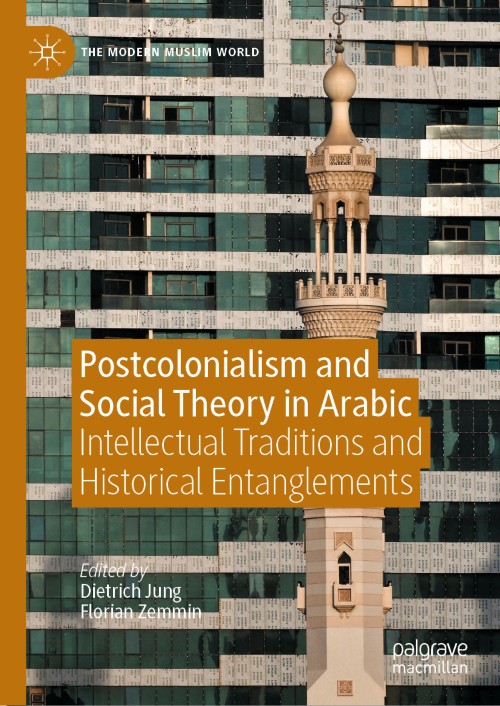
Postcolonialism and Social Theory in Arabic [electronic resource] : Intellectual Traditions and Historical Entanglements / edited by Dietrich Jung, Florian Zemmin.
Erişim Adresi
ISBN
9783031636493
Dil Kodu
İngilizce
Yer Numarası
DK/20947
Basım Bildirimi
1st ed. 2024.
Yayın Bilgisi
Cham : Springer Nature Switzerland : Imprint: Palgrave Macmillan, 2024.
Fiziksel Niteleme
IX, 210 p. 2 illus. online resource.
Dizi
The Modern Muslim World, 2945-6142
İçindekiler Notu
Chapter 1: Beyond Deconstruction – An Introduction To Writing Social Theory In Arabic -- Part I: Social theory in Academic disciplines -- Chapter 2: (Post-)Colonialism, Authoritarianism, And Authenticity: Sociology In Arab Countries -- Chapter : Who Counts As A Theorist? Locating Maghrebi Sociologists In The Intellectual History Of Decolonization -- Chapter 4: Decentering First World War History: Arabic Perspectives On A Global Event -- Chapter 5: The Islamization Of Knowledge: Critique And Alternative -- Part II: Social theory Beyond Academic Disciplines -- Chapter 6: Liquid Modernity In Arabic -- Chapter 7: Crisis And Creativity: Tradition And Revolution In Arab Social Theory -- Chapter 8: The Road Out Of Marxism: Entangled Thought In 1970s Lebanon -- Chapter 9: Arabic Social Theory In Japanese And Indonesian: Transregional Ideoscapes Of The Long 1960s.
Özet, vb.
Since Edward Said’s publication of Orientalism in 1978, so-called Western social theory and its claim to universal analytical validity has been exposed to severe criticism, and rightfully so. Scholars from the field of postcolonial studies were most vocal in criticizing the Eurocentric nature of the conceptual apparatus of the social sciences. Indeed, contemporary social theory almost exclusively refers to the historical experiences of Western Europe and North America. Yet what is the alternative to these Eurocentric frameworks? Many postcolonial critics use few non-English sources and tend to focus on the deconstruction of European and American theories. This book provides a turn of perspective. The authors critically reflect upon the concepts of so-called Western social theory by engaging with social theory in Arabic. Questions addressed include: What are the concepts, themes, and historical narratives in contemporary Arabic social theory? In which ways do Arab social theorists provide us with alternatives to the conceptual apparatuses employed by so-called Western social theory? To what extent are Arab and Western social theories entangled with each other? Dietrich Jung is a professor in Middle East and Islamic studies at the University of Southern Denmark in Odense, Denmark. Florian Zemmin is a professor of Islamic studies at Freie Universität Berlin, Germany.
Konu
Middle East __ Politics and government.
Philosophy.
Postcolonialism.
Knowledge, Sociology of.
Middle Eastern Politics.
Postcolonial Philosophy.
Sociology of Knowledge and Discourse.
Philosophy.
Postcolonialism.
Knowledge, Sociology of.
Middle Eastern Politics.
Postcolonial Philosophy.
Sociology of Knowledge and Discourse.
Diğer Yazarlar
Kurum Adı
Eseri Alıntıla
Referansları kullanmadan önce gözden geçirmeniz ve varsa gerekli düzeltmeleri yapmanız önerilir.
Dijital Kaynak
MARC Görünümü
LEADER 05548nam a22006615i 4500
001 819740
003 TR_AnAIT
005 20260130172447
007 cr nn 008mamaa
008 240912s2024 sz | s |||| 0|eng d
020 |a9783031636493|9978-3-031-63649-3
024 7 |a10.1007/978-3-031-63649-3|2doi
041 |aeng
049 |aTürk Tarih Kurumu Kütüphanesi
050 4|aJQ1758-1852
072 7|aJP|2bicssc
072 7|a1FB|2bicssc
072 7|aPOL059000|2bisacsh
072 7|aJP|x1FB|2thema
082 04|a320.956|223
090 |aDK/20947
245 10|aPostcolonialism and Social Theory in Arabic|h[electronic resource] :|bIntellectual Traditions and Historical Entanglements /|cedited by Dietrich Jung, Florian Zemmin.
250 |a1st ed. 2024.
264 1|aCham :|bSpringer Nature Switzerland :|bImprint: Palgrave Macmillan,|c2024.
300 |aIX, 210 p. 2 illus.|bonline resource.
336 |atext|btxt|2rdacontent
337 |acomputer|bc|2rdamedia
338 |aonline resource|bcr|2rdacarrier
341 0 |bTable of contents navigation|2onix
341 0 |bSingle logical reading order|2onix
341 0 |bUse of color is not sole means of conveying information|2onix
341 0 |bUse of high contrast between text and background color|2onix
341 0 |bNext / Previous structural navigation|2onix
341 0 |bAll non-decorative content supports reading without sight|2onix
347 |atext file|bPDF|2rda
490 1 |aThe Modern Muslim World,|x2945-6142
505 0 |aChapter 1: Beyond Deconstruction – An Introduction To Writing Social Theory In Arabic -- Part I: Social theory in Academic disciplines -- Chapter 2: (Post-)Colonialism, Authoritarianism, And Authenticity: Sociology In Arab Countries -- Chapter : Who Counts As A Theorist? Locating Maghrebi Sociologists In The Intellectual History Of Decolonization -- Chapter 4: Decentering First World War History: Arabic Perspectives On A Global Event -- Chapter 5: The Islamization Of Knowledge: Critique And Alternative -- Part II: Social theory Beyond Academic Disciplines -- Chapter 6: Liquid Modernity In Arabic -- Chapter 7: Crisis And Creativity: Tradition And Revolution In Arab Social Theory -- Chapter 8: The Road Out Of Marxism: Entangled Thought In 1970s Lebanon -- Chapter 9: Arabic Social Theory In Japanese And Indonesian: Transregional Ideoscapes Of The Long 1960s.
520 |aSince Edward Said’s publication of Orientalism in 1978, so-called Western social theory and its claim to universal analytical validity has been exposed to severe criticism, and rightfully so. Scholars from the field of postcolonial studies were most vocal in criticizing the Eurocentric nature of the conceptual apparatus of the social sciences. Indeed, contemporary social theory almost exclusively refers to the historical experiences of Western Europe and North America. Yet what is the alternative to these Eurocentric frameworks? Many postcolonial critics use few non-English sources and tend to focus on the deconstruction of European and American theories. This book provides a turn of perspective. The authors critically reflect upon the concepts of so-called Western social theory by engaging with social theory in Arabic. Questions addressed include: What are the concepts, themes, and historical narratives in contemporary Arabic social theory? In which ways do Arab social theorists provide us with alternatives to the conceptual apparatuses employed by so-called Western social theory? To what extent are Arab and Western social theories entangled with each other? Dietrich Jung is a professor in Middle East and Islamic studies at the University of Southern Denmark in Odense, Denmark. Florian Zemmin is a professor of Islamic studies at Freie Universität Berlin, Germany.
532 8 |aAccessibility summary: This PDF does not fully comply with PDF/UA standards, but does feature limited screen reader support, bookmarks for easy navigation and searchable, selectable text. Users of assistive technologies may experience difficulty navigating or interpreting content in this document. We recognize the importance of accessibility, and we welcome queries about accessibility for any of our products. If you have a question or an access need, please get in touch with us at accessibilitysupport@springernature.com.
532 8 |aNo reading system accessibility options actively disabled
532 8 |aPublisher contact for further accessibility information: accessibilitysupport@springernature.com
650 0|aMiddle East|xPolitics and government.
650 0|aPhilosophy.
650 0|aPostcolonialism.
650 0|aKnowledge, Sociology of.
650 14|aMiddle Eastern Politics.
650 24|aPostcolonial Philosophy.
650 24|aSociology of Knowledge and Discourse.
700 1 |aJung, Dietrich.|eeditor.|0(orcid)0000-0002-6230-1007|1https://orcid.org/0000-0002-6230-1007|4edt|4http://id.loc.gov/vocabulary/relators/edt
700 1 |aZemmin, Florian.|eeditor.|4edt|4http://id.loc.gov/vocabulary/relators/edt
710 2 |aSpringerLink (Online service)
773 0 |tSpringer Nature eBook
776 08|iPrinted edition:|z9783031636486
776 08|iPrinted edition:|z9783031636509
776 08|iPrinted edition:|z9783031636516
830 0|aThe Modern Muslim World,|x2945-6142
856 40|uhttps://doi.org/10.1007/978-3-031-63649-3
912 |aZDB-2-POS
912 |aZDB-2-SXPI
950 |aPolitical Science and International Studies (SpringerNature-41174)
950 |aPolitical Science and International Studies (R0) (SpringerNature-43724)
001 819740
003 TR_AnAIT
005 20260130172447
007 cr nn 008mamaa
008 240912s2024 sz | s |||| 0|eng d
020 |a9783031636493|9978-3-031-63649-3
024 7 |a10.1007/978-3-031-63649-3|2doi
041 |aeng
049 |aTürk Tarih Kurumu Kütüphanesi
050 4|aJQ1758-1852
072 7|aJP|2bicssc
072 7|a1FB|2bicssc
072 7|aPOL059000|2bisacsh
072 7|aJP|x1FB|2thema
082 04|a320.956|223
090 |aDK/20947
245 10|aPostcolonialism and Social Theory in Arabic|h[electronic resource] :|bIntellectual Traditions and Historical Entanglements /|cedited by Dietrich Jung, Florian Zemmin.
250 |a1st ed. 2024.
264 1|aCham :|bSpringer Nature Switzerland :|bImprint: Palgrave Macmillan,|c2024.
300 |aIX, 210 p. 2 illus.|bonline resource.
336 |atext|btxt|2rdacontent
337 |acomputer|bc|2rdamedia
338 |aonline resource|bcr|2rdacarrier
341 0 |bTable of contents navigation|2onix
341 0 |bSingle logical reading order|2onix
341 0 |bUse of color is not sole means of conveying information|2onix
341 0 |bUse of high contrast between text and background color|2onix
341 0 |bNext / Previous structural navigation|2onix
341 0 |bAll non-decorative content supports reading without sight|2onix
347 |atext file|bPDF|2rda
490 1 |aThe Modern Muslim World,|x2945-6142
505 0 |aChapter 1: Beyond Deconstruction – An Introduction To Writing Social Theory In Arabic -- Part I: Social theory in Academic disciplines -- Chapter 2: (Post-)Colonialism, Authoritarianism, And Authenticity: Sociology In Arab Countries -- Chapter : Who Counts As A Theorist? Locating Maghrebi Sociologists In The Intellectual History Of Decolonization -- Chapter 4: Decentering First World War History: Arabic Perspectives On A Global Event -- Chapter 5: The Islamization Of Knowledge: Critique And Alternative -- Part II: Social theory Beyond Academic Disciplines -- Chapter 6: Liquid Modernity In Arabic -- Chapter 7: Crisis And Creativity: Tradition And Revolution In Arab Social Theory -- Chapter 8: The Road Out Of Marxism: Entangled Thought In 1970s Lebanon -- Chapter 9: Arabic Social Theory In Japanese And Indonesian: Transregional Ideoscapes Of The Long 1960s.
520 |aSince Edward Said’s publication of Orientalism in 1978, so-called Western social theory and its claim to universal analytical validity has been exposed to severe criticism, and rightfully so. Scholars from the field of postcolonial studies were most vocal in criticizing the Eurocentric nature of the conceptual apparatus of the social sciences. Indeed, contemporary social theory almost exclusively refers to the historical experiences of Western Europe and North America. Yet what is the alternative to these Eurocentric frameworks? Many postcolonial critics use few non-English sources and tend to focus on the deconstruction of European and American theories. This book provides a turn of perspective. The authors critically reflect upon the concepts of so-called Western social theory by engaging with social theory in Arabic. Questions addressed include: What are the concepts, themes, and historical narratives in contemporary Arabic social theory? In which ways do Arab social theorists provide us with alternatives to the conceptual apparatuses employed by so-called Western social theory? To what extent are Arab and Western social theories entangled with each other? Dietrich Jung is a professor in Middle East and Islamic studies at the University of Southern Denmark in Odense, Denmark. Florian Zemmin is a professor of Islamic studies at Freie Universität Berlin, Germany.
532 8 |aAccessibility summary: This PDF does not fully comply with PDF/UA standards, but does feature limited screen reader support, bookmarks for easy navigation and searchable, selectable text. Users of assistive technologies may experience difficulty navigating or interpreting content in this document. We recognize the importance of accessibility, and we welcome queries about accessibility for any of our products. If you have a question or an access need, please get in touch with us at accessibilitysupport@springernature.com.
532 8 |aNo reading system accessibility options actively disabled
532 8 |aPublisher contact for further accessibility information: accessibilitysupport@springernature.com
650 0|aMiddle East|xPolitics and government.
650 0|aPhilosophy.
650 0|aPostcolonialism.
650 0|aKnowledge, Sociology of.
650 14|aMiddle Eastern Politics.
650 24|aPostcolonial Philosophy.
650 24|aSociology of Knowledge and Discourse.
700 1 |aJung, Dietrich.|eeditor.|0(orcid)0000-0002-6230-1007|1https://orcid.org/0000-0002-6230-1007|4edt|4http://id.loc.gov/vocabulary/relators/edt
700 1 |aZemmin, Florian.|eeditor.|4edt|4http://id.loc.gov/vocabulary/relators/edt
710 2 |aSpringerLink (Online service)
773 0 |tSpringer Nature eBook
776 08|iPrinted edition:|z9783031636486
776 08|iPrinted edition:|z9783031636509
776 08|iPrinted edition:|z9783031636516
830 0|aThe Modern Muslim World,|x2945-6142
856 40|uhttps://doi.org/10.1007/978-3-031-63649-3
912 |aZDB-2-POS
912 |aZDB-2-SXPI
950 |aPolitical Science and International Studies (SpringerNature-41174)
950 |aPolitical Science and International Studies (R0) (SpringerNature-43724)
Materyaller
Depodan talep edilen materyal sadece kütüphane içerisinde kullanılmaktadır.
Materyal dışarıya ödünç verilmemektedir.
Materyal dışarıya ödünç verilmemektedir.
