Islamic Doctrines and Political Liberalism [electronic resource] : Muslim's Sincere Support / by Gozde Hussain.
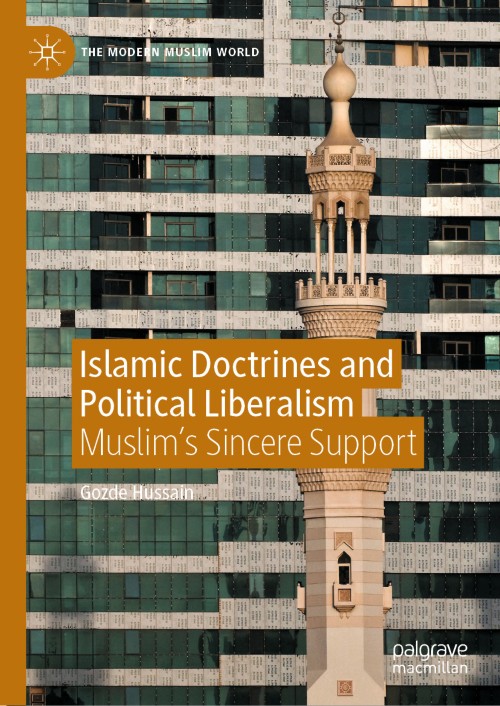
Erişim Adresi
ISBN
9783031722677
Dil Kodu
İngilizce
Yer Numarası
DK/20985
Yazar
Basım Bildirimi
1st ed. 2024.
Yayın Bilgisi
Cham : Springer Nature Switzerland : Imprint: Palgrave Macmillan, 2024.
Fiziksel Niteleme
XV, 253 p. 7 illus., 6 illus. in color. online resource.
Dizi
The Modern Muslim World, 2945-6142
İçindekiler Notu
Chapter 1: Introduction -- Chapter 2: Counter-intuitive Approach to Comparative Political Theorising -- Chapter 3: Rawlsian Political Liberalism: Containment of Unreasonableness in Liberal Constitutional Democracies -- Chapter 4: Critical Examination of the Compatibility of Islamic Doctrinal Tradition and Political Liberalism -- Chapter 5: Islamic Intellectual Tradition -- Chapter 6: Secular Political Order as an Antithesis of Islam -- Chapter 7: Islamic Modus Vivendi: Values of Secure Conduct and Stability -- Chapter 8: Islamic Overlapping Consensus -- Chapter 9: Conclusion.
Özet, vb.
“In this timely and illuminating book, Gozde Hussain explores whether observant Muslims can join the ‘overlapping consensus’ on liberal ideals and principles theorised by John Rawls, or whether any Islamic endorsement of liberal institutions will inevitably be more contingent and contextual than Rawls hoped. To do so, Hussain helpfully maps out a range of positions within Islamic political thought and their level of orthodoxy, ultimately arguing that devout Muslims can find theologically acceptable justifications for a liberal political order. In this way, the book significantly advances our understanding of the relationship between Islam and liberalism.” — Paul Billingham, Associate Professor of Political Theory, University of Oxford, UK “Most Muslims in Muslim-majority and Muslim-minority countries across the globe desire democracy, but to what extent is this just a pragmatic position? Gozde Hussain, informed by an understanding of liberalism and of Islamic scholarly positions in ethics and politics inquires to what extent can faithful Muslims and liberal theorists be in intellectual agreement. Her answers are nuanced and worth studying.” —Tariq Modood, FBA, University of Bristol, UK In this book, the central question addressed is the realism of observant Muslims endorsing a liberal democratic state from within their doctrinal tradition. By examining a range of Islamic orthodoxy positions, the book demonstrates that Muslims can theoretically find Islamic reasons, rooted in acceptable interpretations of divine sources, to justify their commitment to a liberal state. Furthermore, it provides moral reasons and strategies for the liberal state to address incompatible Islamic doctrines, ensuring Muslims can maintain religious practices without an Islamic political authority. This theoretical framework offers insights for future empirical and theoretical studies on Muslims navigating pluralistic liberal societies, making it a vital contribution to the discourse on Islam and liberalism. Gozde Hussain earned a PhD at Royal Holloway, University of London, UK, where they are currently a visiting lecturer and affiliated with the Centre for Islamic and West Asian Studies.
Konu
Middle East __ Politics and government.
Islam __ Study and teaching.
Political science.
Comparative government.
Middle Eastern Politics.
Islamic Studies.
Political Theory.
Comparative Politics.
Islam __ Study and teaching.
Political science.
Comparative government.
Middle Eastern Politics.
Islamic Studies.
Political Theory.
Comparative Politics.
Kurum Adı

Eseri Alıntıla
Referansları kullanmadan önce gözden geçirmeniz ve varsa gerekli düzeltmeleri yapmanız önerilir.
Dijital Kaynak
MARC Görünümü
LEADER 04798nam a22005535i 4500
001 819778
003 TR_AnAIT
005 20260130172306
007 cr nn 008mamaa
008 241113s2024 sz | s |||| 0|eng d
020 |a9783031722677|9978-3-031-72267-7
024 7 |a10.1007/978-3-031-72267-7|2doi
041 |aeng
049 |aTürk Tarih Kurumu Kütüphanesi
050 4|aJQ1758-1852
072 7|aJP|2bicssc
072 7|a1FB|2bicssc
072 7|aPOL059000|2bisacsh
072 7|aJP|x1FB|2thema
082 04|a320.956|223
090 |aDK/20985
100 1 |aHussain, Gozde.|eauthor.|4aut|4http://id.loc.gov/vocabulary/relators/aut
245 10|aIslamic Doctrines and Political Liberalism|h[electronic resource] :|bMuslim's Sincere Support /|cby Gozde Hussain.
250 |a1st ed. 2024.
264 1|aCham :|bSpringer Nature Switzerland :|bImprint: Palgrave Macmillan,|c2024.
300 |aXV, 253 p. 7 illus., 6 illus. in color.|bonline resource.
336 |atext|btxt|2rdacontent
337 |acomputer|bc|2rdamedia
338 |aonline resource|bcr|2rdacarrier
347 |atext file|bPDF|2rda
490 1 |aThe Modern Muslim World,|x2945-6142
505 0 |aChapter 1: Introduction -- Chapter 2: Counter-intuitive Approach to Comparative Political Theorising -- Chapter 3: Rawlsian Political Liberalism: Containment of Unreasonableness in Liberal Constitutional Democracies -- Chapter 4: Critical Examination of the Compatibility of Islamic Doctrinal Tradition and Political Liberalism -- Chapter 5: Islamic Intellectual Tradition -- Chapter 6: Secular Political Order as an Antithesis of Islam -- Chapter 7: Islamic Modus Vivendi: Values of Secure Conduct and Stability -- Chapter 8: Islamic Overlapping Consensus -- Chapter 9: Conclusion.
520 |a“In this timely and illuminating book, Gozde Hussain explores whether observant Muslims can join the ‘overlapping consensus’ on liberal ideals and principles theorised by John Rawls, or whether any Islamic endorsement of liberal institutions will inevitably be more contingent and contextual than Rawls hoped. To do so, Hussain helpfully maps out a range of positions within Islamic political thought and their level of orthodoxy, ultimately arguing that devout Muslims can find theologically acceptable justifications for a liberal political order. In this way, the book significantly advances our understanding of the relationship between Islam and liberalism.” — Paul Billingham, Associate Professor of Political Theory, University of Oxford, UK “Most Muslims in Muslim-majority and Muslim-minority countries across the globe desire democracy, but to what extent is this just a pragmatic position? Gozde Hussain, informed by an understanding of liberalism and of Islamic scholarly positions in ethics and politics inquires to what extent can faithful Muslims and liberal theorists be in intellectual agreement. Her answers are nuanced and worth studying.” —Tariq Modood, FBA, University of Bristol, UK In this book, the central question addressed is the realism of observant Muslims endorsing a liberal democratic state from within their doctrinal tradition. By examining a range of Islamic orthodoxy positions, the book demonstrates that Muslims can theoretically find Islamic reasons, rooted in acceptable interpretations of divine sources, to justify their commitment to a liberal state. Furthermore, it provides moral reasons and strategies for the liberal state to address incompatible Islamic doctrines, ensuring Muslims can maintain religious practices without an Islamic political authority. This theoretical framework offers insights for future empirical and theoretical studies on Muslims navigating pluralistic liberal societies, making it a vital contribution to the discourse on Islam and liberalism. Gozde Hussain earned a PhD at Royal Holloway, University of London, UK, where they are currently a visiting lecturer and affiliated with the Centre for Islamic and West Asian Studies.
650 0|aMiddle East|xPolitics and government.
650 0|aIslam|xStudy and teaching.
650 0|aPolitical science.
650 0|aComparative government.
650 14|aMiddle Eastern Politics.
650 24|aIslamic Studies.
650 24|aPolitical Theory.
650 24|aComparative Politics.
710 2 |aSpringerLink (Online service)
773 0 |tSpringer Nature eBook
776 08|iPrinted edition:|z9783031722660
776 08|iPrinted edition:|z9783031722684
776 08|iPrinted edition:|z9783031722691
830 0|aThe Modern Muslim World,|x2945-6142
856 40|uhttps://doi.org/10.1007/978-3-031-72267-7
912 |aZDB-2-POS
912 |aZDB-2-SXPI
950 |aPolitical Science and International Studies (SpringerNature-41174)
950 |aPolitical Science and International Studies (R0) (SpringerNature-43724)
001 819778
003 TR_AnAIT
005 20260130172306
007 cr nn 008mamaa
008 241113s2024 sz | s |||| 0|eng d
020 |a9783031722677|9978-3-031-72267-7
024 7 |a10.1007/978-3-031-72267-7|2doi
041 |aeng
049 |aTürk Tarih Kurumu Kütüphanesi
050 4|aJQ1758-1852
072 7|aJP|2bicssc
072 7|a1FB|2bicssc
072 7|aPOL059000|2bisacsh
072 7|aJP|x1FB|2thema
082 04|a320.956|223
090 |aDK/20985
100 1 |aHussain, Gozde.|eauthor.|4aut|4http://id.loc.gov/vocabulary/relators/aut
245 10|aIslamic Doctrines and Political Liberalism|h[electronic resource] :|bMuslim's Sincere Support /|cby Gozde Hussain.
250 |a1st ed. 2024.
264 1|aCham :|bSpringer Nature Switzerland :|bImprint: Palgrave Macmillan,|c2024.
300 |aXV, 253 p. 7 illus., 6 illus. in color.|bonline resource.
336 |atext|btxt|2rdacontent
337 |acomputer|bc|2rdamedia
338 |aonline resource|bcr|2rdacarrier
347 |atext file|bPDF|2rda
490 1 |aThe Modern Muslim World,|x2945-6142
505 0 |aChapter 1: Introduction -- Chapter 2: Counter-intuitive Approach to Comparative Political Theorising -- Chapter 3: Rawlsian Political Liberalism: Containment of Unreasonableness in Liberal Constitutional Democracies -- Chapter 4: Critical Examination of the Compatibility of Islamic Doctrinal Tradition and Political Liberalism -- Chapter 5: Islamic Intellectual Tradition -- Chapter 6: Secular Political Order as an Antithesis of Islam -- Chapter 7: Islamic Modus Vivendi: Values of Secure Conduct and Stability -- Chapter 8: Islamic Overlapping Consensus -- Chapter 9: Conclusion.
520 |a“In this timely and illuminating book, Gozde Hussain explores whether observant Muslims can join the ‘overlapping consensus’ on liberal ideals and principles theorised by John Rawls, or whether any Islamic endorsement of liberal institutions will inevitably be more contingent and contextual than Rawls hoped. To do so, Hussain helpfully maps out a range of positions within Islamic political thought and their level of orthodoxy, ultimately arguing that devout Muslims can find theologically acceptable justifications for a liberal political order. In this way, the book significantly advances our understanding of the relationship between Islam and liberalism.” — Paul Billingham, Associate Professor of Political Theory, University of Oxford, UK “Most Muslims in Muslim-majority and Muslim-minority countries across the globe desire democracy, but to what extent is this just a pragmatic position? Gozde Hussain, informed by an understanding of liberalism and of Islamic scholarly positions in ethics and politics inquires to what extent can faithful Muslims and liberal theorists be in intellectual agreement. Her answers are nuanced and worth studying.” —Tariq Modood, FBA, University of Bristol, UK In this book, the central question addressed is the realism of observant Muslims endorsing a liberal democratic state from within their doctrinal tradition. By examining a range of Islamic orthodoxy positions, the book demonstrates that Muslims can theoretically find Islamic reasons, rooted in acceptable interpretations of divine sources, to justify their commitment to a liberal state. Furthermore, it provides moral reasons and strategies for the liberal state to address incompatible Islamic doctrines, ensuring Muslims can maintain religious practices without an Islamic political authority. This theoretical framework offers insights for future empirical and theoretical studies on Muslims navigating pluralistic liberal societies, making it a vital contribution to the discourse on Islam and liberalism. Gozde Hussain earned a PhD at Royal Holloway, University of London, UK, where they are currently a visiting lecturer and affiliated with the Centre for Islamic and West Asian Studies.
650 0|aMiddle East|xPolitics and government.
650 0|aIslam|xStudy and teaching.
650 0|aPolitical science.
650 0|aComparative government.
650 14|aMiddle Eastern Politics.
650 24|aIslamic Studies.
650 24|aPolitical Theory.
650 24|aComparative Politics.
710 2 |aSpringerLink (Online service)
773 0 |tSpringer Nature eBook
776 08|iPrinted edition:|z9783031722660
776 08|iPrinted edition:|z9783031722684
776 08|iPrinted edition:|z9783031722691
830 0|aThe Modern Muslim World,|x2945-6142
856 40|uhttps://doi.org/10.1007/978-3-031-72267-7
912 |aZDB-2-POS
912 |aZDB-2-SXPI
950 |aPolitical Science and International Studies (SpringerNature-41174)
950 |aPolitical Science and International Studies (R0) (SpringerNature-43724)
Materyaller
Depodan talep edilen materyal sadece kütüphane içerisinde kullanılmaktadır.
Materyal dışarıya ödünç verilmemektedir.
