

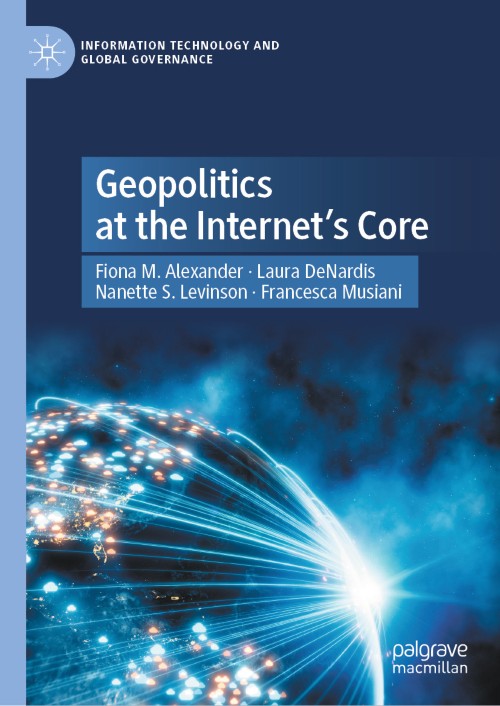
Geopolitics at the Internet’s Core [electronic resource] / by Fiona M. Alexander, Laura DeNardis, Nanette S. Levinson, Francesca Musiani.
Erişim Adresi
ISBN
9783031894787
Dil Kodu
İngilizce
Yer Numarası
DK/21120
Yazar
Basım Bildirimi
1st ed. 2025.
Yayın Bilgisi
Cham : Springer Nature Switzerland : Imprint: Palgrave Macmillan, 2025.
Fiziksel Niteleme
XXV, 245 p. 6 illus., 5 illus. in color. online resource.
Dizi
Information Technology and Global Governance, 2946-3300
İçindekiler Notu
Chapter 1: Internet Protocol Politics -- Chapter 2: A Radical Governance Innovation -- Chapter 3: Technical Design as Governance -- Chapter 4: The Internet Address Space as a Geopolitical Space -- Chapter 5: A Twenty Year Control Struggle from US Stewardship to Private Governance -- Chapter 6: The Internet Protocol and Content Battles -- Chapter 7: Internet Protocol Security Entanglements with Geopolitics -- Chapter 8: The Role of the Internet Protocol Ecosystem in Inclusion -- Chapter 9: Geopolitical and Technical Futures of the Internet Protocol.
Özet, vb.
Contentious geopolitical conflicts over digital technologies have arisen around a complex set of technical specifications at the Internet’s core. One of these is the Internet Protocol (IP), designed for addressing and routing information to its destination. China redesigning the Internet? Ukraine asking that Russia be disconnected from the Internet? The U.S. ‘surrendering’ the Internet? The Internet Protocol - rightly or not - has been at the center of many digital policy concerns for decades. In examining entanglements between IP and public interest issues, Geopolitics at the Internet’s Core illuminates how technical infrastructure is now a proxy for political and economic power. Ongoing global controversies over the Internet Protocol ecosystem hint at its importance and why IP is a flashpoint mediating broader conflicts in various cultural and historic contexts. Geopolitics at the Internet’s Core analyzes the trajectory and possible futures of the Internet Protocol as a space mediating geopolitical and domestic controversies in an increasingly contentious digital world; it explains the IP ecosystem, a complex combination of virtual resources, abstract specifications, tangible infrastructure, functionally specific systems, and the institutions and rules that design and govern these systems. With a view toward the future and insights into the governance of emerging technologies, this book identifies eight IP-related levers of power that illuminate technology governance debates. Opening up the black box of the Internet Protocol and related global governance challenges, it explains the political battles and the stakes of these battles at the heart of the Internet. Fiona M. Alexander is Distinguished Policy Strategist in Residence and Internet Governance Lab Distinguished Fellow at American University, USA. Laura DeNardis is Professor and Endowed Chair in Technology, Ethics, and Society and Director of the Center for Digital Ethics at Georgetown University, USA. Nanette S. Levinson is Professor and Director, Internet Governance Lab at American University, USA. Francesca Musiani is Research Professor at the French National Center for Scientific Research (CNRS), and Director of CNRS's Centre for Internet and Society.
Konu
Political planning.
Internet __ Social aspects.
Mass media __ Political aspects.
Public Policy.
Internet Studies.
Media Policy and Politics.
Internet __ Social aspects.
Mass media __ Political aspects.
Public Policy.
Internet Studies.
Media Policy and Politics.
Diğer Yazarlar
Kurum Adı
Eseri Alıntıla
Referansları kullanmadan önce gözden geçirmeniz ve varsa gerekli düzeltmeleri yapmanız önerilir.
Dijital Kaynak
MARC Görünümü
LEADER 06337nam a22006855i 4500
001 819913
003 TR_AnAIT
005 20260130171833
007 cr nn 008mamaa
008 250727s2025 sz | s |||| 0|eng d
020 |a9783031894787|9978-3-031-89478-7
024 7 |a10.1007/978-3-031-89478-7|2doi
041 |aeng
049 |aTürk Tarih Kurumu Kütüphanesi
050 4|aJF1525.P6
072 7|aJPP|2bicssc
072 7|aPOL028000|2bisacsh
072 7|aJPP|2thema
082 04|a320.6|223
090 |aDK/21120
100 1 |aAlexander, Fiona M.|eauthor.|4aut|4http://id.loc.gov/vocabulary/relators/aut
245 10|aGeopolitics at the Internet’s Core|h[electronic resource] /|cby Fiona M. Alexander, Laura DeNardis, Nanette S. Levinson, Francesca Musiani.
250 |a1st ed. 2025.
264 1|aCham :|bSpringer Nature Switzerland :|bImprint: Palgrave Macmillan,|c2025.
300 |aXXV, 245 p. 6 illus., 5 illus. in color.|bonline resource.
336 |atext|btxt|2rdacontent
337 |acomputer|bc|2rdamedia
338 |aonline resource|bcr|2rdacarrier
341 0 |bPDF/UA-1|2onix
341 0 |bTable of contents navigation|2onix
341 0 |bSingle logical reading order|2onix
341 0 |bShort alternative textual descriptions|2onix
341 0 |bUse of color is not sole means of conveying information|2onix
341 0 |bUse of high contrast between text and background color|2onix
341 0 |bNext / Previous structural navigation|2onix
341 0 |bAll non-decorative content supports reading without sight|2onix
347 |atext file|bPDF|2rda
490 1 |aInformation Technology and Global Governance,|x2946-3300
505 0 |aChapter 1: Internet Protocol Politics -- Chapter 2: A Radical Governance Innovation -- Chapter 3: Technical Design as Governance -- Chapter 4: The Internet Address Space as a Geopolitical Space -- Chapter 5: A Twenty Year Control Struggle from US Stewardship to Private Governance -- Chapter 6: The Internet Protocol and Content Battles -- Chapter 7: Internet Protocol Security Entanglements with Geopolitics -- Chapter 8: The Role of the Internet Protocol Ecosystem in Inclusion -- Chapter 9: Geopolitical and Technical Futures of the Internet Protocol.
520 |aContentious geopolitical conflicts over digital technologies have arisen around a complex set of technical specifications at the Internet’s core. One of these is the Internet Protocol (IP), designed for addressing and routing information to its destination. China redesigning the Internet? Ukraine asking that Russia be disconnected from the Internet? The U.S. ‘surrendering’ the Internet? The Internet Protocol - rightly or not - has been at the center of many digital policy concerns for decades. In examining entanglements between IP and public interest issues, Geopolitics at the Internet’s Core illuminates how technical infrastructure is now a proxy for political and economic power. Ongoing global controversies over the Internet Protocol ecosystem hint at its importance and why IP is a flashpoint mediating broader conflicts in various cultural and historic contexts. Geopolitics at the Internet’s Core analyzes the trajectory and possible futures of the Internet Protocol as a space mediating geopolitical and domestic controversies in an increasingly contentious digital world; it explains the IP ecosystem, a complex combination of virtual resources, abstract specifications, tangible infrastructure, functionally specific systems, and the institutions and rules that design and govern these systems. With a view toward the future and insights into the governance of emerging technologies, this book identifies eight IP-related levers of power that illuminate technology governance debates. Opening up the black box of the Internet Protocol and related global governance challenges, it explains the political battles and the stakes of these battles at the heart of the Internet. Fiona M. Alexander is Distinguished Policy Strategist in Residence and Internet Governance Lab Distinguished Fellow at American University, USA. Laura DeNardis is Professor and Endowed Chair in Technology, Ethics, and Society and Director of the Center for Digital Ethics at Georgetown University, USA. Nanette S. Levinson is Professor and Director, Internet Governance Lab at American University, USA. Francesca Musiani is Research Professor at the French National Center for Scientific Research (CNRS), and Director of CNRS's Centre for Internet and Society.
532 8 |aAccessibility summary: This PDF has been created in accordance with the PDF/UA-1 standard to enhance accessibility, including screen reader support, described non-text content (images, graphs), bookmarks for easy navigation, keyboard-friendly links and forms and searchable, selectable text. We recognize the importance of accessibility, and we welcome queries about accessibility for any of our products. If you have a question or an access need, please get in touch with us at accessibilitysupport@springernature.com. Please note that a more accessible version of this eBook is available as ePub.
532 8 |aNo reading system accessibility options actively disabled
532 8 |aPublisher contact for further accessibility information: accessibilitysupport@springernature.com
650 0|aPolitical planning.
650 0|aInternet|xSocial aspects.
650 0|aMass media|xPolitical aspects.
650 14|aPublic Policy.
650 24|aInternet Studies.
650 24|aMedia Policy and Politics.
700 1 |aDeNardis, Laura.|eauthor.|4aut|4http://id.loc.gov/vocabulary/relators/aut
700 1 |aLevinson, Nanette S.|eauthor.|4aut|4http://id.loc.gov/vocabulary/relators/aut
700 1 |aMusiani, Francesca.|eauthor.|4aut|4http://id.loc.gov/vocabulary/relators/aut
710 2 |aSpringerLink (Online service)
773 0 |tSpringer Nature eBook
776 08|iPrinted edition:|z9783031894770
776 08|iPrinted edition:|z9783031894794
776 08|iPrinted edition:|z9783031894800
830 0|aInformation Technology and Global Governance,|x2946-3300
856 40|uhttps://doi.org/10.1007/978-3-031-89478-7
912 |aZDB-2-POS
912 |aZDB-2-SXPI
950 |aPolitical Science and International Studies (SpringerNature-41174)
950 |aPolitical Science and International Studies (R0) (SpringerNature-43724)
001 819913
003 TR_AnAIT
005 20260130171833
007 cr nn 008mamaa
008 250727s2025 sz | s |||| 0|eng d
020 |a9783031894787|9978-3-031-89478-7
024 7 |a10.1007/978-3-031-89478-7|2doi
041 |aeng
049 |aTürk Tarih Kurumu Kütüphanesi
050 4|aJF1525.P6
072 7|aJPP|2bicssc
072 7|aPOL028000|2bisacsh
072 7|aJPP|2thema
082 04|a320.6|223
090 |aDK/21120
100 1 |aAlexander, Fiona M.|eauthor.|4aut|4http://id.loc.gov/vocabulary/relators/aut
245 10|aGeopolitics at the Internet’s Core|h[electronic resource] /|cby Fiona M. Alexander, Laura DeNardis, Nanette S. Levinson, Francesca Musiani.
250 |a1st ed. 2025.
264 1|aCham :|bSpringer Nature Switzerland :|bImprint: Palgrave Macmillan,|c2025.
300 |aXXV, 245 p. 6 illus., 5 illus. in color.|bonline resource.
336 |atext|btxt|2rdacontent
337 |acomputer|bc|2rdamedia
338 |aonline resource|bcr|2rdacarrier
341 0 |bPDF/UA-1|2onix
341 0 |bTable of contents navigation|2onix
341 0 |bSingle logical reading order|2onix
341 0 |bShort alternative textual descriptions|2onix
341 0 |bUse of color is not sole means of conveying information|2onix
341 0 |bUse of high contrast between text and background color|2onix
341 0 |bNext / Previous structural navigation|2onix
341 0 |bAll non-decorative content supports reading without sight|2onix
347 |atext file|bPDF|2rda
490 1 |aInformation Technology and Global Governance,|x2946-3300
505 0 |aChapter 1: Internet Protocol Politics -- Chapter 2: A Radical Governance Innovation -- Chapter 3: Technical Design as Governance -- Chapter 4: The Internet Address Space as a Geopolitical Space -- Chapter 5: A Twenty Year Control Struggle from US Stewardship to Private Governance -- Chapter 6: The Internet Protocol and Content Battles -- Chapter 7: Internet Protocol Security Entanglements with Geopolitics -- Chapter 8: The Role of the Internet Protocol Ecosystem in Inclusion -- Chapter 9: Geopolitical and Technical Futures of the Internet Protocol.
520 |aContentious geopolitical conflicts over digital technologies have arisen around a complex set of technical specifications at the Internet’s core. One of these is the Internet Protocol (IP), designed for addressing and routing information to its destination. China redesigning the Internet? Ukraine asking that Russia be disconnected from the Internet? The U.S. ‘surrendering’ the Internet? The Internet Protocol - rightly or not - has been at the center of many digital policy concerns for decades. In examining entanglements between IP and public interest issues, Geopolitics at the Internet’s Core illuminates how technical infrastructure is now a proxy for political and economic power. Ongoing global controversies over the Internet Protocol ecosystem hint at its importance and why IP is a flashpoint mediating broader conflicts in various cultural and historic contexts. Geopolitics at the Internet’s Core analyzes the trajectory and possible futures of the Internet Protocol as a space mediating geopolitical and domestic controversies in an increasingly contentious digital world; it explains the IP ecosystem, a complex combination of virtual resources, abstract specifications, tangible infrastructure, functionally specific systems, and the institutions and rules that design and govern these systems. With a view toward the future and insights into the governance of emerging technologies, this book identifies eight IP-related levers of power that illuminate technology governance debates. Opening up the black box of the Internet Protocol and related global governance challenges, it explains the political battles and the stakes of these battles at the heart of the Internet. Fiona M. Alexander is Distinguished Policy Strategist in Residence and Internet Governance Lab Distinguished Fellow at American University, USA. Laura DeNardis is Professor and Endowed Chair in Technology, Ethics, and Society and Director of the Center for Digital Ethics at Georgetown University, USA. Nanette S. Levinson is Professor and Director, Internet Governance Lab at American University, USA. Francesca Musiani is Research Professor at the French National Center for Scientific Research (CNRS), and Director of CNRS's Centre for Internet and Society.
532 8 |aAccessibility summary: This PDF has been created in accordance with the PDF/UA-1 standard to enhance accessibility, including screen reader support, described non-text content (images, graphs), bookmarks for easy navigation, keyboard-friendly links and forms and searchable, selectable text. We recognize the importance of accessibility, and we welcome queries about accessibility for any of our products. If you have a question or an access need, please get in touch with us at accessibilitysupport@springernature.com. Please note that a more accessible version of this eBook is available as ePub.
532 8 |aNo reading system accessibility options actively disabled
532 8 |aPublisher contact for further accessibility information: accessibilitysupport@springernature.com
650 0|aPolitical planning.
650 0|aInternet|xSocial aspects.
650 0|aMass media|xPolitical aspects.
650 14|aPublic Policy.
650 24|aInternet Studies.
650 24|aMedia Policy and Politics.
700 1 |aDeNardis, Laura.|eauthor.|4aut|4http://id.loc.gov/vocabulary/relators/aut
700 1 |aLevinson, Nanette S.|eauthor.|4aut|4http://id.loc.gov/vocabulary/relators/aut
700 1 |aMusiani, Francesca.|eauthor.|4aut|4http://id.loc.gov/vocabulary/relators/aut
710 2 |aSpringerLink (Online service)
773 0 |tSpringer Nature eBook
776 08|iPrinted edition:|z9783031894770
776 08|iPrinted edition:|z9783031894794
776 08|iPrinted edition:|z9783031894800
830 0|aInformation Technology and Global Governance,|x2946-3300
856 40|uhttps://doi.org/10.1007/978-3-031-89478-7
912 |aZDB-2-POS
912 |aZDB-2-SXPI
950 |aPolitical Science and International Studies (SpringerNature-41174)
950 |aPolitical Science and International Studies (R0) (SpringerNature-43724)
Materyaller
Depodan talep edilen materyal sadece kütüphane içerisinde kullanılmaktadır.
Materyal dışarıya ödünç verilmemektedir.
Materyal dışarıya ödünç verilmemektedir.
