

Towards Rethinking Politics, Policy and Polity in the Anthropocene [electronic resource] : Multidisciplinary Perspectives / edited by Hans Günter Brauch.
Erişim Adresi
ISBN
9783031718076
Dil Kodu
İngilizce
Yer Numarası
DK/21169
Basım Bildirimi
1st ed. 2025.
Yayın Bilgisi
Cham : Springer Nature Switzerland : Imprint: Springer, 2025.
Fiziksel Niteleme
LXXIX, 586 p. 79 illus., 71 illus. in color. online resource.
Dizi
The Anthropocene: Politik—Economics—Society—Science, 2367-4032 ; 35
İçindekiler Notu
1.Towards Rethinking Politics Policy and Polity in the Anthropocene Dual Contextual Change the Peace and Security vs The Anthropocene Narrative -- 2.The Anthropocene and International Political Order Towards an Integrated Analysis -- 3.The Anthropocene and Complexity A Survey of Ideas -- 4 Politics and Geology in Anthropocene Geopolitics -- 5.Thinking Politically about the Anthropocene -- 6.Peace and Security Discourses on the Anthropocene An International Relations Perspective -- 7.The Anthropocene and German Political Science A Case Study -- 8.Planetary Boundaries Complex Crises and Governance in the Anthropocene Pathways Tipping Cascades and Transformation in Integrative Geography -- 9.Governance and Politics in the Anthropocene -- 10.Patriarchy has Produced the Patriacene Can Gender Challenge Its Persistence.
Özet, vb.
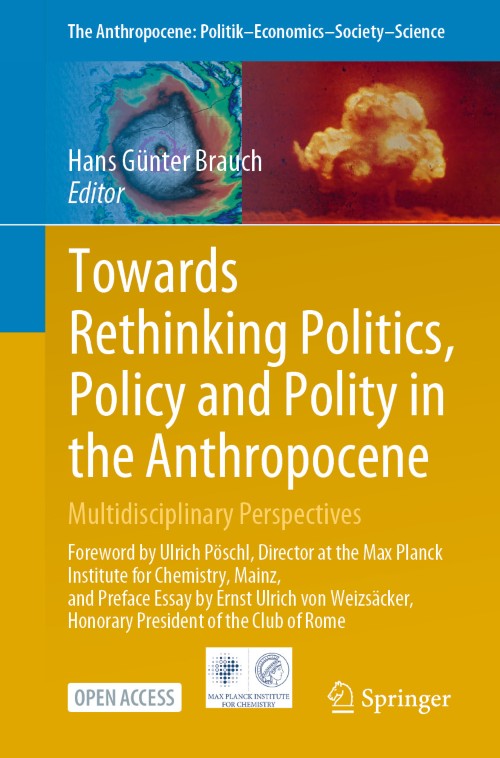
Humankind faces two anthropogenic threats to its survival that are closely linked. The first is the end of the Holocene and the start of the Anthropocene, which was marked by the test of a nuclear bomb on 16 July 1945. In the prevailing peace and security narrative, nuclear weapons and the ‘other’ (country, bloc or alliance) pose a perceived threat to humankind’s survival. In the Anthropocene narrative, ‘we are the threat’ through our way of life and the burning of hydrocarbons. The start of the Anthropocene coincides with a change in the international order with the setting up of the UN and the Bretton Woods Institutions. Three stages of this order are distinguished: the Cold War (bipolarity), the post-Cold War era (unipolarity), and the end of the rule-based global liberal order (multipolarity) on 24 February 2022. In this book ten multidisciplinary perspectives discuss complexity, Anthropocene geopolitics, peace and security discourses and the German debate on the Anthropocene, planetary boundaries, complex crises and integrative geography in the Anthropocene, governance and politics, and the Patriacene and gender. Both existential threats for humankind are illustrated by cover photos of the first nuclear weapons test on 16 July 1945 and by Category 5 Hurricane Otis, an extreme weather event impacting on Acapulco in Mexico on 25 October 2023. The Anthropocene as a new epoch of Earth history coincides in 1945 with a change in the international order. In the security and peace narrative, the ‘other’ and nuclear weapons pose an existential threat; in the Anthropocene narrative, we are the threat. This dual existential change requires a rethinking of politics, policy and polity. In the social sciences, the Anthropocene is being discussed from multidisciplinary perspectives (geography, political science, and peace, security, and gender studies). This is an open access publication.
Konu
Political science.
International relations.
Security, International.
Geography.
Political Science.
International Relations.
International Security Studies.
Geography.
International relations.
Security, International.
Geography.
Political Science.
International Relations.
International Security Studies.
Geography.
Diğer Yazarlar
Kurum Adı
Eseri Alıntıla
Referansları kullanmadan önce gözden geçirmeniz ve varsa gerekli düzeltmeleri yapmanız önerilir.
Dijital Kaynak
MARC Görünümü
LEADER 04816nam a22005535i 4500
001 819962
003 TR_AnAIT
005 20260130171637
007 cr nn 008mamaa
008 250225s2025 sz | s |||| 0|eng d
020 |a9783031718076|9978-3-031-71807-6
024 7 |a10.1007/978-3-031-71807-6|2doi
041 |aeng
049 |aTürk Tarih Kurumu Kütüphanesi
050 4|aJA1-92
072 7|aJPA|2bicssc
072 7|aPOL000000|2bisacsh
072 7|aJPA|2thema
082 04|a320|223
090 |aDK/21169
245 10|aTowards Rethinking Politics, Policy and Polity in the Anthropocene|h[electronic resource] :|bMultidisciplinary Perspectives /|cedited by Hans Günter Brauch.
250 |a1st ed. 2025.
264 1|aCham :|bSpringer Nature Switzerland :|bImprint: Springer,|c2025.
300 |aLXXIX, 586 p. 79 illus., 71 illus. in color.|bonline resource.
336 |atext|btxt|2rdacontent
337 |acomputer|bc|2rdamedia
338 |aonline resource|bcr|2rdacarrier
347 |atext file|bPDF|2rda
490 1 |aThe Anthropocene: Politik—Economics—Society—Science,|x2367-4032 ;|v35
505 0 |a1.Towards Rethinking Politics Policy and Polity in the Anthropocene Dual Contextual Change the Peace and Security vs The Anthropocene Narrative -- 2.The Anthropocene and International Political Order Towards an Integrated Analysis -- 3.The Anthropocene and Complexity A Survey of Ideas -- 4 Politics and Geology in Anthropocene Geopolitics -- 5.Thinking Politically about the Anthropocene -- 6.Peace and Security Discourses on the Anthropocene An International Relations Perspective -- 7.The Anthropocene and German Political Science A Case Study -- 8.Planetary Boundaries Complex Crises and Governance in the Anthropocene Pathways Tipping Cascades and Transformation in Integrative Geography -- 9.Governance and Politics in the Anthropocene -- 10.Patriarchy has Produced the Patriacene Can Gender Challenge Its Persistence.
506 0 |aOpen Access
520 |aHumankind faces two anthropogenic threats to its survival that are closely linked. The first is the end of the Holocene and the start of the Anthropocene, which was marked by the test of a nuclear bomb on 16 July 1945. In the prevailing peace and security narrative, nuclear weapons and the ‘other’ (country, bloc or alliance) pose a perceived threat to humankind’s survival. In the Anthropocene narrative, ‘we are the threat’ through our way of life and the burning of hydrocarbons. The start of the Anthropocene coincides with a change in the international order with the setting up of the UN and the Bretton Woods Institutions. Three stages of this order are distinguished: the Cold War (bipolarity), the post-Cold War era (unipolarity), and the end of the rule-based global liberal order (multipolarity) on 24 February 2022. In this book ten multidisciplinary perspectives discuss complexity, Anthropocene geopolitics, peace and security discourses and the German debate on the Anthropocene, planetary boundaries, complex crises and integrative geography in the Anthropocene, governance and politics, and the Patriacene and gender. Both existential threats for humankind are illustrated by cover photos of the first nuclear weapons test on 16 July 1945 and by Category 5 Hurricane Otis, an extreme weather event impacting on Acapulco in Mexico on 25 October 2023. The Anthropocene as a new epoch of Earth history coincides in 1945 with a change in the international order. In the security and peace narrative, the ‘other’ and nuclear weapons pose an existential threat; in the Anthropocene narrative, we are the threat. This dual existential change requires a rethinking of politics, policy and polity. In the social sciences, the Anthropocene is being discussed from multidisciplinary perspectives (geography, political science, and peace, security, and gender studies). This is an open access publication.
650 0|aPolitical science.
650 0|aInternational relations.
650 0|aSecurity, International.
650 0|aGeography.
650 14|aPolitical Science.
650 24|aInternational Relations.
650 24|aInternational Security Studies.
650 24|aGeography.
700 1 |aBrauch, Hans Günter.|eeditor.|4edt|4http://id.loc.gov/vocabulary/relators/edt
710 2 |aSpringerLink (Online service)
773 0 |tSpringer Nature eBook
776 08|iPrinted edition:|z9783031718069
776 08|iPrinted edition:|z9783031718083
830 0|aThe Anthropocene: Politik—Economics—Society—Science,|x2367-4032 ;|v35
856 40|uhttps://doi.org/10.1007/978-3-031-71807-6
912 |aZDB-2-POS
912 |aZDB-2-SXPI
912 |aZDB-2-SOB
950 |aPolitical Science and International Studies (SpringerNature-41174)
950 |aPolitical Science and International Studies (R0) (SpringerNature-43724)
001 819962
003 TR_AnAIT
005 20260130171637
007 cr nn 008mamaa
008 250225s2025 sz | s |||| 0|eng d
020 |a9783031718076|9978-3-031-71807-6
024 7 |a10.1007/978-3-031-71807-6|2doi
041 |aeng
049 |aTürk Tarih Kurumu Kütüphanesi
050 4|aJA1-92
072 7|aJPA|2bicssc
072 7|aPOL000000|2bisacsh
072 7|aJPA|2thema
082 04|a320|223
090 |aDK/21169
245 10|aTowards Rethinking Politics, Policy and Polity in the Anthropocene|h[electronic resource] :|bMultidisciplinary Perspectives /|cedited by Hans Günter Brauch.
250 |a1st ed. 2025.
264 1|aCham :|bSpringer Nature Switzerland :|bImprint: Springer,|c2025.
300 |aLXXIX, 586 p. 79 illus., 71 illus. in color.|bonline resource.
336 |atext|btxt|2rdacontent
337 |acomputer|bc|2rdamedia
338 |aonline resource|bcr|2rdacarrier
347 |atext file|bPDF|2rda
490 1 |aThe Anthropocene: Politik—Economics—Society—Science,|x2367-4032 ;|v35
505 0 |a1.Towards Rethinking Politics Policy and Polity in the Anthropocene Dual Contextual Change the Peace and Security vs The Anthropocene Narrative -- 2.The Anthropocene and International Political Order Towards an Integrated Analysis -- 3.The Anthropocene and Complexity A Survey of Ideas -- 4 Politics and Geology in Anthropocene Geopolitics -- 5.Thinking Politically about the Anthropocene -- 6.Peace and Security Discourses on the Anthropocene An International Relations Perspective -- 7.The Anthropocene and German Political Science A Case Study -- 8.Planetary Boundaries Complex Crises and Governance in the Anthropocene Pathways Tipping Cascades and Transformation in Integrative Geography -- 9.Governance and Politics in the Anthropocene -- 10.Patriarchy has Produced the Patriacene Can Gender Challenge Its Persistence.
506 0 |aOpen Access
520 |aHumankind faces two anthropogenic threats to its survival that are closely linked. The first is the end of the Holocene and the start of the Anthropocene, which was marked by the test of a nuclear bomb on 16 July 1945. In the prevailing peace and security narrative, nuclear weapons and the ‘other’ (country, bloc or alliance) pose a perceived threat to humankind’s survival. In the Anthropocene narrative, ‘we are the threat’ through our way of life and the burning of hydrocarbons. The start of the Anthropocene coincides with a change in the international order with the setting up of the UN and the Bretton Woods Institutions. Three stages of this order are distinguished: the Cold War (bipolarity), the post-Cold War era (unipolarity), and the end of the rule-based global liberal order (multipolarity) on 24 February 2022. In this book ten multidisciplinary perspectives discuss complexity, Anthropocene geopolitics, peace and security discourses and the German debate on the Anthropocene, planetary boundaries, complex crises and integrative geography in the Anthropocene, governance and politics, and the Patriacene and gender. Both existential threats for humankind are illustrated by cover photos of the first nuclear weapons test on 16 July 1945 and by Category 5 Hurricane Otis, an extreme weather event impacting on Acapulco in Mexico on 25 October 2023. The Anthropocene as a new epoch of Earth history coincides in 1945 with a change in the international order. In the security and peace narrative, the ‘other’ and nuclear weapons pose an existential threat; in the Anthropocene narrative, we are the threat. This dual existential change requires a rethinking of politics, policy and polity. In the social sciences, the Anthropocene is being discussed from multidisciplinary perspectives (geography, political science, and peace, security, and gender studies). This is an open access publication.
650 0|aPolitical science.
650 0|aInternational relations.
650 0|aSecurity, International.
650 0|aGeography.
650 14|aPolitical Science.
650 24|aInternational Relations.
650 24|aInternational Security Studies.
650 24|aGeography.
700 1 |aBrauch, Hans Günter.|eeditor.|4edt|4http://id.loc.gov/vocabulary/relators/edt
710 2 |aSpringerLink (Online service)
773 0 |tSpringer Nature eBook
776 08|iPrinted edition:|z9783031718069
776 08|iPrinted edition:|z9783031718083
830 0|aThe Anthropocene: Politik—Economics—Society—Science,|x2367-4032 ;|v35
856 40|uhttps://doi.org/10.1007/978-3-031-71807-6
912 |aZDB-2-POS
912 |aZDB-2-SXPI
912 |aZDB-2-SOB
950 |aPolitical Science and International Studies (SpringerNature-41174)
950 |aPolitical Science and International Studies (R0) (SpringerNature-43724)
Materyaller
Depodan talep edilen materyal sadece kütüphane içerisinde kullanılmaktadır.
Materyal dışarıya ödünç verilmemektedir.
Materyal dışarıya ödünç verilmemektedir.
