

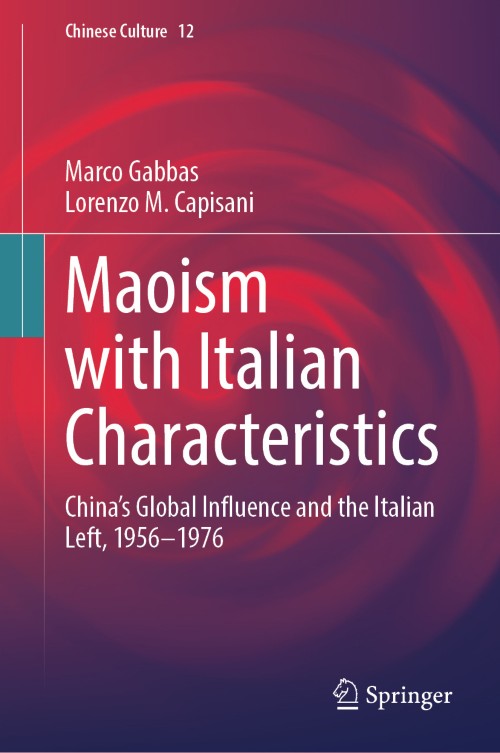
Maoism with Italian Characteristics [electronic resource] : China's Global Influence and the Italian Left, 1956-1976 / by Marco Gabbas, Lorenzo M. Capisani.
Erişim Adresi
ISBN
9789819792375
Dil Kodu
İngilizce
Yer Numarası
DK/21299
Basım Bildirimi
1st ed. 2025.
Yayın Bilgisi
Singapore : Springer Nature Singapore : Imprint: Springer, 2025.
Fiziksel Niteleme
XIV, 245 p. 1 illus. online resource.
Dizi
Chinese Culture, Globality, Connectivity and Modernity, 2662-9763 ; 12
İçindekiler Notu
Introduction -- Communism Beyond the Soviet Model, 1956–1961 -- The “Reform or Revolution” Watershed, 1962–1967 -- The Problematic Maoism of Lotta Continua, 1968–1976 -- Avanguardia Operaia Between Trotskyism and Maoism, 1968–1976 -- Anti-authoritarian Maoism in the Italian Student Movement, 1968–1976 -- Conclusions.
Özet, vb.
This book is, primarily, a historical study that investigates why Mao’s thought took root in Italy, how it developed, and its emergence in opposition to the Italian Communist Party, with a focus on the years 1956–1976. The book also prompts reflection on how dissent has been perceived in Leftist parties more broadly, and how ‘sub-cultures’ can become prominent. The authors delve into the relations between Mao’s China and the Italian institutional Left, mindful of the fact that not all the involved parties represented monolithic clusters of consent. The book confronts a watershed of reforms or revolution, in which the Italian Communist Party embraced a non-revolutionary and parliamentary policy, and where Italian radicals took Mao’s slogans literally to argue that a revolution in Italy was not only possible, but necessary. Tracking the subsequent abandonment of Maoism in modern left-wing parties in Italy, which gradually became more distant from the working class, the authors juxtapose this to modern China, which opened up with Deng Xiaoping’s reforms and Xi Jinping’s search for rejuvenation. In presenting Italian Maoism—a largely forgotten topic and fascinating example of Western Maoism—to an English-reading audience, the authors contextualize these local historical events in a global modern perspective, linking them to the Cold War and horizontal issues, such as dissent, in a rich comparison of Italian and Chinese sources from party archives and collections. It is relevant to historians interested in the circulation of Chinese political ideas in the West, and China’s historical trajectory from the Cold War to the present.
Konu
China __ History.
Comparative government.
Europe __ History.
Asia __ Politics and government.
Philosophy, Chinese.
Europe __ Politics and government.
History of China.
Comparative Politics.
European History.
Asian Politics.
Chinese Philosophy.
European Politics.
Comparative government.
Europe __ History.
Asia __ Politics and government.
Philosophy, Chinese.
Europe __ Politics and government.
History of China.
Comparative Politics.
European History.
Asian Politics.
Chinese Philosophy.
European Politics.
Diğer Yazarlar
Kurum Adı
Eseri Alıntıla
Referansları kullanmadan önce gözden geçirmeniz ve varsa gerekli düzeltmeleri yapmanız önerilir.
Dijital Kaynak
MARC Görünümü
LEADER 05745nam a22007455i 4500
001 820092
003 TR_AnAIT
005 20260130171212
007 cr nn 008mamaa
008 250724s2025 si | s |||| 0|eng d
020 |a9789819792375|9978-981-97-9237-5
024 7 |a10.1007/978-981-97-9237-5|2doi
041 |aeng
049 |aTürk Tarih Kurumu Kütüphanesi
050 4|aDS701-799.9
072 7|aHBJF|2bicssc
072 7|a1FPC|2bicssc
072 7|aHIS008000|2bisacsh
072 7|aNHF|x1FPC|2thema
082 04|a951|223
090 |aDK/21299
100 1 |aGabbas, Marco.|eauthor.|0(orcid)0000-0002-4707-7457|1https://orcid.org/0000-0002-4707-7457|4aut|4http://id.loc.gov/vocabulary/relators/aut
245 10|aMaoism with Italian Characteristics|h[electronic resource] :|bChina's Global Influence and the Italian Left, 1956-1976 /|cby Marco Gabbas, Lorenzo M. Capisani.
250 |a1st ed. 2025.
264 1|aSingapore :|bSpringer Nature Singapore :|bImprint: Springer,|c2025.
300 |aXIV, 245 p. 1 illus.|bonline resource.
336 |atext|btxt|2rdacontent
337 |acomputer|bc|2rdamedia
338 |aonline resource|bcr|2rdacarrier
341 0 |bPDF/UA-1|2onix
341 0 |bTable of contents navigation|2onix
341 0 |bSingle logical reading order|2onix
341 0 |bShort alternative textual descriptions|2onix
341 0 |bUse of color is not sole means of conveying information|2onix
341 0 |bUse of high contrast between text and background color|2onix
341 0 |bNext / Previous structural navigation|2onix
341 0 |bAll non-decorative content supports reading without sight|2onix
347 |atext file|bPDF|2rda
490 1 |aChinese Culture, Globality, Connectivity and Modernity,|x2662-9763 ;|v12
505 0 |aIntroduction -- Communism Beyond the Soviet Model, 1956–1961 -- The “Reform or Revolution” Watershed, 1962–1967 -- The Problematic Maoism of Lotta Continua, 1968–1976 -- Avanguardia Operaia Between Trotskyism and Maoism, 1968–1976 -- Anti-authoritarian Maoism in the Italian Student Movement, 1968–1976 -- Conclusions.
520 |aThis book is, primarily, a historical study that investigates why Mao’s thought took root in Italy, how it developed, and its emergence in opposition to the Italian Communist Party, with a focus on the years 1956–1976. The book also prompts reflection on how dissent has been perceived in Leftist parties more broadly, and how ‘sub-cultures’ can become prominent. The authors delve into the relations between Mao’s China and the Italian institutional Left, mindful of the fact that not all the involved parties represented monolithic clusters of consent. The book confronts a watershed of reforms or revolution, in which the Italian Communist Party embraced a non-revolutionary and parliamentary policy, and where Italian radicals took Mao’s slogans literally to argue that a revolution in Italy was not only possible, but necessary. Tracking the subsequent abandonment of Maoism in modern left-wing parties in Italy, which gradually became more distant from the working class, the authors juxtapose this to modern China, which opened up with Deng Xiaoping’s reforms and Xi Jinping’s search for rejuvenation. In presenting Italian Maoism—a largely forgotten topic and fascinating example of Western Maoism—to an English-reading audience, the authors contextualize these local historical events in a global modern perspective, linking them to the Cold War and horizontal issues, such as dissent, in a rich comparison of Italian and Chinese sources from party archives and collections. It is relevant to historians interested in the circulation of Chinese political ideas in the West, and China’s historical trajectory from the Cold War to the present.
532 8 |aAccessibility summary: This PDF has been created in accordance with the PDF/UA-1 standard to enhance accessibility, including screen reader support, described non-text content (images, graphs), bookmarks for easy navigation, keyboard-friendly links and forms and searchable, selectable text. We recognize the importance of accessibility, and we welcome queries about accessibility for any of our products. If you have a question or an access need, please get in touch with us at accessibilitysupport@springernature.com. Please note that a more accessible version of this eBook is available as ePub.
532 8 |aNo reading system accessibility options actively disabled
532 8 |aPublisher contact for further accessibility information: accessibilitysupport@springernature.com
650 0|aChina|xHistory.
650 0|aComparative government.
650 0|aEurope|xHistory.
650 0|aAsia|xPolitics and government.
650 0|aPhilosophy, Chinese.
650 0|aEurope|xPolitics and government.
650 14|aHistory of China.
650 24|aComparative Politics.
650 24|aEuropean History.
650 24|aAsian Politics.
650 24|aChinese Philosophy.
650 24|aEuropean Politics.
700 1 |aCapisani, Lorenzo M.|eauthor.|0(orcid)0000-0001-8229-9365|1https://orcid.org/0000-0001-8229-9365|4aut|4http://id.loc.gov/vocabulary/relators/aut
710 2 |aSpringerLink (Online service)
773 0 |tSpringer Nature eBook
776 08|iPrinted edition:|z9789819792368
776 08|iPrinted edition:|z9789819792382
776 08|iPrinted edition:|z9789819792399
830 0|aChinese Culture, Globality, Connectivity and Modernity,|x2662-9763 ;|v12
856 40|uhttps://doi.org/10.1007/978-981-97-9237-5
912 |aZDB-2-POS
912 |aZDB-2-SXPI
950 |aPolitical Science and International Studies (SpringerNature-41174)
950 |aPolitical Science and International Studies (R0) (SpringerNature-43724)
001 820092
003 TR_AnAIT
005 20260130171212
007 cr nn 008mamaa
008 250724s2025 si | s |||| 0|eng d
020 |a9789819792375|9978-981-97-9237-5
024 7 |a10.1007/978-981-97-9237-5|2doi
041 |aeng
049 |aTürk Tarih Kurumu Kütüphanesi
050 4|aDS701-799.9
072 7|aHBJF|2bicssc
072 7|a1FPC|2bicssc
072 7|aHIS008000|2bisacsh
072 7|aNHF|x1FPC|2thema
082 04|a951|223
090 |aDK/21299
100 1 |aGabbas, Marco.|eauthor.|0(orcid)0000-0002-4707-7457|1https://orcid.org/0000-0002-4707-7457|4aut|4http://id.loc.gov/vocabulary/relators/aut
245 10|aMaoism with Italian Characteristics|h[electronic resource] :|bChina's Global Influence and the Italian Left, 1956-1976 /|cby Marco Gabbas, Lorenzo M. Capisani.
250 |a1st ed. 2025.
264 1|aSingapore :|bSpringer Nature Singapore :|bImprint: Springer,|c2025.
300 |aXIV, 245 p. 1 illus.|bonline resource.
336 |atext|btxt|2rdacontent
337 |acomputer|bc|2rdamedia
338 |aonline resource|bcr|2rdacarrier
341 0 |bPDF/UA-1|2onix
341 0 |bTable of contents navigation|2onix
341 0 |bSingle logical reading order|2onix
341 0 |bShort alternative textual descriptions|2onix
341 0 |bUse of color is not sole means of conveying information|2onix
341 0 |bUse of high contrast between text and background color|2onix
341 0 |bNext / Previous structural navigation|2onix
341 0 |bAll non-decorative content supports reading without sight|2onix
347 |atext file|bPDF|2rda
490 1 |aChinese Culture, Globality, Connectivity and Modernity,|x2662-9763 ;|v12
505 0 |aIntroduction -- Communism Beyond the Soviet Model, 1956–1961 -- The “Reform or Revolution” Watershed, 1962–1967 -- The Problematic Maoism of Lotta Continua, 1968–1976 -- Avanguardia Operaia Between Trotskyism and Maoism, 1968–1976 -- Anti-authoritarian Maoism in the Italian Student Movement, 1968–1976 -- Conclusions.
520 |aThis book is, primarily, a historical study that investigates why Mao’s thought took root in Italy, how it developed, and its emergence in opposition to the Italian Communist Party, with a focus on the years 1956–1976. The book also prompts reflection on how dissent has been perceived in Leftist parties more broadly, and how ‘sub-cultures’ can become prominent. The authors delve into the relations between Mao’s China and the Italian institutional Left, mindful of the fact that not all the involved parties represented monolithic clusters of consent. The book confronts a watershed of reforms or revolution, in which the Italian Communist Party embraced a non-revolutionary and parliamentary policy, and where Italian radicals took Mao’s slogans literally to argue that a revolution in Italy was not only possible, but necessary. Tracking the subsequent abandonment of Maoism in modern left-wing parties in Italy, which gradually became more distant from the working class, the authors juxtapose this to modern China, which opened up with Deng Xiaoping’s reforms and Xi Jinping’s search for rejuvenation. In presenting Italian Maoism—a largely forgotten topic and fascinating example of Western Maoism—to an English-reading audience, the authors contextualize these local historical events in a global modern perspective, linking them to the Cold War and horizontal issues, such as dissent, in a rich comparison of Italian and Chinese sources from party archives and collections. It is relevant to historians interested in the circulation of Chinese political ideas in the West, and China’s historical trajectory from the Cold War to the present.
532 8 |aAccessibility summary: This PDF has been created in accordance with the PDF/UA-1 standard to enhance accessibility, including screen reader support, described non-text content (images, graphs), bookmarks for easy navigation, keyboard-friendly links and forms and searchable, selectable text. We recognize the importance of accessibility, and we welcome queries about accessibility for any of our products. If you have a question or an access need, please get in touch with us at accessibilitysupport@springernature.com. Please note that a more accessible version of this eBook is available as ePub.
532 8 |aNo reading system accessibility options actively disabled
532 8 |aPublisher contact for further accessibility information: accessibilitysupport@springernature.com
650 0|aChina|xHistory.
650 0|aComparative government.
650 0|aEurope|xHistory.
650 0|aAsia|xPolitics and government.
650 0|aPhilosophy, Chinese.
650 0|aEurope|xPolitics and government.
650 14|aHistory of China.
650 24|aComparative Politics.
650 24|aEuropean History.
650 24|aAsian Politics.
650 24|aChinese Philosophy.
650 24|aEuropean Politics.
700 1 |aCapisani, Lorenzo M.|eauthor.|0(orcid)0000-0001-8229-9365|1https://orcid.org/0000-0001-8229-9365|4aut|4http://id.loc.gov/vocabulary/relators/aut
710 2 |aSpringerLink (Online service)
773 0 |tSpringer Nature eBook
776 08|iPrinted edition:|z9789819792368
776 08|iPrinted edition:|z9789819792382
776 08|iPrinted edition:|z9789819792399
830 0|aChinese Culture, Globality, Connectivity and Modernity,|x2662-9763 ;|v12
856 40|uhttps://doi.org/10.1007/978-981-97-9237-5
912 |aZDB-2-POS
912 |aZDB-2-SXPI
950 |aPolitical Science and International Studies (SpringerNature-41174)
950 |aPolitical Science and International Studies (R0) (SpringerNature-43724)
Materyaller
Depodan talep edilen materyal sadece kütüphane içerisinde kullanılmaktadır.
Materyal dışarıya ödünç verilmemektedir.
Materyal dışarıya ödünç verilmemektedir.
