

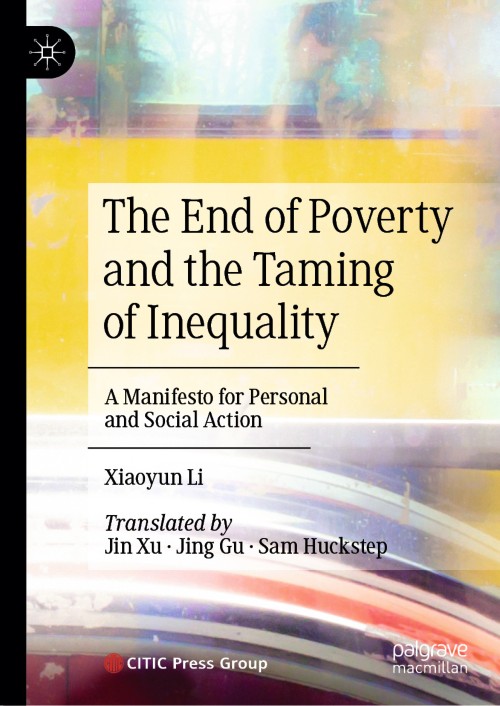
The End of Poverty and the Taming of Inequality [electronic resource] : A Manifesto for Personal and Social Action / by Xiaoyun Li.
Erişim Adresi
ISBN
9789819606849
Dil Kodu
İngilizce
Yer Numarası
DK/21419
Yazar
Basım Bildirimi
1st ed. 2025.
Yayın Bilgisi
Singapore : Springer Nature Singapore : Imprint: Palgrave Macmillan, 2025.
Fiziksel Niteleme
XIX, 254 p. 1 illus. online resource.
İçindekiler Notu
Chapter 1: Origins of Poverty -- Chapter 2: The Need to Help the Poor -- Chapter 3: What Needs to Be Done -- Chapter 4: Why Is It so Difficult to Eradicate Poverty? -- Chapter 5: Why a War on Poverty? -- Chapter 6: How Did a Village Escape Poverty?.
Özet, vb.
In this book, Li Xiaoyun tries to address these questions that attract public attention in today’s China. Drawing on classic and cutting-edge poverty research from political economy, economics and social psychology, Li elaborates on the political and social meanings of China’s recent war on extreme poverty and the institutional set-ups that helped the country successfully escape the poverty trap. Adopting a quasi auto-ethnography of his poverty experiment in a poor ethnic village in China, Li presents an excruciating adventure of how the country and its people fought against poverty from a bottom-up perspective which brings this book alive. A collection of essays and opinion pieces, this book is an “espresso” of Li’s insights and inquiries on China’s chronical and transitional poverty which may interest not only a small circle of poverty researchers, policy-makers, practitioners, but also a wider spectrum of readers who want to understand a real China in development. Li Xiaoyun is currently Lead Chair Professor of Development Studies at China Agricultural University (CAU) and served as Honorary Dean of College of International Development and Global Agriculture (CIDGA) at the University. He is most well known for his research and practice in poverty reduction and international development which has won him the reputation of “the Chinese development pioneer” and numerous awards, though he engages in a wide range of research areas which covers international development, poverty, rural development, gender and development, and sustainable resource management. His many research and works on participatory poverty reduction, coherence of poverty reduction and rural revitalization, reforming China’s aid system have had a wide influence in China. He is also Chair of the Network of Southern Think Tanks (NeST), and Chair of China International Development Research Network.
Konu
Development economics.
Political planning.
Sociology.
Development Economics.
Public Policy.
Sociology.
Political planning.
Sociology.
Development Economics.
Public Policy.
Sociology.
Kurum Adı
Eseri Alıntıla
Referansları kullanmadan önce gözden geçirmeniz ve varsa gerekli düzeltmeleri yapmanız önerilir.
Dijital Kaynak
MARC Görünümü
LEADER 05029nam a22006015i 4500
001 820212
003 TR_AnAIT
005 20260130170812
007 cr nn 008mamaa
008 250201s2025 si | s |||| 0|eng d
020 |a9789819606849|9978-981-96-0684-9
024 7 |a10.1007/978-981-96-0684-9|2doi
041 |aeng
049 |aTürk Tarih Kurumu Kütüphanesi
050 4|aHD72-88
072 7|aKCM|2bicssc
072 7|aBUS068000|2bisacsh
072 7|aKCM|2thema
082 04|a338.9|223
090 |aDK/21419
100 1 |aLi, Xiaoyun.|eauthor.|4aut|4http://id.loc.gov/vocabulary/relators/aut
245 14|aThe End of Poverty and the Taming of Inequality|h[electronic resource] :|bA Manifesto for Personal and Social Action /|cby Xiaoyun Li.
250 |a1st ed. 2025.
264 1|aSingapore :|bSpringer Nature Singapore :|bImprint: Palgrave Macmillan,|c2025.
300 |aXIX, 254 p. 1 illus.|bonline resource.
336 |atext|btxt|2rdacontent
337 |acomputer|bc|2rdamedia
338 |aonline resource|bcr|2rdacarrier
341 0 |bTable of contents navigation|2onix
341 0 |bSingle logical reading order|2onix
341 0 |bUse of color is not sole means of conveying information|2onix
341 0 |bUse of high contrast between text and background color|2onix
341 0 |bNext / Previous structural navigation|2onix
341 0 |bAll non-decorative content supports reading without sight|2onix
347 |atext file|bPDF|2rda
505 0 |aChapter 1: Origins of Poverty -- Chapter 2: The Need to Help the Poor -- Chapter 3: What Needs to Be Done -- Chapter 4: Why Is It so Difficult to Eradicate Poverty? -- Chapter 5: Why a War on Poverty? -- Chapter 6: How Did a Village Escape Poverty?.
520 |aIn this book, Li Xiaoyun tries to address these questions that attract public attention in today’s China. Drawing on classic and cutting-edge poverty research from political economy, economics and social psychology, Li elaborates on the political and social meanings of China’s recent war on extreme poverty and the institutional set-ups that helped the country successfully escape the poverty trap. Adopting a quasi auto-ethnography of his poverty experiment in a poor ethnic village in China, Li presents an excruciating adventure of how the country and its people fought against poverty from a bottom-up perspective which brings this book alive. A collection of essays and opinion pieces, this book is an “espresso” of Li’s insights and inquiries on China’s chronical and transitional poverty which may interest not only a small circle of poverty researchers, policy-makers, practitioners, but also a wider spectrum of readers who want to understand a real China in development. Li Xiaoyun is currently Lead Chair Professor of Development Studies at China Agricultural University (CAU) and served as Honorary Dean of College of International Development and Global Agriculture (CIDGA) at the University. He is most well known for his research and practice in poverty reduction and international development which has won him the reputation of “the Chinese development pioneer” and numerous awards, though he engages in a wide range of research areas which covers international development, poverty, rural development, gender and development, and sustainable resource management. His many research and works on participatory poverty reduction, coherence of poverty reduction and rural revitalization, reforming China’s aid system have had a wide influence in China. He is also Chair of the Network of Southern Think Tanks (NeST), and Chair of China International Development Research Network.
532 8 |aAccessibility summary: This PDF does not fully comply with PDF/UA standards, but does feature limited screen reader support, bookmarks for easy navigation and searchable, selectable text. Users of assistive technologies may experience difficulty navigating or interpreting content in this document. We recognize the importance of accessibility, and we welcome queries about accessibility for any of our products. If you have a question or an access need, please get in touch with us at accessibilitysupport@springernature.com.
532 8 |aNo reading system accessibility options actively disabled
532 8 |aPublisher contact for further accessibility information: accessibilitysupport@springernature.com
650 0|aDevelopment economics.
650 0|aPolitical planning.
650 0|aSociology.
650 14|aDevelopment Economics.
650 24|aPublic Policy.
650 24|aSociology.
710 2 |aSpringerLink (Online service)
773 0 |tSpringer Nature eBook
776 08|iPrinted edition:|z9789819606832
776 08|iPrinted edition:|z9789819606856
776 08|iPrinted edition:|z9789819606863
856 40|uhttps://doi.org/10.1007/978-981-96-0684-9
912 |aZDB-2-POS
912 |aZDB-2-SXPI
950 |aPolitical Science and International Studies (SpringerNature-41174)
950 |aPolitical Science and International Studies (R0) (SpringerNature-43724)
001 820212
003 TR_AnAIT
005 20260130170812
007 cr nn 008mamaa
008 250201s2025 si | s |||| 0|eng d
020 |a9789819606849|9978-981-96-0684-9
024 7 |a10.1007/978-981-96-0684-9|2doi
041 |aeng
049 |aTürk Tarih Kurumu Kütüphanesi
050 4|aHD72-88
072 7|aKCM|2bicssc
072 7|aBUS068000|2bisacsh
072 7|aKCM|2thema
082 04|a338.9|223
090 |aDK/21419
100 1 |aLi, Xiaoyun.|eauthor.|4aut|4http://id.loc.gov/vocabulary/relators/aut
245 14|aThe End of Poverty and the Taming of Inequality|h[electronic resource] :|bA Manifesto for Personal and Social Action /|cby Xiaoyun Li.
250 |a1st ed. 2025.
264 1|aSingapore :|bSpringer Nature Singapore :|bImprint: Palgrave Macmillan,|c2025.
300 |aXIX, 254 p. 1 illus.|bonline resource.
336 |atext|btxt|2rdacontent
337 |acomputer|bc|2rdamedia
338 |aonline resource|bcr|2rdacarrier
341 0 |bTable of contents navigation|2onix
341 0 |bSingle logical reading order|2onix
341 0 |bUse of color is not sole means of conveying information|2onix
341 0 |bUse of high contrast between text and background color|2onix
341 0 |bNext / Previous structural navigation|2onix
341 0 |bAll non-decorative content supports reading without sight|2onix
347 |atext file|bPDF|2rda
505 0 |aChapter 1: Origins of Poverty -- Chapter 2: The Need to Help the Poor -- Chapter 3: What Needs to Be Done -- Chapter 4: Why Is It so Difficult to Eradicate Poverty? -- Chapter 5: Why a War on Poverty? -- Chapter 6: How Did a Village Escape Poverty?.
520 |aIn this book, Li Xiaoyun tries to address these questions that attract public attention in today’s China. Drawing on classic and cutting-edge poverty research from political economy, economics and social psychology, Li elaborates on the political and social meanings of China’s recent war on extreme poverty and the institutional set-ups that helped the country successfully escape the poverty trap. Adopting a quasi auto-ethnography of his poverty experiment in a poor ethnic village in China, Li presents an excruciating adventure of how the country and its people fought against poverty from a bottom-up perspective which brings this book alive. A collection of essays and opinion pieces, this book is an “espresso” of Li’s insights and inquiries on China’s chronical and transitional poverty which may interest not only a small circle of poverty researchers, policy-makers, practitioners, but also a wider spectrum of readers who want to understand a real China in development. Li Xiaoyun is currently Lead Chair Professor of Development Studies at China Agricultural University (CAU) and served as Honorary Dean of College of International Development and Global Agriculture (CIDGA) at the University. He is most well known for his research and practice in poverty reduction and international development which has won him the reputation of “the Chinese development pioneer” and numerous awards, though he engages in a wide range of research areas which covers international development, poverty, rural development, gender and development, and sustainable resource management. His many research and works on participatory poverty reduction, coherence of poverty reduction and rural revitalization, reforming China’s aid system have had a wide influence in China. He is also Chair of the Network of Southern Think Tanks (NeST), and Chair of China International Development Research Network.
532 8 |aAccessibility summary: This PDF does not fully comply with PDF/UA standards, but does feature limited screen reader support, bookmarks for easy navigation and searchable, selectable text. Users of assistive technologies may experience difficulty navigating or interpreting content in this document. We recognize the importance of accessibility, and we welcome queries about accessibility for any of our products. If you have a question or an access need, please get in touch with us at accessibilitysupport@springernature.com.
532 8 |aNo reading system accessibility options actively disabled
532 8 |aPublisher contact for further accessibility information: accessibilitysupport@springernature.com
650 0|aDevelopment economics.
650 0|aPolitical planning.
650 0|aSociology.
650 14|aDevelopment Economics.
650 24|aPublic Policy.
650 24|aSociology.
710 2 |aSpringerLink (Online service)
773 0 |tSpringer Nature eBook
776 08|iPrinted edition:|z9789819606832
776 08|iPrinted edition:|z9789819606856
776 08|iPrinted edition:|z9789819606863
856 40|uhttps://doi.org/10.1007/978-981-96-0684-9
912 |aZDB-2-POS
912 |aZDB-2-SXPI
950 |aPolitical Science and International Studies (SpringerNature-41174)
950 |aPolitical Science and International Studies (R0) (SpringerNature-43724)
Materyaller
Depodan talep edilen materyal sadece kütüphane içerisinde kullanılmaktadır.
Materyal dışarıya ödünç verilmemektedir.
Materyal dışarıya ödünç verilmemektedir.
