

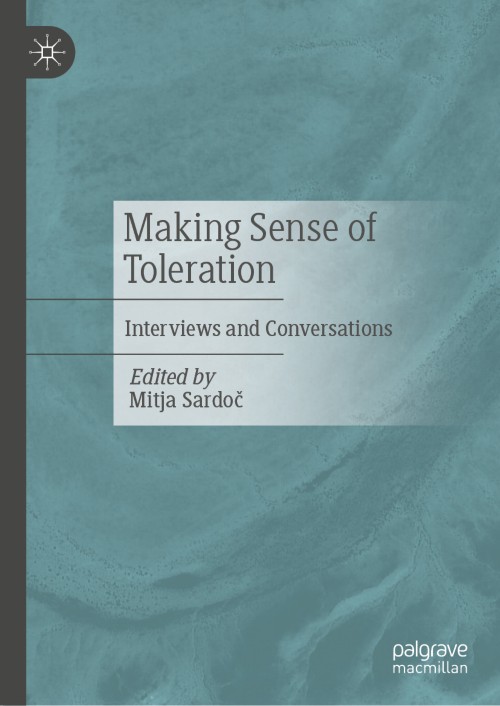
Making Sense of Toleration [electronic resource] : Interviews and Conversations / edited by Mitja Sardoč.
Erişim Adresi
ISBN
9783031842566
Dil Kodu
İngilizce
Yer Numarası
DK/21470
Basım Bildirimi
1st ed. 2025.
Yayın Bilgisi
Cham : Springer Nature Switzerland : Imprint: Palgrave Macmillan, 2025.
Fiziksel Niteleme
XIII, 184 p. 1 illus. online resource.
İçindekiler Notu
Chapter 1: Making Sense of Toleration: An Introduction-Mitja Sardoč -- Chapter 2: Toleration, Pluralism and Liberal Democracy: An Interview with Peter Jones -- Chapter 3: The Grounds of Tolerance, and its Limits: An Interview with Thomas M. Scanlon -- Chapter 4: Problems with Toleration: An Interview with Charles Larmore -- Chapter 5: The Justification of Toleration: An Interview with Rainer Forst -- Chapter 6:Toleration and Civility: An Interview with Teresa M. Bejan -- Chapter 7: Historical Perspectives on Toleration: An Interview with Benjamin J. Kaplan -- Chapter 8: Toleration as an Ideal of Public Ethics: An Interview with Emanuela Ceva -- Chapter 9:Multiculturalism Re-examined: An Interview with Tariq Modood -- Chapter 10: Toleration, Respect and Recognition: An Interview with Sune Laegaard -- Chapter 11: Toleration as Recognition Re-examined: An Interview with Anna Elisabetta Galeotti -- Chapter 12:How to Take Tolerance Seriously: An Interview with Bernd Simon -- Chapter 13:'The Meaning and Value of Toleration: Common Conceptual Misconceptions, False Criticism, and Alleged Paradoxes': An Interview with Yossi Nehushtan -- Chapter 14: The Dark Side of Tolerance: An Interview with Wendy Brown.
Özet, vb.
This book brings together a collection of interviews and conversations with leading scholars across different disciplines and areas of research including moral and political philosophy, history, sociology, political theory, psychology, and jurisprudence, among others. It provides an authoritative presentation of contemporary accounts of toleration, their conceptual foundations, and a comprehensive presentation of the different concepts most commonly associated with it (e.g. civility, dignity, coercion, harm, conflict, disagreement, secularism, power, domination, trust, non-interference, neutrality, fairness, pluralism, respect, recognition and ultimately diversity itself). The interviews and conversations published in this volume address some of the most pressing controversies on toleration (and related issues) at both the theoretical and practical levels. Alongside customary refinements of arguments and positions usually embedded in academic conversations, these interviews provide unique insights into the ‘behind the scenes’ on one of the central topics in contemporary scholarly research. Mitja Sardoč is a researcher at the Educational Research Institute in Ljubljana, Slovenia, where he is a member of the Educational Research program and a researcher at the Faculty of Social Sciences, University of Ljubljana. His research interests include citizenship education, patriotism, multiculturalism, toleration, radicalization and violent extremism, education policy, talents and distributive justice, and equality of opportunity.
Konu
Political science.
Sociology.
Philosophy.
Political Theory.
Sociology.
Philosophy.
Sociology.
Philosophy.
Political Theory.
Sociology.
Philosophy.
Diğer Yazarlar
Kurum Adı
Eseri Alıntıla
Referansları kullanmadan önce gözden geçirmeniz ve varsa gerekli düzeltmeleri yapmanız önerilir.
Dijital Kaynak
MARC Görünümü
LEADER 05594nam a22006015i 4500
001 820263
003 TR_AnAIT
005 20260130170558
007 cr nn 008mamaa
008 250531s2025 sz | s |||| 0|eng d
020 |a9783031842566|9978-3-031-84256-6
024 7 |a10.1007/978-3-031-84256-6|2doi
041 |aeng
049 |aTürk Tarih Kurumu Kütüphanesi
050 4|aJC11-607
072 7|aJPA|2bicssc
072 7|aPOL010000|2bisacsh
072 7|aJPA|2thema
082 04|a320.01|223
090 |aDK/21470
245 10|aMaking Sense of Toleration|h[electronic resource] :|bInterviews and Conversations /|cedited by Mitja Sardoč.
250 |a1st ed. 2025.
264 1|aCham :|bSpringer Nature Switzerland :|bImprint: Palgrave Macmillan,|c2025.
300 |aXIII, 184 p. 1 illus.|bonline resource.
336 |atext|btxt|2rdacontent
337 |acomputer|bc|2rdamedia
338 |aonline resource|bcr|2rdacarrier
341 0 |bTable of contents navigation|2onix
341 0 |bSingle logical reading order|2onix
341 0 |bUse of color is not sole means of conveying information|2onix
341 0 |bUse of high contrast between text and background color|2onix
341 0 |bNext / Previous structural navigation|2onix
341 0 |bAll non-decorative content supports reading without sight|2onix
347 |atext file|bPDF|2rda
505 0 |aChapter 1: Making Sense of Toleration: An Introduction-Mitja Sardoč -- Chapter 2: Toleration, Pluralism and Liberal Democracy: An Interview with Peter Jones -- Chapter 3: The Grounds of Tolerance, and its Limits: An Interview with Thomas M. Scanlon -- Chapter 4: Problems with Toleration: An Interview with Charles Larmore -- Chapter 5: The Justification of Toleration: An Interview with Rainer Forst -- Chapter 6:Toleration and Civility: An Interview with Teresa M. Bejan -- Chapter 7: Historical Perspectives on Toleration: An Interview with Benjamin J. Kaplan -- Chapter 8: Toleration as an Ideal of Public Ethics: An Interview with Emanuela Ceva -- Chapter 9:Multiculturalism Re-examined: An Interview with Tariq Modood -- Chapter 10: Toleration, Respect and Recognition: An Interview with Sune Laegaard -- Chapter 11: Toleration as Recognition Re-examined: An Interview with Anna Elisabetta Galeotti -- Chapter 12:How to Take Tolerance Seriously: An Interview with Bernd Simon -- Chapter 13:'The Meaning and Value of Toleration: Common Conceptual Misconceptions, False Criticism, and Alleged Paradoxes': An Interview with Yossi Nehushtan -- Chapter 14: The Dark Side of Tolerance: An Interview with Wendy Brown.
520 |aThis book brings together a collection of interviews and conversations with leading scholars across different disciplines and areas of research including moral and political philosophy, history, sociology, political theory, psychology, and jurisprudence, among others. It provides an authoritative presentation of contemporary accounts of toleration, their conceptual foundations, and a comprehensive presentation of the different concepts most commonly associated with it (e.g. civility, dignity, coercion, harm, conflict, disagreement, secularism, power, domination, trust, non-interference, neutrality, fairness, pluralism, respect, recognition and ultimately diversity itself). The interviews and conversations published in this volume address some of the most pressing controversies on toleration (and related issues) at both the theoretical and practical levels. Alongside customary refinements of arguments and positions usually embedded in academic conversations, these interviews provide unique insights into the ‘behind the scenes’ on one of the central topics in contemporary scholarly research. Mitja Sardoč is a researcher at the Educational Research Institute in Ljubljana, Slovenia, where he is a member of the Educational Research program and a researcher at the Faculty of Social Sciences, University of Ljubljana. His research interests include citizenship education, patriotism, multiculturalism, toleration, radicalization and violent extremism, education policy, talents and distributive justice, and equality of opportunity.
532 8 |aAccessibility summary: This PDF does not fully comply with PDF/UA standards, but does feature limited screen reader support, bookmarks for easy navigation and searchable, selectable text. Users of assistive technologies may experience difficulty navigating or interpreting content in this document. We recognize the importance of accessibility, and we welcome queries about accessibility for any of our products. If you have a question or an access need, please get in touch with us at accessibilitysupport@springernature.com.
532 8 |aNo reading system accessibility options actively disabled
532 8 |aPublisher contact for further accessibility information: accessibilitysupport@springernature.com
650 0|aPolitical science.
650 0|aSociology.
650 0|aPhilosophy.
650 14|aPolitical Theory.
650 24|aSociology.
650 24|aPhilosophy.
700 1 |aSardoč, Mitja.|eeditor.|4edt|4http://id.loc.gov/vocabulary/relators/edt
710 2 |aSpringerLink (Online service)
773 0 |tSpringer Nature eBook
776 08|iPrinted edition:|z9783031842559
776 08|iPrinted edition:|z9783031842573
776 08|iPrinted edition:|z9783031842580
856 40|uhttps://doi.org/10.1007/978-3-031-84256-6
912 |aZDB-2-POS
912 |aZDB-2-SXPI
950 |aPolitical Science and International Studies (SpringerNature-41174)
950 |aPolitical Science and International Studies (R0) (SpringerNature-43724)
001 820263
003 TR_AnAIT
005 20260130170558
007 cr nn 008mamaa
008 250531s2025 sz | s |||| 0|eng d
020 |a9783031842566|9978-3-031-84256-6
024 7 |a10.1007/978-3-031-84256-6|2doi
041 |aeng
049 |aTürk Tarih Kurumu Kütüphanesi
050 4|aJC11-607
072 7|aJPA|2bicssc
072 7|aPOL010000|2bisacsh
072 7|aJPA|2thema
082 04|a320.01|223
090 |aDK/21470
245 10|aMaking Sense of Toleration|h[electronic resource] :|bInterviews and Conversations /|cedited by Mitja Sardoč.
250 |a1st ed. 2025.
264 1|aCham :|bSpringer Nature Switzerland :|bImprint: Palgrave Macmillan,|c2025.
300 |aXIII, 184 p. 1 illus.|bonline resource.
336 |atext|btxt|2rdacontent
337 |acomputer|bc|2rdamedia
338 |aonline resource|bcr|2rdacarrier
341 0 |bTable of contents navigation|2onix
341 0 |bSingle logical reading order|2onix
341 0 |bUse of color is not sole means of conveying information|2onix
341 0 |bUse of high contrast between text and background color|2onix
341 0 |bNext / Previous structural navigation|2onix
341 0 |bAll non-decorative content supports reading without sight|2onix
347 |atext file|bPDF|2rda
505 0 |aChapter 1: Making Sense of Toleration: An Introduction-Mitja Sardoč -- Chapter 2: Toleration, Pluralism and Liberal Democracy: An Interview with Peter Jones -- Chapter 3: The Grounds of Tolerance, and its Limits: An Interview with Thomas M. Scanlon -- Chapter 4: Problems with Toleration: An Interview with Charles Larmore -- Chapter 5: The Justification of Toleration: An Interview with Rainer Forst -- Chapter 6:Toleration and Civility: An Interview with Teresa M. Bejan -- Chapter 7: Historical Perspectives on Toleration: An Interview with Benjamin J. Kaplan -- Chapter 8: Toleration as an Ideal of Public Ethics: An Interview with Emanuela Ceva -- Chapter 9:Multiculturalism Re-examined: An Interview with Tariq Modood -- Chapter 10: Toleration, Respect and Recognition: An Interview with Sune Laegaard -- Chapter 11: Toleration as Recognition Re-examined: An Interview with Anna Elisabetta Galeotti -- Chapter 12:How to Take Tolerance Seriously: An Interview with Bernd Simon -- Chapter 13:'The Meaning and Value of Toleration: Common Conceptual Misconceptions, False Criticism, and Alleged Paradoxes': An Interview with Yossi Nehushtan -- Chapter 14: The Dark Side of Tolerance: An Interview with Wendy Brown.
520 |aThis book brings together a collection of interviews and conversations with leading scholars across different disciplines and areas of research including moral and political philosophy, history, sociology, political theory, psychology, and jurisprudence, among others. It provides an authoritative presentation of contemporary accounts of toleration, their conceptual foundations, and a comprehensive presentation of the different concepts most commonly associated with it (e.g. civility, dignity, coercion, harm, conflict, disagreement, secularism, power, domination, trust, non-interference, neutrality, fairness, pluralism, respect, recognition and ultimately diversity itself). The interviews and conversations published in this volume address some of the most pressing controversies on toleration (and related issues) at both the theoretical and practical levels. Alongside customary refinements of arguments and positions usually embedded in academic conversations, these interviews provide unique insights into the ‘behind the scenes’ on one of the central topics in contemporary scholarly research. Mitja Sardoč is a researcher at the Educational Research Institute in Ljubljana, Slovenia, where he is a member of the Educational Research program and a researcher at the Faculty of Social Sciences, University of Ljubljana. His research interests include citizenship education, patriotism, multiculturalism, toleration, radicalization and violent extremism, education policy, talents and distributive justice, and equality of opportunity.
532 8 |aAccessibility summary: This PDF does not fully comply with PDF/UA standards, but does feature limited screen reader support, bookmarks for easy navigation and searchable, selectable text. Users of assistive technologies may experience difficulty navigating or interpreting content in this document. We recognize the importance of accessibility, and we welcome queries about accessibility for any of our products. If you have a question or an access need, please get in touch with us at accessibilitysupport@springernature.com.
532 8 |aNo reading system accessibility options actively disabled
532 8 |aPublisher contact for further accessibility information: accessibilitysupport@springernature.com
650 0|aPolitical science.
650 0|aSociology.
650 0|aPhilosophy.
650 14|aPolitical Theory.
650 24|aSociology.
650 24|aPhilosophy.
700 1 |aSardoč, Mitja.|eeditor.|4edt|4http://id.loc.gov/vocabulary/relators/edt
710 2 |aSpringerLink (Online service)
773 0 |tSpringer Nature eBook
776 08|iPrinted edition:|z9783031842559
776 08|iPrinted edition:|z9783031842573
776 08|iPrinted edition:|z9783031842580
856 40|uhttps://doi.org/10.1007/978-3-031-84256-6
912 |aZDB-2-POS
912 |aZDB-2-SXPI
950 |aPolitical Science and International Studies (SpringerNature-41174)
950 |aPolitical Science and International Studies (R0) (SpringerNature-43724)
Materyaller
Depodan talep edilen materyal sadece kütüphane içerisinde kullanılmaktadır.
Materyal dışarıya ödünç verilmemektedir.
Materyal dışarıya ödünç verilmemektedir.
