

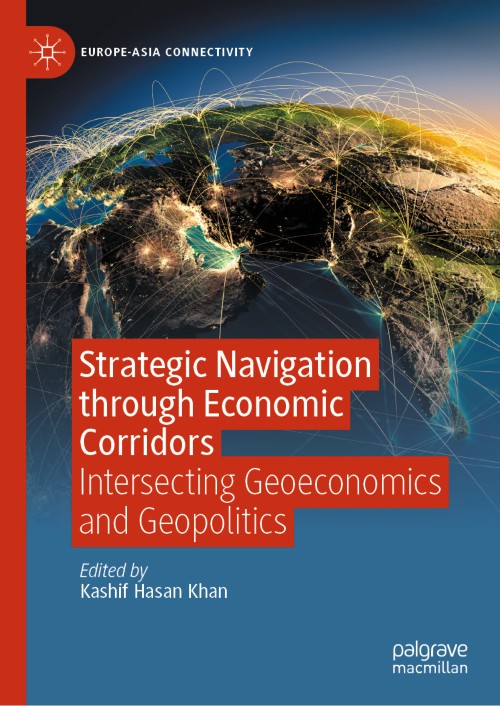
Strategic Navigation through Economic Corridors [electronic resource] : Intersecting Geoeconomics and Geopolitics / by Kashif Hasan Khan.
Erişim Adresi
ISBN
9789819660117
Dil Kodu
İngilizce
Yer Numarası
DK/21521
Yazar
Basım Bildirimi
1st ed. 2025.
Yayın Bilgisi
Singapore : Springer Nature Singapore : Imprint: Palgrave Macmillan, 2025.
Fiziksel Niteleme
XI, 257 p. 8 illus., 7 illus. in color. online resource.
Dizi
Europe-Asia Connectivity, 2730-9460
İçindekiler Notu
Chapter 1: Strategic Navigation through Economic Corridors – Intersecting Geoeconomics and Geopolitics: An Introduction -- Part I: Economic Corridors and Global Governance -- Chapter 2: Transnational Economic Corridors. A New Form of Global Governance? -- Chapter 3: Transitology in Eurasia Institution Building, Transitional Justice in Times of New Global Order -- Chapter 4: The BRICS and Economic Corridors: Geoeconomic Convergences and Divergences -- Chapter 5: Role of the North-South Corridor on Iran’s convergence with the Shanghai Cooperation Organization members -- Part II: The BRI Vis -a-Vis the other Economic corridors: Geoeconomics Analysis -- Chapter 6: IMEC and the BRI: Complementary or Opposite Ways -- Chapter 7: China’s Belt and Road Initiative in South Asia’s Strategic Cultures: Differing Perceptions and Possibilities for Implementation -- Chapter 8: The Impact of War on Economic Corridors: BRI and Ukrainian War -- Part III: Economic Connectivity Amid Geopolitical Transitions -- Chapter 9: The Impact of the Gaza War on the Future of IMEEC -- Chapter 10: The Transformative Role of The Crisis: A Peaceful Approach to The Zangazur Corridor -- Chapter 11: INSTC And Central Asia: Unlocking Economic Potential Through Strategic Engagement -- Chapter 12: Bridging the Governance Gap: The Impact of Economic Corridors like INSTC on Trade and Institutional Disparities.
Özet, vb.
This book offers an in-depth investigation into the dynamic relationship that exists between geoeconomics and geopolitics in the context of contemporary economic corridors. It dives deep into the strategic significance of economic corridors, which are essential arteries of trade, investment, and connection across regions and nations. It examines how a variety of geopolitical issues have an impact on the creation, management, and exploitation of these corridors, hence influencing the dynamics of regional power and the tendencies of the global economy. The book takes a multidisciplinary approach to investigate the intricate relationships that exist between economic interests, political aspirations, and security concerns throughout significant economic corridors all over the world. It investigates how governments, multinational enterprises, and international organizations negotiate the complex environment of geoeconomic competitiveness and geopolitical conflicts to maximize their strategic advantages and minimize the risks. It is beneficial for policymakers, corporate executives, and academics who are interested in understanding and navigating the dynamic convergence of geoeconomics and geopolitics in the arena of economic corridors with practical insights. Prof. Kashif Hasan Khan is an associate professor in the Economics Department at Ala-Too International University, Bishkek, Kyrgyzstan. His research focuses on economic corridors, international trade and connectivity issues. He has edited multiple books, and his work has appeared in prestigious journals.
Konu
International economic relations.
International trade.
Economics.
Economic geography.
Globalization.
Diplomacy.
International Political Economy’.
International Trade.
Political Economy and Economic Systems.
Economic Geography.
Globalization.
Diplomacy.
International trade.
Economics.
Economic geography.
Globalization.
Diplomacy.
International Political Economy’.
International Trade.
Political Economy and Economic Systems.
Economic Geography.
Globalization.
Diplomacy.
Kurum Adı
Eseri Alıntıla
Referansları kullanmadan önce gözden geçirmeniz ve varsa gerekli düzeltmeleri yapmanız önerilir.
Dijital Kaynak
MARC Görünümü
LEADER 06453nam a22007455i 4500
001 820314
003 TR_AnAIT
005 20260130170409
007 cr nn 008mamaa
008 251027s2025 si | s |||| 0|eng d
020 |a9789819660117|9978-981-96-6011-7
024 7 |a10.1007/978-981-96-6011-7|2doi
041 |aeng
049 |aTürk Tarih Kurumu Kütüphanesi
050 4|aJZ1252
072 7|aJPS|2bicssc
072 7|aKCP|2bicssc
072 7|aPOL011020|2bisacsh
072 7|aJPS|2thema
072 7|aKCP|2thema
082 04|a327.111|223
090 |aDK/21521
100 1 |aKhan, Kashif Hasan.|eauthor.|4aut|4http://id.loc.gov/vocabulary/relators/aut
245 10|aStrategic Navigation through Economic Corridors|h[electronic resource] :|bIntersecting Geoeconomics and Geopolitics /|cby Kashif Hasan Khan.
250 |a1st ed. 2025.
264 1|aSingapore :|bSpringer Nature Singapore :|bImprint: Palgrave Macmillan,|c2025.
300 |aXI, 257 p. 8 illus., 7 illus. in color.|bonline resource.
336 |atext|btxt|2rdacontent
337 |acomputer|bc|2rdamedia
338 |aonline resource|bcr|2rdacarrier
341 0 |bPDF/UA-1|2onix
341 0 |bTable of contents navigation|2onix
341 0 |bSingle logical reading order|2onix
341 0 |bShort alternative textual descriptions|2onix
341 0 |bUse of color is not sole means of conveying information|2onix
341 0 |bUse of high contrast between text and background color|2onix
341 0 |bNext / Previous structural navigation|2onix
341 0 |bAll non-decorative content supports reading without sight|2onix
347 |atext file|bPDF|2rda
490 1 |aEurope-Asia Connectivity,|x2730-9460
505 0 |aChapter 1: Strategic Navigation through Economic Corridors – Intersecting Geoeconomics and Geopolitics: An Introduction -- Part I: Economic Corridors and Global Governance -- Chapter 2: Transnational Economic Corridors. A New Form of Global Governance? -- Chapter 3: Transitology in Eurasia Institution Building, Transitional Justice in Times of New Global Order -- Chapter 4: The BRICS and Economic Corridors: Geoeconomic Convergences and Divergences -- Chapter 5: Role of the North-South Corridor on Iran’s convergence with the Shanghai Cooperation Organization members -- Part II: The BRI Vis -a-Vis the other Economic corridors: Geoeconomics Analysis -- Chapter 6: IMEC and the BRI: Complementary or Opposite Ways -- Chapter 7: China’s Belt and Road Initiative in South Asia’s Strategic Cultures: Differing Perceptions and Possibilities for Implementation -- Chapter 8: The Impact of War on Economic Corridors: BRI and Ukrainian War -- Part III: Economic Connectivity Amid Geopolitical Transitions -- Chapter 9: The Impact of the Gaza War on the Future of IMEEC -- Chapter 10: The Transformative Role of The Crisis: A Peaceful Approach to The Zangazur Corridor -- Chapter 11: INSTC And Central Asia: Unlocking Economic Potential Through Strategic Engagement -- Chapter 12: Bridging the Governance Gap: The Impact of Economic Corridors like INSTC on Trade and Institutional Disparities.
520 |aThis book offers an in-depth investigation into the dynamic relationship that exists between geoeconomics and geopolitics in the context of contemporary economic corridors. It dives deep into the strategic significance of economic corridors, which are essential arteries of trade, investment, and connection across regions and nations. It examines how a variety of geopolitical issues have an impact on the creation, management, and exploitation of these corridors, hence influencing the dynamics of regional power and the tendencies of the global economy. The book takes a multidisciplinary approach to investigate the intricate relationships that exist between economic interests, political aspirations, and security concerns throughout significant economic corridors all over the world. It investigates how governments, multinational enterprises, and international organizations negotiate the complex environment of geoeconomic competitiveness and geopolitical conflicts to maximize their strategic advantages and minimize the risks. It is beneficial for policymakers, corporate executives, and academics who are interested in understanding and navigating the dynamic convergence of geoeconomics and geopolitics in the arena of economic corridors with practical insights. Prof. Kashif Hasan Khan is an associate professor in the Economics Department at Ala-Too International University, Bishkek, Kyrgyzstan. His research focuses on economic corridors, international trade and connectivity issues. He has edited multiple books, and his work has appeared in prestigious journals.
532 8 |aAccessibility summary: This PDF has been created in accordance with the PDF/UA-1 standard to enhance accessibility, including screen reader support, described non-text content (images, graphs), bookmarks for easy navigation, keyboard-friendly links and forms and searchable, selectable text. We recognize the importance of accessibility, and we welcome queries about accessibility for any of our products. If you have a question or an access need, please get in touch with us at accessibilitysupport@springernature.com. Please note that a more accessible version of this eBook is available as ePub.
532 8 |aNo reading system accessibility options actively disabled
532 8 |aPublisher contact for further accessibility information: accessibilitysupport@springernature.com
650 0|aInternational economic relations.
650 0|aInternational trade.
650 0|aEconomics.
650 0|aEconomic geography.
650 0|aGlobalization.
650 0|aDiplomacy.
650 14|aInternational Political Economy’.
650 24|aInternational Trade.
650 24|aPolitical Economy and Economic Systems.
650 24|aEconomic Geography.
650 24|aGlobalization.
650 24|aDiplomacy.
710 2 |aSpringerLink (Online service)
773 0 |tSpringer Nature eBook
776 08|iPrinted edition:|z9789819660100
776 08|iPrinted edition:|z9789819660124
776 08|iPrinted edition:|z9789819660131
830 0|aEurope-Asia Connectivity,|x2730-9460
856 40|uhttps://doi.org/10.1007/978-981-96-6011-7
912 |aZDB-2-POS
912 |aZDB-2-SXPI
950 |aPolitical Science and International Studies (SpringerNature-41174)
950 |aPolitical Science and International Studies (R0) (SpringerNature-43724)
001 820314
003 TR_AnAIT
005 20260130170409
007 cr nn 008mamaa
008 251027s2025 si | s |||| 0|eng d
020 |a9789819660117|9978-981-96-6011-7
024 7 |a10.1007/978-981-96-6011-7|2doi
041 |aeng
049 |aTürk Tarih Kurumu Kütüphanesi
050 4|aJZ1252
072 7|aJPS|2bicssc
072 7|aKCP|2bicssc
072 7|aPOL011020|2bisacsh
072 7|aJPS|2thema
072 7|aKCP|2thema
082 04|a327.111|223
090 |aDK/21521
100 1 |aKhan, Kashif Hasan.|eauthor.|4aut|4http://id.loc.gov/vocabulary/relators/aut
245 10|aStrategic Navigation through Economic Corridors|h[electronic resource] :|bIntersecting Geoeconomics and Geopolitics /|cby Kashif Hasan Khan.
250 |a1st ed. 2025.
264 1|aSingapore :|bSpringer Nature Singapore :|bImprint: Palgrave Macmillan,|c2025.
300 |aXI, 257 p. 8 illus., 7 illus. in color.|bonline resource.
336 |atext|btxt|2rdacontent
337 |acomputer|bc|2rdamedia
338 |aonline resource|bcr|2rdacarrier
341 0 |bPDF/UA-1|2onix
341 0 |bTable of contents navigation|2onix
341 0 |bSingle logical reading order|2onix
341 0 |bShort alternative textual descriptions|2onix
341 0 |bUse of color is not sole means of conveying information|2onix
341 0 |bUse of high contrast between text and background color|2onix
341 0 |bNext / Previous structural navigation|2onix
341 0 |bAll non-decorative content supports reading without sight|2onix
347 |atext file|bPDF|2rda
490 1 |aEurope-Asia Connectivity,|x2730-9460
505 0 |aChapter 1: Strategic Navigation through Economic Corridors – Intersecting Geoeconomics and Geopolitics: An Introduction -- Part I: Economic Corridors and Global Governance -- Chapter 2: Transnational Economic Corridors. A New Form of Global Governance? -- Chapter 3: Transitology in Eurasia Institution Building, Transitional Justice in Times of New Global Order -- Chapter 4: The BRICS and Economic Corridors: Geoeconomic Convergences and Divergences -- Chapter 5: Role of the North-South Corridor on Iran’s convergence with the Shanghai Cooperation Organization members -- Part II: The BRI Vis -a-Vis the other Economic corridors: Geoeconomics Analysis -- Chapter 6: IMEC and the BRI: Complementary or Opposite Ways -- Chapter 7: China’s Belt and Road Initiative in South Asia’s Strategic Cultures: Differing Perceptions and Possibilities for Implementation -- Chapter 8: The Impact of War on Economic Corridors: BRI and Ukrainian War -- Part III: Economic Connectivity Amid Geopolitical Transitions -- Chapter 9: The Impact of the Gaza War on the Future of IMEEC -- Chapter 10: The Transformative Role of The Crisis: A Peaceful Approach to The Zangazur Corridor -- Chapter 11: INSTC And Central Asia: Unlocking Economic Potential Through Strategic Engagement -- Chapter 12: Bridging the Governance Gap: The Impact of Economic Corridors like INSTC on Trade and Institutional Disparities.
520 |aThis book offers an in-depth investigation into the dynamic relationship that exists between geoeconomics and geopolitics in the context of contemporary economic corridors. It dives deep into the strategic significance of economic corridors, which are essential arteries of trade, investment, and connection across regions and nations. It examines how a variety of geopolitical issues have an impact on the creation, management, and exploitation of these corridors, hence influencing the dynamics of regional power and the tendencies of the global economy. The book takes a multidisciplinary approach to investigate the intricate relationships that exist between economic interests, political aspirations, and security concerns throughout significant economic corridors all over the world. It investigates how governments, multinational enterprises, and international organizations negotiate the complex environment of geoeconomic competitiveness and geopolitical conflicts to maximize their strategic advantages and minimize the risks. It is beneficial for policymakers, corporate executives, and academics who are interested in understanding and navigating the dynamic convergence of geoeconomics and geopolitics in the arena of economic corridors with practical insights. Prof. Kashif Hasan Khan is an associate professor in the Economics Department at Ala-Too International University, Bishkek, Kyrgyzstan. His research focuses on economic corridors, international trade and connectivity issues. He has edited multiple books, and his work has appeared in prestigious journals.
532 8 |aAccessibility summary: This PDF has been created in accordance with the PDF/UA-1 standard to enhance accessibility, including screen reader support, described non-text content (images, graphs), bookmarks for easy navigation, keyboard-friendly links and forms and searchable, selectable text. We recognize the importance of accessibility, and we welcome queries about accessibility for any of our products. If you have a question or an access need, please get in touch with us at accessibilitysupport@springernature.com. Please note that a more accessible version of this eBook is available as ePub.
532 8 |aNo reading system accessibility options actively disabled
532 8 |aPublisher contact for further accessibility information: accessibilitysupport@springernature.com
650 0|aInternational economic relations.
650 0|aInternational trade.
650 0|aEconomics.
650 0|aEconomic geography.
650 0|aGlobalization.
650 0|aDiplomacy.
650 14|aInternational Political Economy’.
650 24|aInternational Trade.
650 24|aPolitical Economy and Economic Systems.
650 24|aEconomic Geography.
650 24|aGlobalization.
650 24|aDiplomacy.
710 2 |aSpringerLink (Online service)
773 0 |tSpringer Nature eBook
776 08|iPrinted edition:|z9789819660100
776 08|iPrinted edition:|z9789819660124
776 08|iPrinted edition:|z9789819660131
830 0|aEurope-Asia Connectivity,|x2730-9460
856 40|uhttps://doi.org/10.1007/978-981-96-6011-7
912 |aZDB-2-POS
912 |aZDB-2-SXPI
950 |aPolitical Science and International Studies (SpringerNature-41174)
950 |aPolitical Science and International Studies (R0) (SpringerNature-43724)
Materyaller
Depodan talep edilen materyal sadece kütüphane içerisinde kullanılmaktadır.
Materyal dışarıya ödünç verilmemektedir.
Materyal dışarıya ödünç verilmemektedir.
