

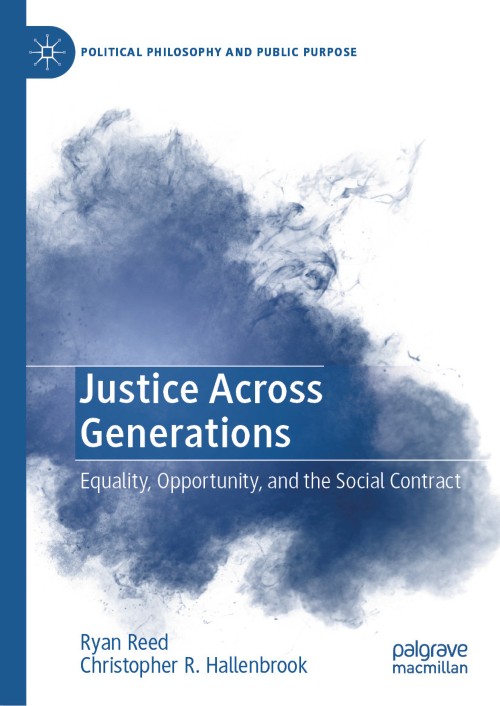
Justice Across Generations [electronic resource] : Equality, Opportunity, and the Social Contract / by Ryan Reed, Christopher R. Hallenbrook.
Erişim Adresi
ISBN
9783032072122
Dil Kodu
İngilizce
Yer Numarası
DK/21522
Yazar
Basım Bildirimi
1st ed. 2025.
Yayın Bilgisi
Cham : Springer Nature Switzerland : Imprint: Palgrave Macmillan, 2025.
Fiziksel Niteleme
XI, 177 p. 1 illus. online resource.
Dizi
Political Philosophy and Public Purpose, 2524-7158
İçindekiler Notu
Chapter 1 : What Do We Owe? -- Chapter 2: Constructing a Contractualist Theory of Intergenerational Justice -- Chapter 3: Rising Temperatures, Diminishing Opportunities -- Chapter 4: Do AI Sheep Dream of Electric Social Contracts? -- Chapter 5: No Child Left Behind? -- Chapter 6: Debts to the Future (and the Present) -- Chapter 7: Righting Past Generations’Wrongs -- Chapter 8: Conclusion: Intergenerational Justice as Preservation of Opportunities.
Özet, vb.
This book presents a contractualist theory of intergenerational justice that avoids deficiencies in existing IGJ theories, e.g., the non-identity problem and the under-defining of "generations." The inability of social contract theory to provide a thorough accounting of justice between generations has been called an embarrassment and rightly so. That said, serious attempts have been made from a variety of contract perspectives to rectify the approach’s shortcomings in the area of intergenerational justice. One of the most prominent contract theorists, John Rawls, attempted to address justice between generations in his theory via his just savings principle, but both versions of it were met with stinging criticism. As the climate crisis, among other challenges, presses the issue of justice for future generations, the authors believe that intergenerational justice is something that social contract theory should and can address. Specifically, they present a Rawlsian approach that begins with a clarified understanding of what is meant by “generations,” and proceeds from there to modify generational knowledge constraints in the original position. The authors then draw upon the concept of indirect reciprocity to round out an argument for a Rawlsian principle of justice between generations: intergenerational fair equality of opportunity. They then apply their intergenerational justice theory to five major public policy areas. Ryan Reed is Associate Professor of Political Science at Bradley University. Christopher R. Hallenbrook is Associate Professor of Political Science and L.G. Chaffee Endowed Chair of Global and Comparative Politics at California State University Dominguez Hills.
Konu
Political science.
Political planning.
Political Theory.
Political Science.
Public Policy.
Political planning.
Political Theory.
Political Science.
Public Policy.
Diğer Yazarlar
Kurum Adı
Eseri Alıntıla
Referansları kullanmadan önce gözden geçirmeniz ve varsa gerekli düzeltmeleri yapmanız önerilir.
Dijital Kaynak
MARC Görünümü
LEADER 05411nam a22006495i 4500
001 820315
003 TR_AnAIT
005 20260130170400
007 cr nn 008mamaa
008 251028s2025 sz | s |||| 0|eng d
020 |a9783032072122|9978-3-032-07212-2
024 7 |a10.1007/978-3-032-07212-2|2doi
041 |aeng
049 |aTürk Tarih Kurumu Kütüphanesi
050 4|aJC11-607
072 7|aJPA|2bicssc
072 7|aPOL010000|2bisacsh
072 7|aJPA|2thema
082 04|a320.01|223
090 |aDK/21522
100 1 |aReed, Ryan.|eauthor.|4aut|4http://id.loc.gov/vocabulary/relators/aut
245 10|aJustice Across Generations|h[electronic resource] :|bEquality, Opportunity, and the Social Contract /|cby Ryan Reed, Christopher R. Hallenbrook.
250 |a1st ed. 2025.
264 1|aCham :|bSpringer Nature Switzerland :|bImprint: Palgrave Macmillan,|c2025.
300 |aXI, 177 p. 1 illus.|bonline resource.
336 |atext|btxt|2rdacontent
337 |acomputer|bc|2rdamedia
338 |aonline resource|bcr|2rdacarrier
341 0 |bPDF/UA-1|2onix
341 0 |bTable of contents navigation|2onix
341 0 |bSingle logical reading order|2onix
341 0 |bShort alternative textual descriptions|2onix
341 0 |bUse of color is not sole means of conveying information|2onix
341 0 |bUse of high contrast between text and background color|2onix
341 0 |bNext / Previous structural navigation|2onix
341 0 |bAll non-decorative content supports reading without sight|2onix
347 |atext file|bPDF|2rda
490 1 |aPolitical Philosophy and Public Purpose,|x2524-7158
505 0 |aChapter 1 : What Do We Owe? -- Chapter 2: Constructing a Contractualist Theory of Intergenerational Justice -- Chapter 3: Rising Temperatures, Diminishing Opportunities -- Chapter 4: Do AI Sheep Dream of Electric Social Contracts? -- Chapter 5: No Child Left Behind? -- Chapter 6: Debts to the Future (and the Present) -- Chapter 7: Righting Past Generations’Wrongs -- Chapter 8: Conclusion: Intergenerational Justice as Preservation of Opportunities.
520 |aThis book presents a contractualist theory of intergenerational justice that avoids deficiencies in existing IGJ theories, e.g., the non-identity problem and the under-defining of "generations." The inability of social contract theory to provide a thorough accounting of justice between generations has been called an embarrassment and rightly so. That said, serious attempts have been made from a variety of contract perspectives to rectify the approach’s shortcomings in the area of intergenerational justice. One of the most prominent contract theorists, John Rawls, attempted to address justice between generations in his theory via his just savings principle, but both versions of it were met with stinging criticism. As the climate crisis, among other challenges, presses the issue of justice for future generations, the authors believe that intergenerational justice is something that social contract theory should and can address. Specifically, they present a Rawlsian approach that begins with a clarified understanding of what is meant by “generations,” and proceeds from there to modify generational knowledge constraints in the original position. The authors then draw upon the concept of indirect reciprocity to round out an argument for a Rawlsian principle of justice between generations: intergenerational fair equality of opportunity. They then apply their intergenerational justice theory to five major public policy areas. Ryan Reed is Associate Professor of Political Science at Bradley University. Christopher R. Hallenbrook is Associate Professor of Political Science and L.G. Chaffee Endowed Chair of Global and Comparative Politics at California State University Dominguez Hills.
532 8 |aAccessibility summary: This PDF has been created in accordance with the PDF/UA-1 standard to enhance accessibility, including screen reader support, described non-text content (images, graphs), bookmarks for easy navigation, keyboard-friendly links and forms and searchable, selectable text. We recognize the importance of accessibility, and we welcome queries about accessibility for any of our products. If you have a question or an access need, please get in touch with us at accessibilitysupport@springernature.com. Please note that a more accessible version of this eBook is available as ePub.
532 8 |aNo reading system accessibility options actively disabled
532 8 |aPublisher contact for further accessibility information: accessibilitysupport@springernature.com
650 0|aPolitical science.
650 0|aPolitical planning.
650 14|aPolitical Theory.
650 24|aPolitical Science.
650 24|aPublic Policy.
700 1 |aR. Hallenbrook, Christopher.|eauthor.|4aut|4http://id.loc.gov/vocabulary/relators/aut
710 2 |aSpringerLink (Online service)
773 0 |tSpringer Nature eBook
776 08|iPrinted edition:|z9783032072115
776 08|iPrinted edition:|z9783032072139
776 08|iPrinted edition:|z9783032072146
830 0|aPolitical Philosophy and Public Purpose,|x2524-7158
856 40|uhttps://doi.org/10.1007/978-3-032-07212-2
912 |aZDB-2-POS
912 |aZDB-2-SXPI
950 |aPolitical Science and International Studies (SpringerNature-41174)
950 |aPolitical Science and International Studies (R0) (SpringerNature-43724)
001 820315
003 TR_AnAIT
005 20260130170400
007 cr nn 008mamaa
008 251028s2025 sz | s |||| 0|eng d
020 |a9783032072122|9978-3-032-07212-2
024 7 |a10.1007/978-3-032-07212-2|2doi
041 |aeng
049 |aTürk Tarih Kurumu Kütüphanesi
050 4|aJC11-607
072 7|aJPA|2bicssc
072 7|aPOL010000|2bisacsh
072 7|aJPA|2thema
082 04|a320.01|223
090 |aDK/21522
100 1 |aReed, Ryan.|eauthor.|4aut|4http://id.loc.gov/vocabulary/relators/aut
245 10|aJustice Across Generations|h[electronic resource] :|bEquality, Opportunity, and the Social Contract /|cby Ryan Reed, Christopher R. Hallenbrook.
250 |a1st ed. 2025.
264 1|aCham :|bSpringer Nature Switzerland :|bImprint: Palgrave Macmillan,|c2025.
300 |aXI, 177 p. 1 illus.|bonline resource.
336 |atext|btxt|2rdacontent
337 |acomputer|bc|2rdamedia
338 |aonline resource|bcr|2rdacarrier
341 0 |bPDF/UA-1|2onix
341 0 |bTable of contents navigation|2onix
341 0 |bSingle logical reading order|2onix
341 0 |bShort alternative textual descriptions|2onix
341 0 |bUse of color is not sole means of conveying information|2onix
341 0 |bUse of high contrast between text and background color|2onix
341 0 |bNext / Previous structural navigation|2onix
341 0 |bAll non-decorative content supports reading without sight|2onix
347 |atext file|bPDF|2rda
490 1 |aPolitical Philosophy and Public Purpose,|x2524-7158
505 0 |aChapter 1 : What Do We Owe? -- Chapter 2: Constructing a Contractualist Theory of Intergenerational Justice -- Chapter 3: Rising Temperatures, Diminishing Opportunities -- Chapter 4: Do AI Sheep Dream of Electric Social Contracts? -- Chapter 5: No Child Left Behind? -- Chapter 6: Debts to the Future (and the Present) -- Chapter 7: Righting Past Generations’Wrongs -- Chapter 8: Conclusion: Intergenerational Justice as Preservation of Opportunities.
520 |aThis book presents a contractualist theory of intergenerational justice that avoids deficiencies in existing IGJ theories, e.g., the non-identity problem and the under-defining of "generations." The inability of social contract theory to provide a thorough accounting of justice between generations has been called an embarrassment and rightly so. That said, serious attempts have been made from a variety of contract perspectives to rectify the approach’s shortcomings in the area of intergenerational justice. One of the most prominent contract theorists, John Rawls, attempted to address justice between generations in his theory via his just savings principle, but both versions of it were met with stinging criticism. As the climate crisis, among other challenges, presses the issue of justice for future generations, the authors believe that intergenerational justice is something that social contract theory should and can address. Specifically, they present a Rawlsian approach that begins with a clarified understanding of what is meant by “generations,” and proceeds from there to modify generational knowledge constraints in the original position. The authors then draw upon the concept of indirect reciprocity to round out an argument for a Rawlsian principle of justice between generations: intergenerational fair equality of opportunity. They then apply their intergenerational justice theory to five major public policy areas. Ryan Reed is Associate Professor of Political Science at Bradley University. Christopher R. Hallenbrook is Associate Professor of Political Science and L.G. Chaffee Endowed Chair of Global and Comparative Politics at California State University Dominguez Hills.
532 8 |aAccessibility summary: This PDF has been created in accordance with the PDF/UA-1 standard to enhance accessibility, including screen reader support, described non-text content (images, graphs), bookmarks for easy navigation, keyboard-friendly links and forms and searchable, selectable text. We recognize the importance of accessibility, and we welcome queries about accessibility for any of our products. If you have a question or an access need, please get in touch with us at accessibilitysupport@springernature.com. Please note that a more accessible version of this eBook is available as ePub.
532 8 |aNo reading system accessibility options actively disabled
532 8 |aPublisher contact for further accessibility information: accessibilitysupport@springernature.com
650 0|aPolitical science.
650 0|aPolitical planning.
650 14|aPolitical Theory.
650 24|aPolitical Science.
650 24|aPublic Policy.
700 1 |aR. Hallenbrook, Christopher.|eauthor.|4aut|4http://id.loc.gov/vocabulary/relators/aut
710 2 |aSpringerLink (Online service)
773 0 |tSpringer Nature eBook
776 08|iPrinted edition:|z9783032072115
776 08|iPrinted edition:|z9783032072139
776 08|iPrinted edition:|z9783032072146
830 0|aPolitical Philosophy and Public Purpose,|x2524-7158
856 40|uhttps://doi.org/10.1007/978-3-032-07212-2
912 |aZDB-2-POS
912 |aZDB-2-SXPI
950 |aPolitical Science and International Studies (SpringerNature-41174)
950 |aPolitical Science and International Studies (R0) (SpringerNature-43724)
Materyaller
Depodan talep edilen materyal sadece kütüphane içerisinde kullanılmaktadır.
Materyal dışarıya ödünç verilmemektedir.
Materyal dışarıya ödünç verilmemektedir.
