LEADER 03421nam a22006015i 4500
001 821093
003 TR_AnAIT
005 20260130164039
007 cr nn 008mamaa
008 151116s2013 xxu| s |||| 0|eng d
020 |a9781137351128|9978-1-137-35112-8
024 7 |a10.1057/9781137351128|2doi
041 |aeng
049 |aTürk Tarih Kurumu Kütüphanesi
050 4|aJZ4835-5490.2
072 7|aJPSN|2bicssc
072 7|aPOL011000|2bisacsh
072 7|aJPSN|2thema
082 04|a327.06|223
090 |aDK/22281
100 1 |aIkenberry, G.|eauthor.|4aut|4http://id.loc.gov/vocabulary/relators/aut
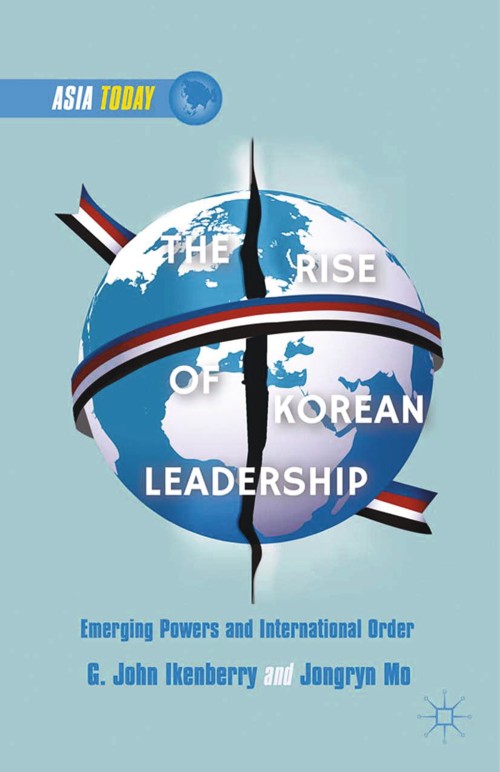
245 14|aThe Rise of Korean Leadership|h[electronic resource] :|bEmerging Powers and Liberal International Order /|cby G. Ikenberry, J. Mo, Mo Jongryn.
250 |a1st ed. 2013.
264 1|aNew York :|bPalgrave Macmillan US :|bImprint: Palgrave Macmillan,|c2013.
300 |aXII, 211 p.|bonline resource.
336 |atext|btxt|2rdacontent
337 |acomputer|bc|2rdamedia
338 |aonline resource|bcr|2rdacarrier
347 |atext file|bPDF|2rda
490 1 |aAsia Today,|x2634-5455
520 |aSouth Korea has emerged as a new middle power playing a significant role in a wide range of important global issue areas and supporting liberal international order with its leadership diplomacy. The growing role played by new powers like Korea calls into question the prevailing view that global governance is polarized with emerging powers challenging the liberal international order established by the United States and its European allies after World War II. As the case of Korea shows, large developing countries like the BRICS are not the only emerging powers active in global governance. Newly developed or high income developing countries like South Korea, Turkey and Mexico are also active emerging powers, taking new initiatives, setting agendas and mediating conflicts between rival groups on the global stage. Because these high income developing countries have advanced under and benefited from the liberal international order, they see a great stake in its stability and show a willingness to protect it. "Liberal internationalist" developing countries are joining the expanding list of middle powers who contribute to the maintenance of liberal international order as niche players and system supporters.
650 0|aInternational organization.
650 0|aGlobalization.
650 0|aComparative government.
650 0|aInternational relations.
650 0|aPolitical science.
650 0|aDiplomacy.
650 14|aInternational Organization.
650 24|aGlobalization.
650 24|aComparative Politics.
650 24|aInternational Relations.
650 24|aPolitical Science.
650 24|aDiplomacy.
700 1 |aMo, J.|eauthor.|4aut|4http://id.loc.gov/vocabulary/relators/aut
700 1 |aJongryn, Mo.|eauthor.|4aut|4http://id.loc.gov/vocabulary/relators/aut
710 2 |aSpringerLink (Online service)
773 0 |tSpringer Nature eBook
776 08|iPrinted edition:|z9781137351111
776 08|iPrinted edition:|z9781349468676
776 08|iPrinted edition:|z9781349468683
830 0|aAsia Today,|x2634-5455
856 40|uhttps://doi.org/10.1057/9781137351128
912 |aZDB-2-PIS
912 |aZDB-2-SXPI
950 |aPalgrave Political & Intern. Studies Collection (SpringerNature-41143)
950 |aPolitical Science and International Studies (R0) (SpringerNature-43724)