LEADER 02257nam a22004575i 4500
001 821534
003 TR_AnAIT
005 20260130162639
007 cr nn 008mamaa
008 151125s2004 xxk| s |||| 0|eng d
020 |a9780230005600|9978-0-230-00560-0
024 7 |a10.1057/9780230005600|2doi
041 |aeng
049 |aTürk Tarih Kurumu Kütüphanesi
050 4|aJZ2-6530
072 7|aJPS|2bicssc
072 7|aPOL011000|2bisacsh
072 7|aJPS|2thema
082 04|a327|223
090 |aDK/22719
100 1 |aBellamy, A.|eauthor.|4aut|4http://id.loc.gov/vocabulary/relators/aut
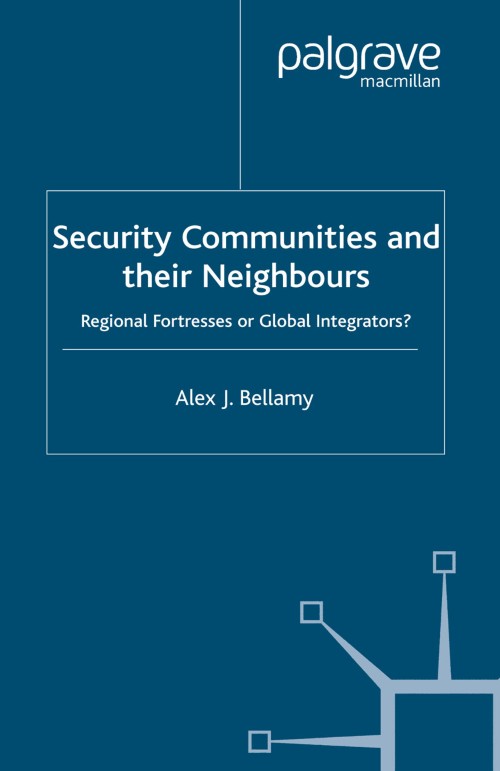
245 10|aSecurity Communities and their Neighbours|h[electronic resource] :|bRegional Fortresses or Global Integrators? /|cby A. Bellamy.
250 |a1st ed. 2004.
264 1|aLondon :|bPalgrave Macmillan UK :|bImprint: Palgrave Macmillan,|c2004.
300 |aX, 221 p.|bonline resource.
336 |atext|btxt|2rdacontent
337 |acomputer|bc|2rdamedia
338 |aonline resource|bcr|2rdacarrier
347 |atext file|bPDF|2rda
520 |aDoes the proliferation of security communities around the world presage a new era of competition between regions or an era of intensified global integration? This important new study assesses the relationship between security communities and their neighbours and asks whether processes of regional integration will contribute to a global 'clash of civilizations'. Drawing on four detailed case studies (Western Europe, Southeast Asia, the Persian Gulf and North America), Alex J. Bellamy argues that the more mature a security community becomes, the less likely it is to become a 'regional fortress'.
650 0|aInternational relations.
650 0|aPolitics and war.
650 14|aInternational Relations.
650 24|aMilitary and Defence Studies.
710 2 |aSpringerLink (Online service)
773 0 |tSpringer Nature eBook
776 08|iPrinted edition:|z9781403906229
776 08|iPrinted edition:|z9781349510078
776 08|iPrinted edition:|z9781349510085
856 40|uhttps://doi.org/10.1057/9780230005600
912 |aZDB-2-PIS
912 |aZDB-2-SXPI
950 |aPalgrave Political & Intern. Studies Collection (SpringerNature-41143)
950 |aPolitical Science and International Studies (R0) (SpringerNature-43724)