LEADER 02205nam a22005415i 4500
001 821651
003 TR_AnAIT
005 20260130162310
007 cr nn 008mamaa
008 151126s2011 xxk| s |||| 0|eng d
020 |a9780230307285|9978-0-230-30728-5
024 7 |a10.1057/9780230307285|2doi
041 |aeng
049 |aTürk Tarih Kurumu Kütüphanesi
050 4|aJA1-92
072 7|aJPA|2bicssc
072 7|aPOL000000|2bisacsh
072 7|aJPA|2thema
082 04|a320|223
090 |aDK/22835
100 1 |aAtkins, J.|eauthor.|4aut|4http://id.loc.gov/vocabulary/relators/aut
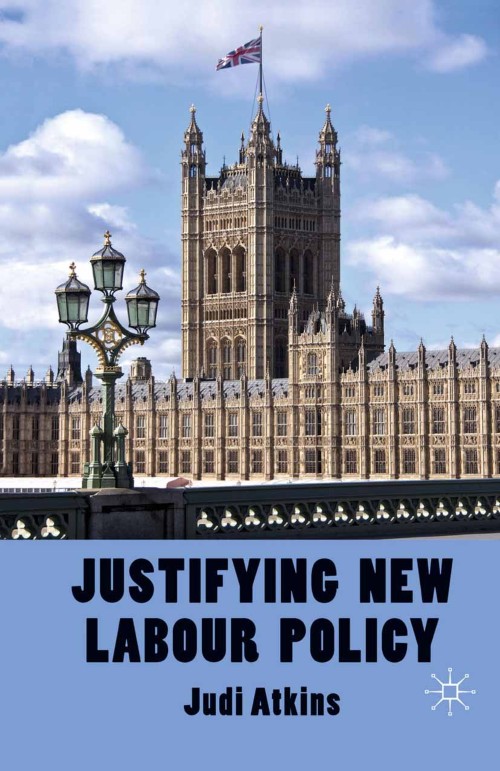
245 10|aJustifying New Labour Policy|h[electronic resource] /|cby J. Atkins.
250 |a1st ed. 2011.
264 1|aLondon :|bPalgrave Macmillan UK :|bImprint: Palgrave Macmillan,|c2011.
300 |aXI, 217 p.|bonline resource.
336 |atext|btxt|2rdacontent
337 |acomputer|bc|2rdamedia
338 |aonline resource|bcr|2rdacarrier
347 |atext file|bPDF|2rda
520 |aAn original combination of theoretical innovation and a detailed empirical analysis of the ideas, language and policy of New Labour. Politicians often appeal to moral principles and arguments in their efforts to win support for new policy programmes. Yet the question of how politicians use moral language has until now been neglected by scholars.
650 0|aPolitical science.
650 0|aEurope|xPolitics and government.
650 0|aPolitical science|xPhilosophy.
650 0|aPolitical planning.
650 0|aAmerica|xPolitics and government.
650 14|aPolitical Science.
650 24|aEuropean Politics.
650 24|aPolitical Theory.
650 24|aPolitical Philosophy.
650 24|aPublic Policy.
650 24|aAmerican Politics.
710 2 |aSpringerLink (Online service)
773 0 |tSpringer Nature eBook
776 08|iPrinted edition:|z9780230279117
776 08|iPrinted edition:|z9781349326839
776 08|iPrinted edition:|z9781349326846
856 40|uhttps://doi.org/10.1057/9780230307285
912 |aZDB-2-PIS
912 |aZDB-2-SXPI
950 |aPalgrave Political & Intern. Studies Collection (SpringerNature-41143)
950 |aPolitical Science and International Studies (R0) (SpringerNature-43724)