LEADER 03869nam a22005055i 4500
001 822067
003 TR_AnAIT
005 20260130161048
007 cr nn 008mamaa
008 151214s1981 xxk| s |||| 0|eng d
020 |a9781349047789|9978-1-349-04778-9
024 7 |a10.1007/978-1-349-04778-9|2doi
041 |aeng
049 |aTürk Tarih Kurumu Kütüphanesi
050 4|aHB172
072 7|aKCC|2bicssc
072 7|aBUS044000|2bisacsh
072 7|aKCC|2thema
082 04|a338.5|223
090 |aDK/23223
100 1 |aKatouzian, Homa.|eauthor.|4aut|4http://id.loc.gov/vocabulary/relators/aut
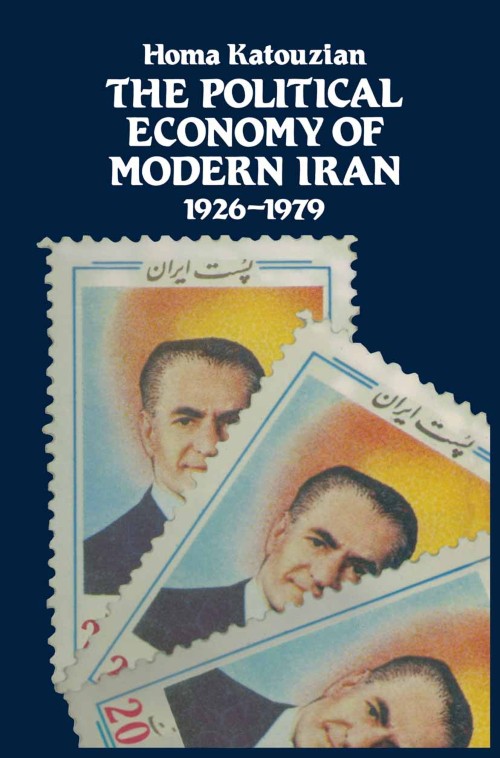
245 14|aThe Political Economy of Modern Iran|h[electronic resource] :|bDespotism and Pseudo-Modernism, 1926–1979 /|cby Homa Katouzian.
250 |a1st ed. 1981.
264 1|aLondon :|bPalgrave Macmillan UK :|bImprint: Palgrave Macmillan,|c1981.
300 |aX, 389 p.|bonline resource.
336 |atext|btxt|2rdacontent
337 |acomputer|bc|2rdamedia
338 |aonline resource|bcr|2rdacarrier
347 |atext file|bPDF|2rda
520 |aVisit the Unspun website which includes Table of Contents and the Introduction. The World Wide Web has cut a wide path through our daily lives. As claims of "the Web changes everything" suffuse print media, television, movies, and even presidential campaign speeches, just how thoroughly do the users immersed in this new technology understand it? What, exactly, is the Web changing? And how might we participate in or even direct Web-related change? Intended for readers new to studying the Internet, each chapter in Unspun addresses a different aspect of the "web revolution"--hypertext, multimedia, authorship, community, governance, identity, gender, race, cyberspace, political economy, and ideology--as it shapes and is shaped by economic, political, social, and cultural forces. The contributors particularly focus on the language of the Web, exploring concepts that are still emerging and therefore unstable and in flux. Unspun demonstrates how the tacit assumptions behind this rhetoric mustbe examined if we want to really know what we are saying when we talk about the Web. Unspun will help readers more fully understand and become critically aware of the issues involved in living, as we do, in a wired society. Contributors include: Jay Bolter, Sean Cubitt, Jodi Dean, Dawn Dietrich, Cynthia Fuchs, Matthew Kirschenbaum, Timothy Luke, Vincent Mosco, Lisa Nakamura, Russell Potter, Rob Shields, John Sloop, and Joseph Tabbi.
532 8 |aAccessibility summary: This PDF is not accessible. It is based on scanned pages and does not support features such as screen reader compatibility or described non-text content (images, graphs etc). However, it likely supports searchable and selectable text based on OCR (Optical Character Recognition). Users with accessibility needs may not be able to use this content effectively. Please contact us at accessibilitysupport@springernature.com if you require assistance or an alternative format.
532 8 |aInaccessible, or known limited accessibility
532 8 |aNo reading system accessibility options actively disabled
532 8 |aPublisher contact for further accessibility information: accessibilitysupport@springernature.com
650 0|aMicroeconomics.
650 0|aInternational economic relations.
650 14|aMicroeconomics.
650 24|aInternational Political Economy’.
710 2 |aSpringerLink (Online service)
773 0 |tSpringer Nature eBook
776 08|iPrinted edition:|z9780333269619
776 08|iPrinted edition:|z9781349047796
776 08|iPrinted edition:|z9781349047802
856 40|uhttps://doi.org/10.1007/978-1-349-04778-9
912 |aZDB-2-PIS
912 |aZDB-2-SXPI
950 |aPalgrave Political & Intern. Studies Collection (SpringerNature-41143)
950 |aPolitical Science and International Studies (R0) (SpringerNature-43724)