LEADER 02315nam a22005775i 4500
001 823588
003 TR_AnAIT
005 20260130152026
007 cr nn 008mamaa
008 151203s2012 xxk| s |||| 0|eng d
020 |a9781137292049|9978-1-137-29204-9
024 7 |a10.1057/9781137292049|2doi
041 |aeng
049 |aTürk Tarih Kurumu Kütüphanesi
050 4|aJQ1870-3981
072 7|aJP|2bicssc
072 7|a1H|2bicssc
072 7|aPOL053000|2bisacsh
072 7|aJP|x1H|2thema
082 04|a320.96|223
090 |aDK/24729
100 1 |aHill, J.|eauthor.|4aut|4http://id.loc.gov/vocabulary/relators/aut
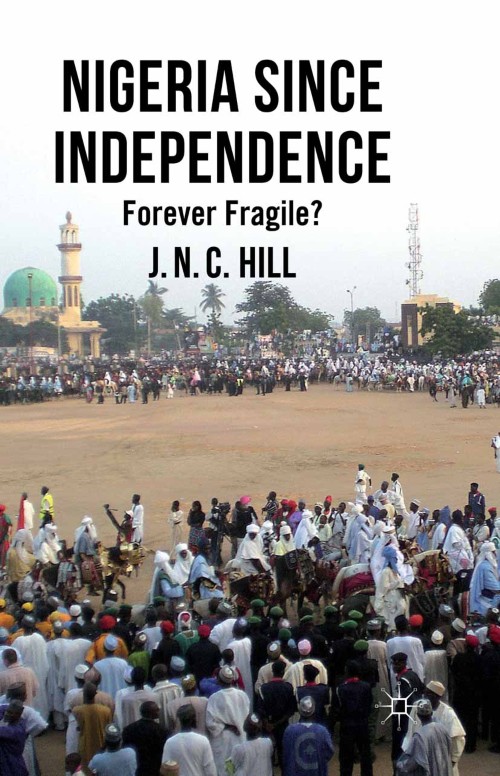
245 10|aNigeria Since Independence|h[electronic resource] :|bForever Fragile? /|cby J. Hill.
250 |a1st ed. 2012.
264 1|aLondon :|bPalgrave Macmillan UK :|bImprint: Palgrave Macmillan,|c2012.
300 |aXIII, 173 p.|bonline resource.
336 |atext|btxt|2rdacontent
337 |acomputer|bc|2rdamedia
338 |aonline resource|bcr|2rdacarrier
347 |atext file|bPDF|2rda
520 |aThis book analyses the political and ethnical tensions that characterize Nigeria, which derive both from colonial and contemporary conflicts. It points out three major factors why Nigeria has not yet collapsed like many other African states: ethnic power sharing amongst the political elite, the military with its national outlook, and oil wealth.
650 0|aAfrica|xPolitics and government.
650 0|aPolitics and war.
650 0|aPolitical science.
650 0|aTerrorism.
650 0|aPolitical violence.
650 0|aDiplomacy.
650 0|aInternational relations.
650 14|aAfrican Politics.
650 24|aMilitary and Defence Studies.
650 24|aPolitical Science.
650 24|aTerrorism and Political Violence.
650 24|aDiplomacy.
650 24|aInternational Relations.
710 2 |aSpringerLink (Online service)
773 0 |tSpringer Nature eBook
776 08|iPrinted edition:|z9780230298521
776 08|iPrinted edition:|z9781349334704
776 08|iPrinted edition:|z9781349334711
856 40|uhttps://doi.org/10.1057/9781137292049
912 |aZDB-2-PIS
912 |aZDB-2-SXPI
950 |aPalgrave Political & Intern. Studies Collection (SpringerNature-41143)
950 |aPolitical Science and International Studies (R0) (SpringerNature-43724)