LEADER 02982nam a22004815i 4500
001 823994
003 TR_AnAIT
005 20260130150746
007 cr nn 008mamaa
008 151231s2003 xxu| s |||| 0|eng d
020 |a9781403973733|9978-1-4039-7373-3
024 7 |a10.1057/9781403973733|2doi
041 |aeng
049 |aTürk Tarih Kurumu Kütüphanesi
050 4|aJA1-92
072 7|aJPA|2bicssc
072 7|aPOL000000|2bisacsh
072 7|aJPA|2thema
082 04|a320|223
090 |aDK/25135
100 1 |aWilson, P.|eauthor.|4aut|4http://id.loc.gov/vocabulary/relators/aut
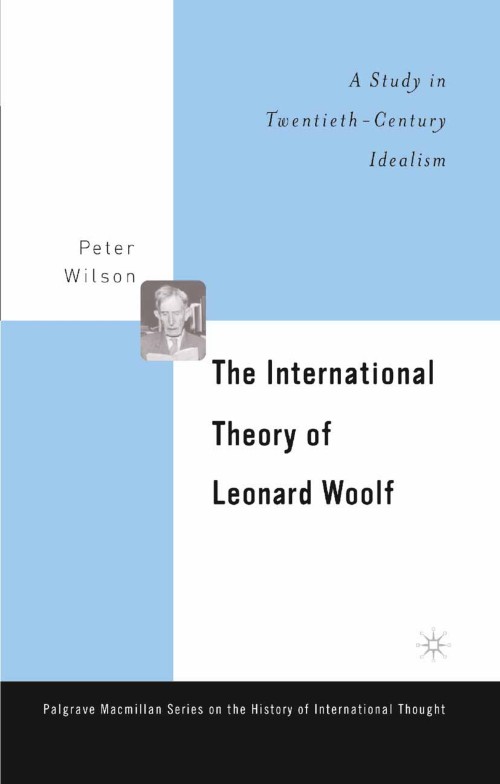
245 14|aThe International Theory of Leonard Woolf|h[electronic resource] :|bA Study in Twentieth-Century Idealism /|cby P. Wilson.
250 |a1st ed. 2003.
264 1|aNew York :|bPalgrave Macmillan US :|bImprint: Palgrave Macmillan,|c2003.
300 |a284 p.|bonline resource.
336 |atext|btxt|2rdacontent
337 |acomputer|bc|2rdamedia
338 |aonline resource|bcr|2rdacarrier
347 |atext file|bPDF|2rda
490 1 |aThe Palgrave Macmillan History of International Thought,|x2634-5226
520 |aColonial civil servant, Fabian socialist, and eminence grise of the Bloombury Circle, Leonard Woolf was one of the most prolific writers on international relations of the early to mid-Twentieth Century. His report for the Fabian Society, International Government , was influential on the creation of the League of Nations. He was co-founder of the popular pressure group, the League of Nations Society. He was a leading critic of empire. He helped to educate the British Labour Party on global issues, constructing, in 1929, its first credible foreign policy. With his wife, Virginia, he founded the celebrated Hogarth Press. He pioneered 'functionalist' and 'transnationalist' theory. He pioneered documentary journalism. He wrote towards the end of his long life one of the most insightful autobiographies of the Twentieth Century. This book examines the thought of this fascinating and relatively unknown political thinker. It thoroughly reassesses his ideas, for decades condemned as 'utopian', in the context of the much more fluid international scene of theTwenty-First century. In particular, it asks have his ideas about international government gained new pertinence in the post-Cold War world?
650 0|aPolitical science.
650 0|aPhilosophy.
650 14|aPolitical Science.
650 24|aPhilosophy.
710 2 |aSpringerLink (Online service)
773 0 |tSpringer Nature eBook
776 08|iPrinted edition:|z9780312294731
776 08|iPrinted edition:|z9781349387823
776 08|iPrinted edition:|z9781349387830
830 0|aThe Palgrave Macmillan History of International Thought,|x2634-5226
856 40|uhttps://doi.org/10.1057/9781403973733
912 |aZDB-2-PIS
912 |aZDB-2-SXPI
950 |aPalgrave Political & Intern. Studies Collection (SpringerNature-41143)
950 |aPolitical Science and International Studies (R0) (SpringerNature-43724)