

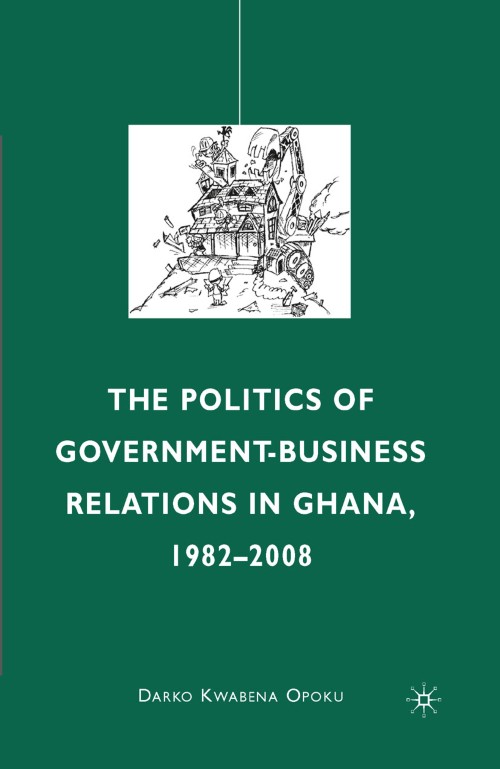
The Politics of Government-Business Relations in Ghana, 1982-2008 [electronic resource] / by D. Opoku.
Erişim Adresi
ISBN
9780230113107
Dil Kodu
İngilizce
Yer Numarası
DK/25245
Yazar
Basım Bildirimi
1st ed. 2010.
Yayın Bilgisi
New York : Palgrave Macmillan US : Imprint: Palgrave Macmillan, 2010.
Fiziksel Niteleme
XIV, 264 p. online resource.
Özet, vb.
Since the early 1980s, the World Bank, backed by aid donor countries, has been involved in a determined effort to stimulate capitalist growth in Africa by prescribing a set of orthodox, neoliberal economic policies. Using Ghana as a case study, this book considers why this is the case.
Konu
Ethnology __ Africa.
Culture.
Business.
Management science.
Economic development.
Africa __ Politics and government.
Political science.
International relations.
African Culture.
Business and Management.
Development Studies.
African Politics.
Political Science.
International Relations.
Culture.
Business.
Management science.
Economic development.
Africa __ Politics and government.
Political science.
International relations.
African Culture.
Business and Management.
Development Studies.
African Politics.
Political Science.
International Relations.
Kurum Adı
