LEADER 02376nam a22005655i 4500
001 824167
003 TR_AnAIT
005 20260130150154
007 cr nn 008mamaa
008 151207s2006 xxu| s |||| 0|eng d
020 |a9781403983602|9978-1-4039-8360-2
024 7 |a10.1057/9781403983602|2doi
041 |aeng
049 |aTürk Tarih Kurumu Kütüphanesi
050 4|aJA85-85.2
072 7|aJPH|2bicssc
072 7|aGTC|2bicssc
072 7|aPOL000000|2bisacsh
072 7|aJPH|2thema
072 7|aGTC|2thema
082 04|a320.014|223
090 |aDK/25308
100 1 |aRoselle, L.|eauthor.|4aut|4http://id.loc.gov/vocabulary/relators/aut
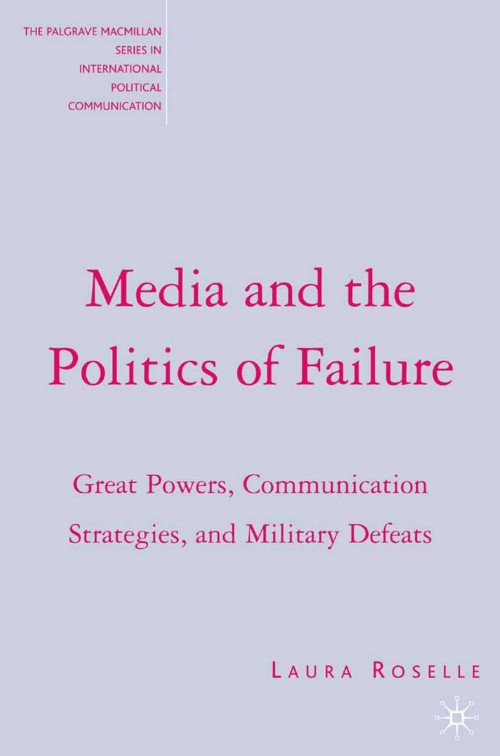
245 10|aMedia and the Politics of Failure|h[electronic resource] :|bGreat Powers, Communication Strategies, and Military Defeats /|cby L. Roselle.
250 |a1st ed. 2006.
264 1|aNew York :|bPalgrave Macmillan US :|bImprint: Palgrave Macmillan,|c2006.
300 |aVII, 191 p.|bonline resource.
336 |atext|btxt|2rdacontent
337 |acomputer|bc|2rdamedia
338 |aonline resource|bcr|2rdacarrier
347 |atext file|bPDF|2rda
490 1 |aThe Palgrave Macmillan Series in International Political Communication,|x2945-6126
520 |aRoselle analyzes how political leaders of powerful states use media to explain military defeats. The cases of the United States in Vietnam and the Soviet Union in Afghanistan highlight the role of great power identity, domestic politics, and media structure.
650 0|aCommunication in politics.
650 0|aPolitical science.
650 0|aInternational relations.
650 0|aPeace.
650 14|aPolitical Communication.
650 24|aPolitical Science.
650 24|aInternational Relations.
650 24|aPeace and Conflict Studies.
710 2 |aSpringerLink (Online service)
773 0 |tSpringer Nature eBook
776 08|iPrinted edition:|z9781403975256
776 08|iPrinted edition:|z9781349535897
776 08|iPrinted edition:|z9781349535903
776 08|iPrinted edition:|z9780230116771
830 0|aThe Palgrave Macmillan Series in International Political Communication,|x2945-6126
856 40|uhttps://doi.org/10.1057/9781403983602
912 |aZDB-2-PIS
912 |aZDB-2-SXPI
950 |aPalgrave Political & Intern. Studies Collection (SpringerNature-41143)
950 |aPolitical Science and International Studies (R0) (SpringerNature-43724)