LEADER 02139nam a22005175i 4500
001 824606
003 TR_AnAIT
005 20260130144319
007 cr nn 008mamaa
008 151013s2009 xxu| s |||| 0|eng d
020 |a9780230622128|9978-0-230-62212-8
024 7 |a10.1057/9780230622128|2doi
041 |aeng
049 |aTürk Tarih Kurumu Kütüphanesi
050 4|aJQ1-1852
072 7|aJP|2bicssc
072 7|a1F|2bicssc
072 7|aPOL054000|2bisacsh
072 7|aJP|x1F|2thema
082 04|a320.95|223
090 |aDK/25747
100 1 |aKhan, S.|eauthor.|4aut|4http://id.loc.gov/vocabulary/relators/aut
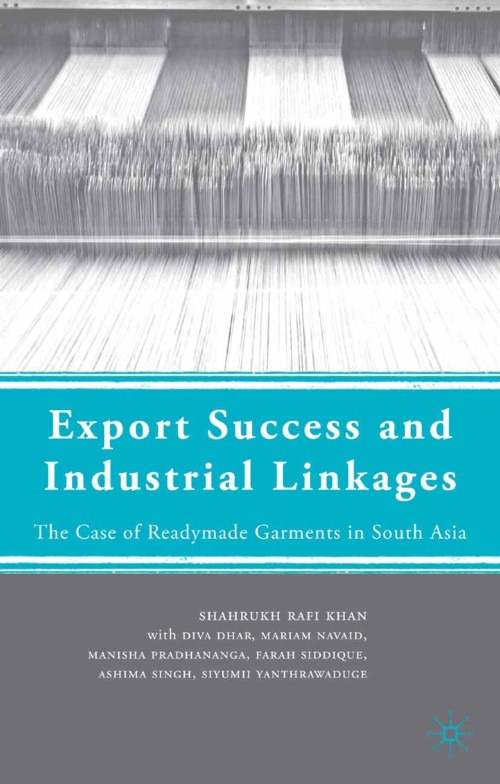
245 10|aExport Success and Industrial Linkages|h[electronic resource] :|bThe Case of Readymade Garments in South Asia /|cby S. Khan.
250 |a1st ed. 2009.
264 1|aNew York :|bPalgrave Macmillan US :|bImprint: Palgrave Macmillan,|c2009.
300 |aXIV, 191 p.|bonline resource.
336 |atext|btxt|2rdacontent
337 |acomputer|bc|2rdamedia
338 |aonline resource|bcr|2rdacarrier
347 |atext file|bPDF|2rda
520 |aThis book uses an analysis of the garment industry in South Asia to uphold the predictions of neo-classical economic trade theory, but suggest that there is little to learn from it about business, structural, and institutional practices or critical linkages and partnerships.
650 0|aAsia|xPolitics and government.
650 0|aInternational relations.
650 0|aPolitical science.
650 0|aInternational economic relations.
650 14|aAsian Politics.
650 24|aInternational Relations.
650 24|aPolitical Science.
650 24|aInternational Political Economy’.
710 2 |aSpringerLink (Online service)
773 0 |tSpringer Nature eBook
776 08|iPrinted edition:|z9780230608504
776 08|iPrinted edition:|z9781349375509
776 08|iPrinted edition:|z9781349375516
856 40|uhttps://doi.org/10.1057/9780230622128
912 |aZDB-2-PIS
912 |aZDB-2-SXPI
950 |aPalgrave Political & Intern. Studies Collection (SpringerNature-41143)
950 |aPolitical Science and International Studies (R0) (SpringerNature-43724)