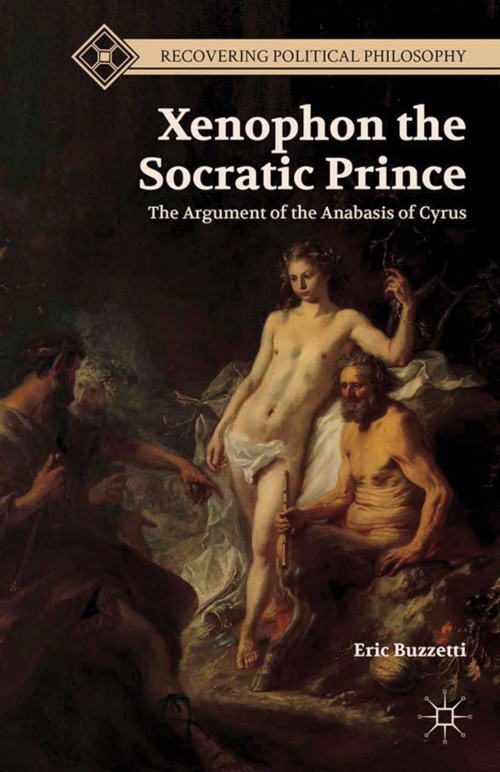
LEADER 02343nam a22005775i 4500
001 824956
003 TR_AnAIT
005 20260131084852
007 cr nn 008mamaa
008 151203s2014 xxu| s |||| 0|eng d
020 |a9781137325921|9978-1-137-32592-1
024 7 |a10.1057/9781137325921|2doi
041 |aeng
049 |aTürk Tarih Kurumu Kütüphanesi
050 4|aB65
072 7|aHPS|2bicssc
072 7|aPHI019000|2bisacsh
072 7|aQDTS|2thema
082 04|a320.01|223
090 |aDK/26097
100 1 |aBuzzetti, E.|eauthor.|4aut|4http://id.loc.gov/vocabulary/relators/aut
245 10|aXenophon the Socratic Prince|h[electronic resource] :|bThe Argument of the Anabasis of Cyrus /|cby E. Buzzetti.
250 |a1st ed. 2014.
264 1|aNew York :|bPalgrave Macmillan US :|bImprint: Palgrave Macmillan,|c2014.
300 |aXVII, 337 p. 1 illus.|bonline resource.
336 |atext|btxt|2rdacontent
337 |acomputer|bc|2rdamedia
338 |aonline resource|bcr|2rdacarrier
347 |atext file|bPDF|2rda
490 1 |aRecovering Political Philosophy,|x2524-7174
520 |aAn interpretation of Xenophon's Anabasis of Cyrus, paralleling the text to Machiavelli's The Prince, and focusing on the question: How did the Socratic education help Xenophon reconcile morality with effectiveness, the noble with the good, as a ruler?
650 0|aPolitical science|xPhilosophy.
650 0|aSocial sciences|xPhilosophy.
650 0|aPolitical science.
650 0|aClassical literature.
650 0|aLiterature, Ancient.
650 0|aPhilosophy, Ancient.
650 14|aPolitical Philosophy.
650 24|aSocial Philosophy.
650 24|aPolitical Theory.
650 24|aPolitical Science.
650 24|aClassical and Antique Literature.
650 24|aAncient Philosophy / Classical Philosophy.
710 2 |aSpringerLink (Online service)
773 0 |tSpringer Nature eBook
776 08|iPrinted edition:|z9781137333308
776 08|iPrinted edition:|z9781349462155
776 08|iPrinted edition:|z9781349462162
830 0|aRecovering Political Philosophy,|x2524-7174
856 40|uhttps://doi.org/10.1057/9781137325921
912 |aZDB-2-PPS
912 |aZDB-2-SXPI
950 |aPalgrave Political Science Collection (SpringerNature-41144)
950 |aPolitical Science and International Studies (R0) (SpringerNature-43724)