LEADER 02322nam a22005655i 4500
001 825264
003 TR_AnAIT
005 20260131083619
007 cr nn 008mamaa
008 151128s2015 xxk| s |||| 0|eng d
020 |a9781137404718|9978-1-137-40471-8
024 7 |a10.1057/9781137404718|2doi
041 |aeng
049 |aTürk Tarih Kurumu Kütüphanesi
050 4|aJA1-92
072 7|aJPA|2bicssc
072 7|aPOL000000|2bisacsh
072 7|aJPA|2thema
082 04|a320|223
090 |aDK/26405
100 1 |aMurray, E.|eauthor.|4aut|4http://id.loc.gov/vocabulary/relators/aut
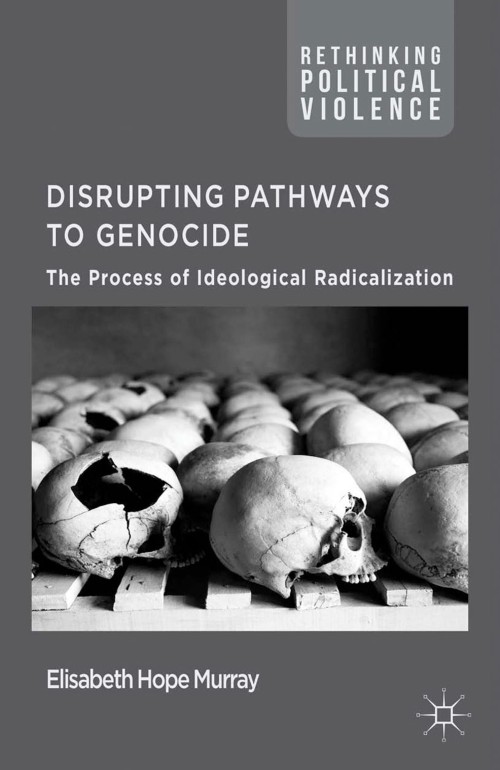
245 10|aDisrupting Pathways to Genocide|h[electronic resource] :|bThe Process of Ideological Radicalization /|cby E. Murray.
250 |a1st ed. 2015.
264 1|aLondon :|bPalgrave Macmillan UK :|bImprint: Palgrave Macmillan,|c2015.
300 |aXI, 218 p.|bonline resource.
336 |atext|btxt|2rdacontent
337 |acomputer|bc|2rdamedia
338 |aonline resource|bcr|2rdacarrier
347 |atext file|bPDF|2rda
490 1 |aRethinking Political Violence,|x2752-8596
520 |aHow does ideology in some states radicalise to such an extent as to become genocidal? Can the causes of radicalisation be seen as internal or external? Examining the ideological evolution in the Armenian genocide, the Holocaust and during the break up of Yugoslavia, Elisabeth Hope Murray seeks to answer these questions in this comparative work.
650 0|aPolitical science.
650 0|aInternational relations.
650 0|aPeace.
650 0|aSociology.
650 0|aMilitary history.
650 14|aPolitical Science.
650 24|aInternational Relations.
650 24|aPeace and Conflict Studies.
650 24|aSociology.
650 24|aPolitical Theory.
650 24|aMilitary History.
710 2 |aSpringerLink (Online service)
773 0 |tSpringer Nature eBook
776 08|iPrinted edition:|z9781137404701
776 08|iPrinted edition:|z9781349487417
776 08|iPrinted edition:|z9781349487424
830 0|aRethinking Political Violence,|x2752-8596
856 40|uhttps://doi.org/10.1057/9781137404718
912 |aZDB-2-PID
912 |aZDB-2-SXPI
950 |aPalgrave Intern. Relations & Development Collection (SpringerNature-41139)
950 |aPolitical Science and International Studies (R0) (SpringerNature-43724)