LEADER 03893nam a22004815i 4500
001 825762
003 TR_AnAIT
005 20260131081437
007 cr nn 008mamaa
008 150818s1968 xxk| s |||| 0|eng d
020 |a9781349152902|9978-1-349-15290-2
024 7 |a10.1007/978-1-349-15290-2|2doi
041 |aeng
049 |aTürk Tarih Kurumu Kütüphanesi
050 4|aBL660-2685.2
072 7|aHRAX|2bicssc
072 7|aREL033000|2bisacsh
072 7|aQRAX|2thema
082 04|a200.09|223
090 |aDK/26873
100 1 |aLing, Trevor.|eauthor.|4aut|4http://id.loc.gov/vocabulary/relators/aut
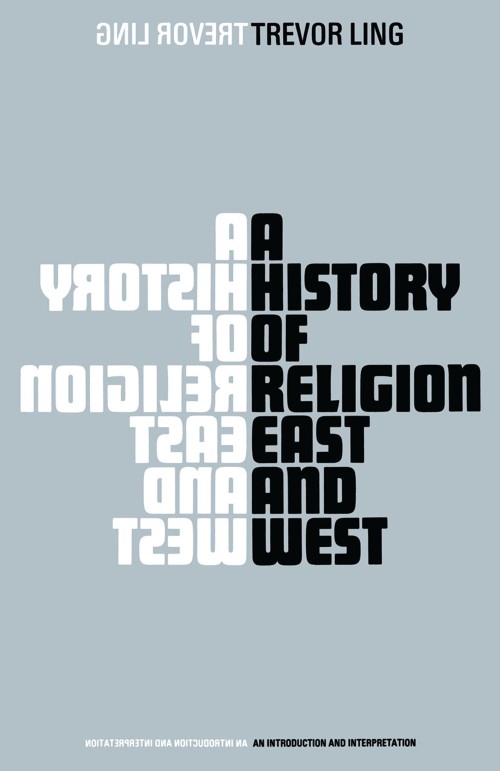
245 12|aA History of Religion East and West|h[electronic resource] :|bAn Introduction and Interpretation /|cby Trevor Ling.
250 |a1st ed. 1968.
264 1|aLondon :|bPalgrave Macmillan UK :|bImprint: Palgrave Macmillan,|c1968.
300 |aXXX, 464 p.|bonline resource.
336 |atext|btxt|2rdacontent
337 |acomputer|bc|2rdamedia
338 |aonline resource|bcr|2rdacarrier
347 |atext file|bPDF|2rda
520 |aThe religious traditions of Asia and Europe, the 'East' and 'West' of the title, are sometimes regarded as being in sharp contrast with each other, the one 'mystical', the other 'prophetic'. Whenever their religions are not so contrasted they are usually treated in isolation from each other: the religion of Israel, Zoroastrianism, Judaism, Christianity, Hinduism, Jainism and Buddhism. Dr Ling, however, stresses that there is considerable overlap and interpenetration between the two types and areas, and that it is important to see the historical inter-relation between these religions and to observe how, during given periods of history, there are parallel developments or significant divergences. He covers the period 1500 B.C. to the present time, providing an outline of the development of Asian and European religious traditions and institutions, and discussing the social and economic factors involved in the development of religous traditions, although he shows that such factors alone do not account for the religious life of man. Dr Ling goes on to interpret the contemporary significance of these religions and their potential for the future life of humanity. He suggests that the present stage of religious advance is characterised by open-endedness towards the future; not all religions exhibit this character, but none has yet exhausted the possibilities of development. This book is intended for use an an introduction to the study of religion. Although reference is made in the text to sources of further information, the book can be used without reference to them.
532 8 |aAccessibility summary: This PDF is not accessible. It is based on scanned pages and does not support features such as screen reader compatibility or described non-text content (images, graphs etc). However, it likely supports searchable and selectable text based on OCR (Optical Character Recognition). Users with accessibility needs may not be able to use this content effectively. Please contact us at accessibilitysupport@springernature.com if you require assistance or an alternative format.
532 8 |aInaccessible, or known limited accessibility
532 8 |aNo reading system accessibility options actively disabled
532 8 |aPublisher contact for further accessibility information: accessibilitysupport@springernature.com
650 0|aReligion|xHistory.
650 14|aHistory of Religion.
710 2 |aSpringerLink (Online service)
773 0 |tSpringer Nature eBook
776 08|iPrinted edition:|z9780333028391
776 08|iPrinted edition:|z9780333101728
776 08|iPrinted edition:|z9781349152919
856 40|uhttps://doi.org/10.1007/978-1-349-15290-2
912 |aZDB-2-PRE
912 |aZDB-2-SXPR
950 |aPalgrave Religion & Philosophy Collection (SpringerNature-41145)
950 |aPhilosophy and Religion (R0) (SpringerNature-43725)