LEADER 02090nam a22004335i 4500
001 826142
003 TR_AnAIT
005 20260131075807
007 cr nn 008mamaa
008 151127s2003 xxk| s |||| 0|eng d
020 |a9780230511262|9978-0-230-51126-2
024 7 |a10.1057/9780230511262|2doi
041 |aeng
049 |aTürk Tarih Kurumu Kütüphanesi
050 4|aBD143-237
072 7|aHPK|2bicssc
072 7|aPHI004000|2bisacsh
072 7|aQDTK|2thema
082 04|a120|223
090 |aDK/27244
100 1 |aKnowles, J.|eauthor.|4aut|4http://id.loc.gov/vocabulary/relators/aut
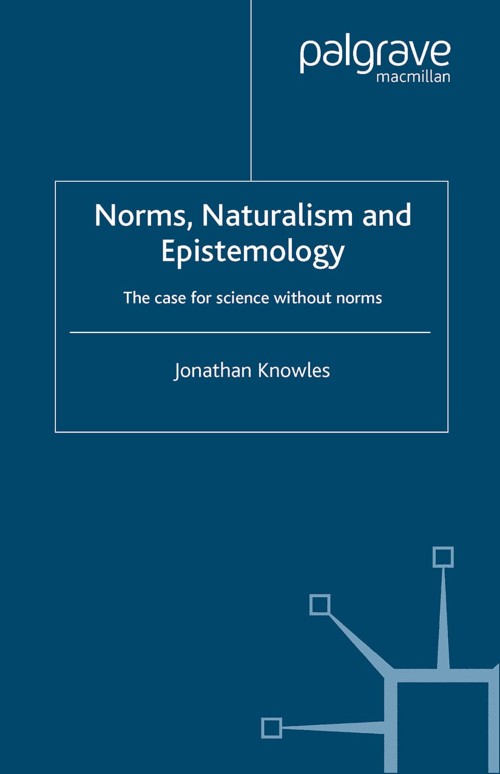
245 10|aNorms, Naturalism and Epistemology|h[electronic resource] :|bThe Case for Science Without Norms /|cby J. Knowles.
250 |a1st ed. 2003.
264 1|aLondon :|bPalgrave Macmillan UK :|bImprint: Palgrave Macmillan,|c2003.
300 |aVIII, 182 p.|bonline resource.
336 |atext|btxt|2rdacontent
337 |acomputer|bc|2rdamedia
338 |aonline resource|bcr|2rdacarrier
347 |atext file|bPDF|2rda
520 |aIn the field of epistemology, naturalism holds that there are no a priori norms for guiding our belief-formation: we must start our inquiries in situ , assuming some beliefs and the general reliability of our basic cognitive practices to justify others. Naturalized epistemology seeks to motivate norms for cognitive enquiry on such a naturalistic basis. The author argues that, whilst naturalism must be embraced, this more abmitious project is in vain: to the extent one can justify naturalistic norms, they are not needed for optimal rational belief-formation.
650 0|aKnowledge, Theory of.
650 14|aEpistemology.
710 2 |aSpringerLink (Online service)
773 0 |tSpringer Nature eBook
776 08|iPrinted edition:|z9781403902870
776 08|iPrinted edition:|z9781349508358
776 08|iPrinted edition:|z9781349508365
856 40|uhttps://doi.org/10.1057/9780230511262
912 |aZDB-2-PRE
912 |aZDB-2-SXPR
950 |aPalgrave Religion & Philosophy Collection (SpringerNature-41145)
950 |aPhilosophy and Religion (R0) (SpringerNature-43725)