LEADER 02351nam a22005895i 4500
001 826474
003 TR_AnAIT
005 20260131073852
007 cr nn 008mamaa
008 151218s2012 xxu| s |||| 0|eng d
020 |a9781137015006|9978-1-137-01500-6
024 7 |a10.1057/9781137015006|2doi
041 |aeng
049 |aTürk Tarih Kurumu Kütüphanesi
050 4|aBL60
072 7|aJHB|2bicssc
072 7|aJFSR|2bicssc
072 7|aSOC039000|2bisacsh
072 7|aJHB|2thema
072 7|aJBSR|2thema
082 04|a306.6|223
090 |aDK/27576
100 1 |aAhmad, A.|eauthor.|4aut|4http://id.loc.gov/vocabulary/relators/aut
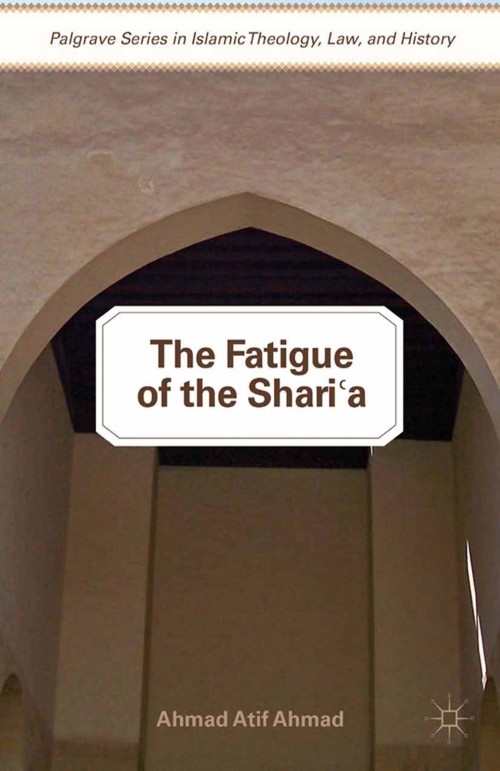
245 14|aThe Fatigue of the Shari‘a|h[electronic resource] /|cby A. Ahmad.
250 |a1st ed. 2012.
264 1|aNew York :|bPalgrave Macmillan US :|bImprint: Palgrave Macmillan,|c2012.
300 |aXIII, 208 p. 2 illus.|bonline resource.
336 |atext|btxt|2rdacontent
337 |acomputer|bc|2rdamedia
338 |aonline resource|bcr|2rdacarrier
347 |atext file|bPDF|2rda
490 1 |aPalgrave Series in Islamic Theology, Law, and History,|x2945-6703
520 |aThe Fatigue of the Shari'a places on a continuum two kinds of debates: debates in the Islamic tradition about the end of access to divine guidance and debates in modern scholarship in Islamic legal studies about the end of the Shari'a. The resulting continuum covers what access to divine guidance means and how it relates to Shari'a.
650 0|aReligion and sociology.
650 0|aReligion.
650 0|aReligion|xHistory.
650 0|aEthnology|xMiddle East .
650 0|aCulture.
650 0|aIslam|xDoctrines.
650 14|aSociology of Religion.
650 24|aReligion.
650 24|aHistory of Religion.
650 24|aMiddle Eastern Culture.
650 24|aIslamic Theology.
710 2 |aSpringerLink (Online service)
773 0 |tSpringer Nature eBook
776 08|iPrinted edition:|z9780230340367
776 08|iPrinted edition:|z9781349342914
776 08|iPrinted edition:|z9781349342921
830 0|aPalgrave Series in Islamic Theology, Law, and History,|x2945-6703
856 40|uhttps://doi.org/10.1057/9781137015006
912 |aZDB-2-PRE
912 |aZDB-2-SXPR
950 |aPalgrave Religion & Philosophy Collection (SpringerNature-41145)
950 |aPhilosophy and Religion (R0) (SpringerNature-43725)