LEADER 03849nam a22005535i 4500
001 827373
003 TR_AnAIT
005 20260131065247
007 cr nn 008mamaa
008 151217s2015 xxk| s |||| 0|eng d
020 |a9781137552037|9978-1-137-55203-7
024 7 |a10.1057/9781137552037|2doi
041 |aeng
049 |aTürk Tarih Kurumu Kütüphanesi
050 4|aPN171.4-239
072 7|aCBV|2bicssc
072 7|aLAN005000|2bisacsh
072 7|aCBV|2thema
082 04|a808.02|223
090 |aDK/28473
100 1 |aMurphy, Terence Patrick.|eauthor.|4aut|4http://id.loc.gov/vocabulary/relators/aut
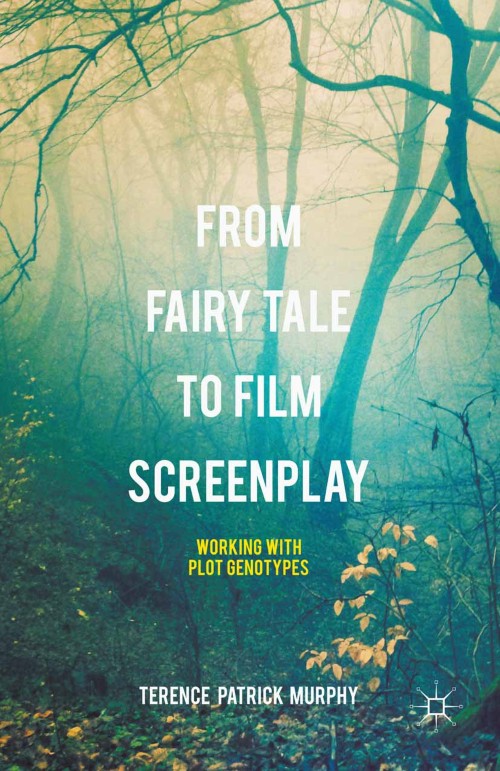
245 10|aFrom Fairy Tale to Film Screenplay|h[electronic resource] :|bWorking with Plot Genotypes /|cby Terence Patrick Murphy.
250 |a1st ed. 2015.
264 1|aLondon :|bPalgrave Macmillan UK :|bImprint: Palgrave Macmillan,|c2015.
300 |aXI, 197 p.|bonline resource.
336 |atext|btxt|2rdacontent
337 |acomputer|bc|2rdamedia
338 |aonline resource|bcr|2rdacarrier
347 |atext file|bPDF|2rda
520 |aIn Screenplay: The Foundations of Screenwriting (1979), Syd Field first popularized the Three-Act Paradigm of Setup, Confrontation and Resolution for conceptualizing and creating the Hollywood screenplay. For Field, the budding screenwriter needs a clear screenplay structure, one which includes two well-crafted plot points, the first at the end of Act I, the second at the end of Act II. By focusing on the importance of the four essentials of beginning and end, and the two pivotal plot points, Field did the Hollywood film industry an enormous service. Nonetheless, although he handles the issue of overall structure expertly, Field falls down when offering the screenwriter advice on how to successfully build each of the three individual Acts. This is because Field did not recognize the importance of another layer of analysis that underpins the existence of plot points. This is the level of the plot genotype.This book will offer you a richer theory of plot structure than the one Field outlines. It will do this not by contradicting anything Field has to say about the Hollywood paradigm, but by complementing it with a deeper level of analysis. Plot genotypes are the compositional schemas of particular stories. They are sets of instructions, written in the language of the plot function, for executing particular plots. This book outlines the plot genotypes for The Frog Prince, The Robber Bridegroom, Puss-in-Boots, and Little Red Riding Hood and then shows how these genotypes provide the underpinnings for the film screenplays of Pretty Woman, Wrong Turn, The Mask, and Psycho. By means of a detailed study of these four Hollywood screenplays, you will be able to offer a much richer description of what is going on at any particular point in a screenplay. In this way, you will become much sharper at understanding how screenplays work. And you will become much better at learning how to write coherent screenplays yourself.
650 0|aCreative writing.
650 0|aMotion picture authorship.
650 0|aGrammar, Comparative and general|xMorphology.
650 0|aCommunication.
650 0|aLiterature|xPhilosophy.
650 0|aArts.
650 14|aCreative Writing.
650 24|aScreenwriting.
650 24|aMorphology.
650 24|aMedia and Communication.
650 24|aLiterary Theory.
650 24|aArts.
710 2 |aSpringerLink (Online service)
773 0 |tSpringer Nature eBook
776 08|iPrinted edition:|z9781137552020
776 08|iPrinted edition:|z9781349561285
776 08|iPrinted edition:|z9781349561292
856 40|uhttps://doi.org/10.1057/9781137552037
912 |aZDB-2-PCC
912 |aZDB-2-SXL
950 |aPalgrave Media & Culture Collection (SpringerNature-41142)
950 |aLiterature, Cultural and Media Studies (R0) (SpringerNature-43723)