LEADER 02382nam a22006135i 4500
001 827712
003 TR_AnAIT
005 20260131063557
007 cr nn 008mamaa
008 151203s2015 xxk| s |||| 0|eng d
020 |a9781137467201|9978-1-137-46720-1
024 7 |a10.1057/9781137467201|2doi
041 |aeng
049 |aTürk Tarih Kurumu Kütüphanesi
050 4|aHM
072 7|aJHB|2bicssc
072 7|aJHB|2bicssc
072 7|aSOC026000|2bisacsh
072 7|aJHB|2thema
072 7|aJHB|2thema
082 04|a301|223
090 |aDK/28812
100 1 |aAbeysinghe, S.|eauthor.|4aut|4http://id.loc.gov/vocabulary/relators/aut
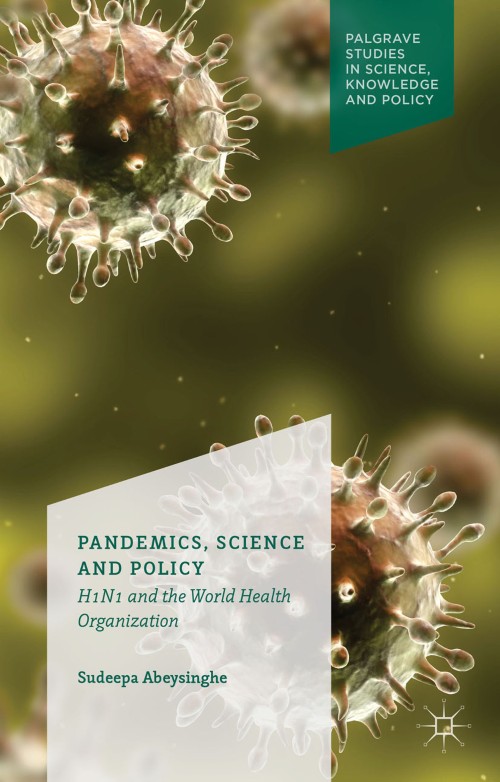
245 10|aPandemics, Science and Policy|h[electronic resource] :|bH1N1 and the World Health Organisation /|cby S. Abeysinghe.
250 |a1st ed. 2015.
264 1|aLondon :|bPalgrave Macmillan UK :|bImprint: Palgrave Macmillan,|c2015.
300 |aV, 243 p.|bonline resource.
336 |atext|btxt|2rdacontent
337 |acomputer|bc|2rdamedia
338 |aonline resource|bcr|2rdacarrier
347 |atext file|bPDF|2rda
490 1 |aPalgrave Studies in Science, Knowledge and Policy,|x2947-5813
520 |aPandemics, Science and Policy analyses the World Health Organisation's (WHO) management of the 2009 H1N1 Pandemic. Abeysinghe illustrates the ways in which the WHO's account was vulnerable to contestation, and ultimately how uncertain risks can affect policy and action on the global level.
650 0|aSociology.
650 0|aSocial medicine.
650 0|aSocial policy.
650 0|aPhysics|xStudy and teaching.
650 0|aSocial sciences.
650 0|aHumanities.
650 0|aMedical sciences.
650 14|aSociology.
650 24|aMedical Sociology.
650 24|aSocial Policy.
650 24|aEducation in Physics.
650 24|aHumanities and Social Sciences.
650 24|aHealth Sciences.
710 2 |aSpringerLink (Online service)
773 0 |tSpringer Nature eBook
776 08|iPrinted edition:|z9781137467195
776 08|iPrinted edition:|z9781349499960
776 08|iPrinted edition:|z9781349499977
830 0|aPalgrave Studies in Science, Knowledge and Policy,|x2947-5813
856 40|uhttps://doi.org/10.1057/9781137467201
912 |aZDB-2-PSE
912 |aZDB-2-SXS
950 |aPalgrave Social Sciences Collection (SpringerNature-41146)
950 |aSocial Sciences (R0) (SpringerNature-43726)