LEADER 03786nam a22006735i 4500
001 827763
003 TR_AnAIT
005 20260131063211
007 cr nn 008mamaa
008 151028s2010 xxu| s |||| 0|eng d
020 |a9780230115590|9978-0-230-11559-0
024 7 |a10.1057/9780230115590|2doi
041 |aeng
049 |aTürk Tarih Kurumu Kütüphanesi
050 4|aGN643-661
072 7|aJFC|2bicssc
072 7|a1H|2bicssc
072 7|aSOC008010|2bisacsh
072 7|aJBCC|x1H|2thema
082 04|a306.096|223
090 |aDK/28863
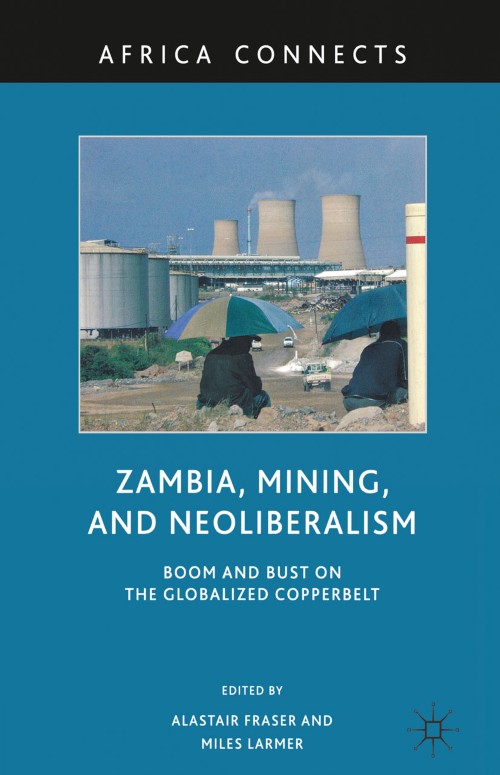
245 10|aZambia, Mining, and Neoliberalism|h[electronic resource] :|bBoom and Bust on the Globalized Copperbelt /|cedited by A. Fraser, M. Larmer.
250 |a1st ed. 2010.
264 1|aNew York :|bPalgrave Macmillan US :|bImprint: Palgrave Macmillan,|c2010.
300 |aXXI, 298 p. 6 illus.|bonline resource.
336 |atext|btxt|2rdacontent
337 |acomputer|bc|2rdamedia
338 |aonline resource|bcr|2rdacarrier
347 |atext file|bPDF|2rda
490 1 |aAfrica Connects
520 |aThis book paints a vivid picture of Zambia's experience riding the copper price rollercoaster. It brings together the best of recent research on Zambia's mining industry from eminent scholars in history, geography, anthropology, politics, sociology and economics. The authors discuss how aid donors pressed Zambia to privatize its key industry and how multinational mining houses took advantage of tax-breaks and lax regulation. It considers the opportunities and dangers presented by Chinese investment, how both companies and the Zambian state responded to dramatic instabilities in global commodity markets since 2004, and how frustration with the courting of mining multinationals has led to the rise of populist opposition. This detailed study of a key industry in a poor Central African state tells us a great deal about the unstable nature and uneven impacts of the whole global economic system.
532 8 |aAccessibility summary: This PDF is not accessible. It is based on scanned pages and does not support features such as screen reader compatibility or described non-text content (images, graphs etc). However, it likely supports searchable and selectable text based on OCR (Optical Character Recognition). Users with accessibility needs may not be able to use this content effectively. Please contact us at accessibilitysupport@springernature.com if you require assistance or an alternative format.
532 8 |aInaccessible, or known limited accessibility
532 8 |aNo reading system accessibility options actively disabled
532 8 |aPublisher contact for further accessibility information: accessibilitysupport@springernature.com
650 0|aEthnology|xAfrica.
650 0|aCulture.
650 0|aBusiness.
650 0|aManagement science.
650 0|aAnthropology.
650 0|aSociology.
650 0|aEconomic development.
650 0|aCulture|xStudy and teaching.
650 14|aAfrican Culture.
650 24|aBusiness and Management.
650 24|aAnthropology.
650 24|aSociology.
650 24|aDevelopment Studies.
650 24|aCultural Studies.
700 1 |aFraser, A.|eeditor.|4edt|4http://id.loc.gov/vocabulary/relators/edt
700 1 |aLarmer, M.|eeditor.|4edt|4http://id.loc.gov/vocabulary/relators/edt
710 2 |aSpringerLink (Online service)
773 0 |tSpringer Nature eBook
776 08|iPrinted edition:|z9780230104983
776 08|iPrinted edition:|z9781349289431
776 08|iPrinted edition:|z9781349289448
830 0|aAfrica Connects
856 40|uhttps://doi.org/10.1057/9780230115590
912 |aZDB-2-PSE
912 |aZDB-2-SXS
950 |aPalgrave Social Sciences Collection (SpringerNature-41146)
950 |aSocial Sciences (R0) (SpringerNature-43726)