LEADER 03835nam a22006255i 4500
001 829345
003 TR_AnAIT
005 20260131052012
007 cr nn 008mamaa
008 160319s2000 xxu| s |||| 0|eng d
020 |a9781349619559|9978-1-349-61955-9
024 7 |a10.1007/978-1-349-61955-9|2doi
041 |aeng
049 |aTürk Tarih Kurumu Kütüphanesi
050 4|aBL60
072 7|aJHB|2bicssc
072 7|aJFSR|2bicssc
072 7|aSOC039000|2bisacsh
072 7|aJHB|2thema
072 7|aJBSR|2thema
082 04|a306.6|223
090 |aDK/30438
100 1 |aNA, NA.|eauthor.|4aut|4http://id.loc.gov/vocabulary/relators/aut
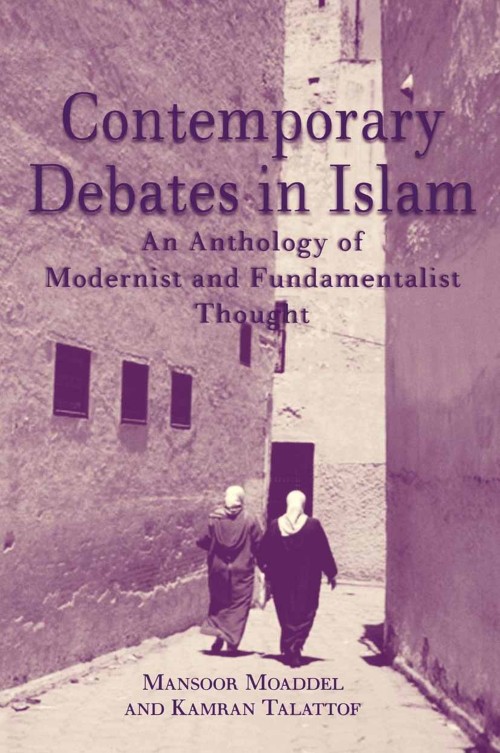
245 10|aContemporary Debates in Islam|h[electronic resource] :|bAn Anthology of Modernist and. Fundamentalist Thought /|cby NA NA.
250 |a1st ed. 2000.
264 1|aNew York :|bPalgrave Macmillan US :|bImprint: Palgrave Macmillan,|c2000.
300 |aXI, 382 p.|bonline resource.
336 |atext|btxt|2rdacontent
337 |acomputer|bc|2rdamedia
338 |aonline resource|bcr|2rdacarrier
347 |atext file|bPDF|2rda
520 |aAlso available in paperback as "Modernist and Fundamentalist Debates in Islam"During the second half of the nineteenth century, a group of prominent Muslim theologians began to critically examine classical conceptions and methods of jurisprudence and devised a new approach to Islamic theology. This new approach was nothing short of an outright rebellion against Islamic orthodoxy, displaying an astonishing compatibility with nineteenth century Enlightenment-era thought. In the 20th century this modernist movement declined, to be replaced by another cultural episode, characterized by the growing power of Islamic fundamentalism. This volume looks at these two very different approaches to Islam. The editors have selected the most prominent Islamic thinkers of modernist and fundamentalist viewpoints, diverse nationalities, and from both the late decades of the nineteenth century and the early decades of the 20th century. The writers discuss their own views with regard to such issues as philosophical and political perceptions of democracy, the state, the history of Islam, women's rights, personal lifestyle, education, and the West.
532 8 |aAccessibility summary: This PDF is not accessible. It is based on scanned pages and does not support features such as screen reader compatibility or described non-text content (images, graphs etc). However, it likely supports searchable and selectable text based on OCR (Optical Character Recognition). Users with accessibility needs may not be able to use this content effectively. Please contact us at accessibilitysupport@springernature.com if you require assistance or an alternative format.
532 8 |aInaccessible, or known limited accessibility
532 8 |aNo reading system accessibility options actively disabled
532 8 |aPublisher contact for further accessibility information: accessibilitysupport@springernature.com
650 0|aReligion and sociology.
650 0|aEthnology|xAsia.
650 0|aCulture.
650 0|aIslam.
650 0|aReligion|xPhilosophy.
650 0|aMiddle East|xHistory.
650 14|aSociology of Religion.
650 24|aAsian Culture.
650 24|aIslam.
650 24|aPhilosophy of Religion.
650 24|aHistory of the Middle East.
650 24|aSociology of Culture.
710 2 |aSpringerLink (Online service)
773 0 |tSpringer Nature eBook
776 08|iPrinted edition:|z9781349619566
776 08|iPrinted edition:|z9780312215804
776 08|iPrinted edition:|z9781349619573
856 40|uhttps://doi.org/10.1007/978-1-349-61955-9
912 |aZDB-2-PSD
912 |aZDB-2-SXS
950 |aPalgrave Social & Cultural Studies Collection (SpringerNature-41148)
950 |aSocial Sciences (R0) (SpringerNature-43726)